
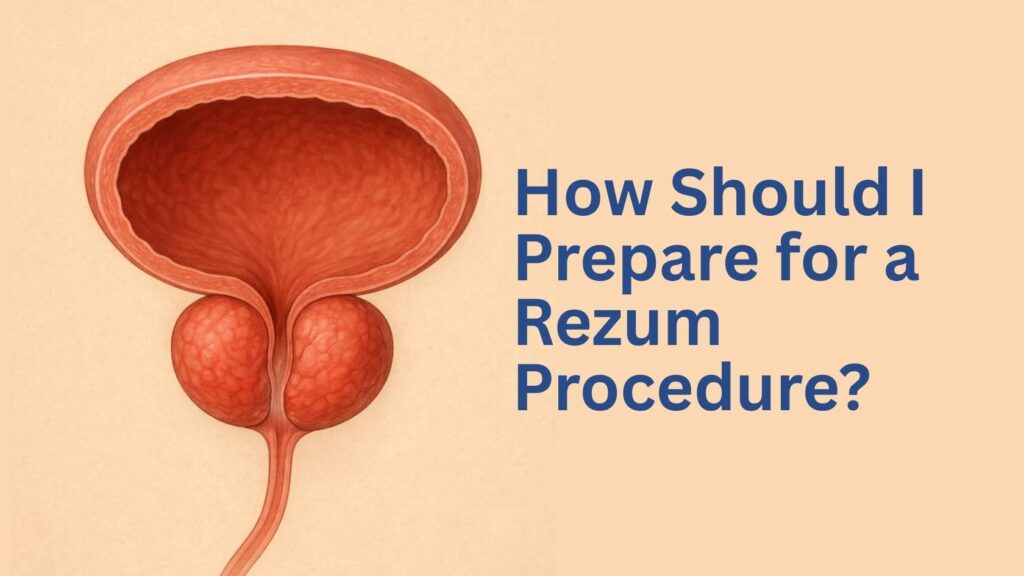
How Should I Prepare for a Rezum Procedure?
If you’re planning Rezum therapy for enlarged prostate symptoms in Dubai, good preparation can make the procedure day smoother, reduce avoidable delays, and support a more comfortable recovery. Rezum is a minimally invasive treatment, but it still involves the urinary tract and prostate tissue, so following the right pre-procedure steps is important for safety and best results.
This page explains how to prepare for a Rezum procedure, what to do in the days leading up to treatment, and how to get ready for the first phase of recovery.
Why Preparation Matters for Rezum Therapy
Preparing for Rezum therapy helps you:
Confirm the treatment is appropriate for your symptoms
Reduce the risk of infection and unexpected complications
Plan for temporary changes in urination after the procedure
Avoid medication-related bleeding risks
Set realistic expectations about recovery and symptom improvement
Even though Rezum is not a major surgery, the prostate can temporarily swell after treatment, and the bladder needs time to adjust. Proper preparation supports a smoother experience.
Step 1: Attend a Proper Consultation and Evaluation
A detailed consultation is the foundation of preparation. During this visit, symptoms are reviewed and tests may be done to confirm that urinary issues are caused by benign prostate enlargement and not another condition.
You’ll typically be asked about:
Weak urine stream
Difficulty starting urination
Night-time urination
Urgency and frequency
Feeling of incomplete bladder emptying
Any history of urinary retention
Common evaluation steps may include:
Urine test (to rule out infection)
Symptom score questionnaire
Prostate assessment and size estimation
Bladder emptying check (post-void residual)
Urine flow test
This evaluation helps confirm suitability and supports safe planning.
Step 2: Share Your Complete Medication List
One of the most important preparation steps is reviewing medications and supplements. Bring a clear list of everything you take, including:
Prescription medicines
Over-the-counter painkillers
Herbal supplements
Vitamins and “natural” products
This matters because some medicines can increase bleeding risk or affect urination.
Medicines that may need special attention
Blood thinners (anticoagulants/antiplatelets)
Certain anti-inflammatory pain medications
Some supplements that can affect bleeding
Never stop any medication on your own. Medication changes should be done only with medical guidance.
Step 3: Treat Any Urine Infection Before the Procedure
A urinary tract infection can increase discomfort and complication risk. If a urine test shows infection, it is usually treated before proceeding.
Preparation steps may include:
Taking prescribed antibiotics fully
Repeating urine testing if advised
Informing the clinic if symptoms return (burning, fever, foul-smelling urine)
Proceeding only when infection is controlled supports safer healing.
Step 4: Understand Catheter Possibility and Plan for It
Some people need a temporary urinary catheter after Rezum therapy, mainly because the prostate may swell in the early recovery stage. This is not unusual and does not mean the treatment failed.
It helps to prepare by:
Understanding basic catheter care and hygiene
Planning your first few days with easy access to a restroom
Wearing loose clothing
Avoiding long travel immediately after the procedure
If catheter use is planned, you may also be told when removal usually happens and what to expect afterward.
Step 5: Follow Pre-Procedure Instructions About Food and Drink
Preparation instructions vary depending on whether local anesthesia, light sedation, or another comfort method is used.
You may be advised to:
Avoid heavy meals before the procedure
Follow specific fasting instructions if sedation is planned
Take certain medications with a small sip of water (only if advised)
Always follow the exact instruction given for your appointment.
Step 6: Arrange Transport and the First 24–48 Hours
Even when Rezum is a same-day procedure, planning your return home matters—especially if sedation is used or you feel uncomfortable afterward.
Practical preparation includes:
Arranging someone to drive you home
Keeping your schedule light for the first 1–2 days
Avoiding important travel plans immediately after the procedure
Preparing a comfortable rest space at home
This reduces stress and supports early recovery.
Step 7: Plan Short-Term Activity Restrictions
Rezum recovery is usually quicker than traditional surgery, but some temporary restrictions are common.
You may be advised to avoid for a short period:
Heavy lifting
Intense workouts
Cycling
Straining during bowel movements
Long sitting without breaks
Light walking is often encouraged because it supports circulation and comfort.
Step 8: Prepare Your Body With Simple Lifestyle Steps
In the week before the procedure, simple habits can support recovery:
Stay well hydrated (unless instructed otherwise)
Reduce bladder irritants like excess caffeine
Avoid alcohol close to the procedure day if advised
Try to maintain regular sleep and meals
These steps can help reduce irritation and improve overall readiness.
Step 9: Know What “Normal” Early Symptoms Can Be
A key part of preparation is understanding what may happen after the procedure so you don’t panic unnecessarily.
Common temporary effects during early recovery can include:
Burning or stinging during urination
Increased frequency or urgency
Mild blood in urine
Pelvic discomfort or pressure
These are usually temporary and improve as the prostate heals. Symptom improvement is often gradual, not instant.
Step 10: Pack the Right Things for Procedure Day
Bring:
Identification documents
Any requested medical reports or test results
A list of current medications
Comfortable loose clothing
Water (if permitted after the procedure)
Avoid tight belts or restrictive trousers on procedure day for better comfort.
Step 11: Ask the Right Questions Before the Procedure
If you feel unsure, asking questions is part of good preparation. Helpful questions include:
Will I need a catheter, and for how long?
What urinary changes are expected in the first week?
When can I return to work and exercise?
What symptoms require urgent medical advice?
What is the typical improvement timeline?
Clear expectations reduce anxiety and improve confidence.
Step 12: Prepare Your Home for a Smooth Recovery
Small home preparation can make the first week easier:
Keep drinking water easily accessible
Stock light, easy meals
Avoid lifting heavy objects
Plan short, gentle walks
Keep basic hygiene supplies ready
This is especially helpful if urinary frequency is higher early on.
When to Inform the Clinic Before Your Appointment
Before the procedure, contact the clinic promptly if you develop:
Fever or chills
New burning urination
Increasing pelvic pain
Visible heavy blood in urine
Inability to pass urine
These may require reassessment before proceeding.
Final Thoughts on Preparing for Rezum Therapy
Preparing for a Rezum procedure is mostly about smart planning: completing the right evaluation, reviewing medications, treating infections, and organizing the first few recovery days. When preparation is done properly, the procedure day is smoother and the recovery period is usually more manageable. With clear guidance and realistic expectations, many men feel more confident about moving forward with Rezum therapy in Dubai.
Frequently Asked Questions
1. How many days before Rezum should I prepare?
Preparation usually begins a few days before the procedure, especially if medication adjustments or infection treatment are required.
2. Do I need to stop blood thinners before Rezum therapy?
Some blood-thinning medications may need temporary adjustment, but this should only be done under medical guidance.
3. Can I eat normally before the Rezum procedure?
Light meals are usually allowed unless sedation is planned, in which case fasting instructions may be provided.
4. Should I treat a urinary infection before Rezum therapy?
Yes, any active urinary infection should be treated completely before undergoing the procedure.
5. Is it necessary to arrange someone to accompany me?
It is recommended to arrange transport home, especially if sedation is used.
6. Will I need a catheter after the procedure?
Some patients require a temporary catheter for a few days to support healing and urine drainage.
7. Can I continue my regular medications before treatment?
Most medications can be continued, but certain drugs may require temporary adjustment after consultation.
8. Should I avoid alcohol before the procedure?
Reducing or avoiding alcohol before the procedure is generally advised to support healing and reduce irritation.
9. How should I prepare my home for recovery?
Keep water accessible, avoid heavy lifting, plan light meals, and ensure easy restroom access during the first few days.
10. What symptoms should I report before the procedure?
Fever, burning urination, severe pain, or visible heavy blood in urine should be reported before proceeding with treatment.