Weak Urine Flow Treatment Abu Dhabi Care
Weak Urine Flow Treatment Abu Dhabi is an important topic for men who feel difficulty passing urine, experience a slow stream, or feel that the bladder is not emptying fully. A weak urine flow may seem like a small issue at first, but when it continues, it can disturb sleep, daily comfort, confidence, and overall urinary health.
In many men, weak urine flow is linked with benign prostatic hyperplasia, also called BPH or enlarged prostate. However, it can also happen because of infection, urethral narrowing, bladder problems, medicines, or lifestyle-related factors. This guide explains the causes, symptoms, treatment options, recovery support, and frequently asked questions in simple language.
What Does Weak Urine Flow Mean?
Weak urine flow means the urine stream is slower, thinner, interrupted, or less forceful than normal. Some people may need to wait before urine starts. Others may feel they need to push or strain to pass urine.
A weak stream can happen once in a while due to dehydration or temporary irritation. But if it happens regularly, it should not be ignored. It may be a sign that urine is not passing freely from the bladder through the urethra.
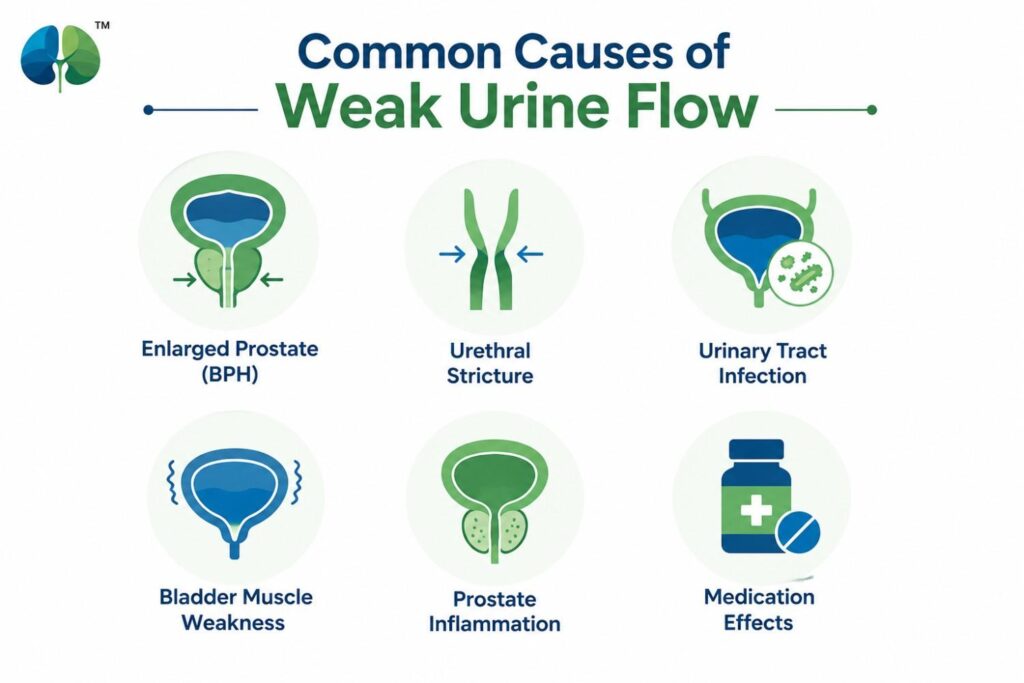
Common Causes of Weak Urine Flow
There are several possible causes of weak urine flow. The correct treatment depends on identifying the reason behind the symptom.
- Enlarged Prostate or BPH
BPH is one of the most common causes in older men. As the prostate grows, it can press on the urethra and block the smooth flow of urine.
- Urethral Stricture
A urethral stricture is a narrowing of the urine passage. It may happen because of scar tissue, injury, infection, or previous procedures.
- Urinary Tract Infection
A urinary infection can cause burning, urgency, frequent urination, and difficulty passing urine.
- Bladder Muscle Weakness
Sometimes the bladder muscle may not contract strongly enough to push urine out properly.
- Prostate Inflammation
Prostatitis, or inflammation of the prostate, can cause pain, weak flow, burning, and urinary discomfort.
- Medication Effects
Some medicines may affect bladder function or make urination more difficult.
Symptoms That Should Not Be Ignored
Weak urine flow may appear with other urinary symptoms. These symptoms help the doctor understand how serious the condition may be.
Common symptoms include:
- Slow urine stream
- Thin or interrupted urine flow
- Difficulty starting urination
- Straining while passing urine
- Dribbling after urination
- Frequent urination
- Waking up at night to urinate
- Sudden urge to urinate
- Feeling of incomplete bladder emptying
- Burning sensation while urinating
- Pain in the lower abdomen or pelvic area
If symptoms are persistent, medical evaluation is important.
Weak Urine Flow Treatment Abu Dhabi: When to Consult a Urologist
Weak Urine Flow Treatment Abu Dhabi should be considered when symptoms continue, become worse, or affect daily life. A urologist can check whether the cause is BPH, infection, stricture, bladder weakness, or another urinary condition.
You should seek medical advice if you have:
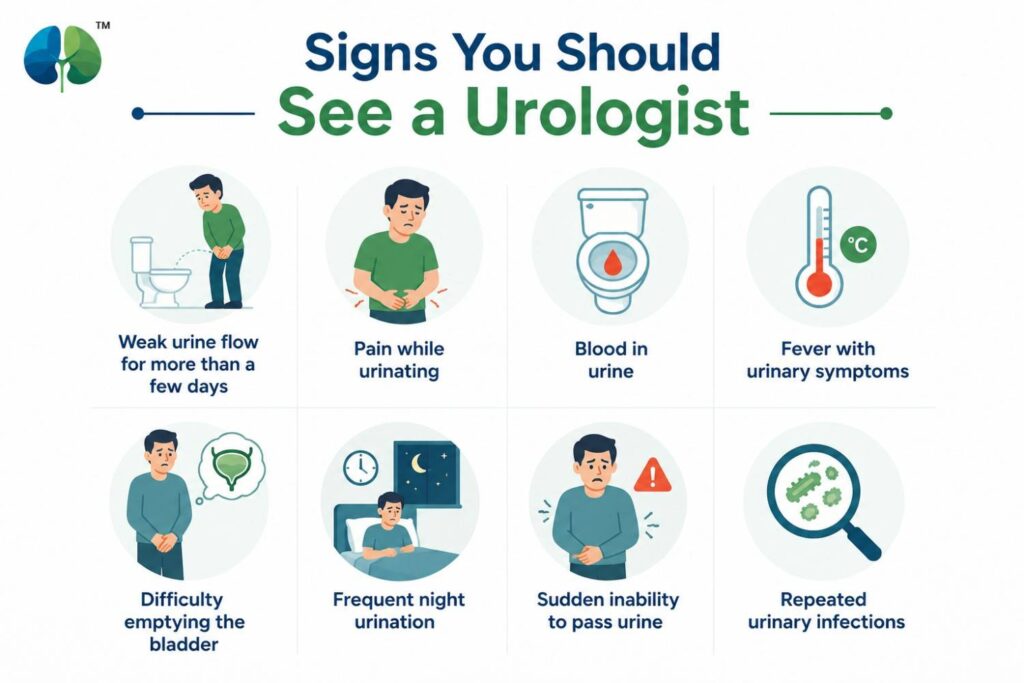
- Weak urine flow for more than a few days
- Pain while urinating
- Blood in urine
- Fever with urinary symptoms
- Difficulty emptying the bladder
- Frequent night urination
- Sudden inability to pass urine
- Repeated urinary infections
Early diagnosis can help prevent complications such as urinary retention, bladder strain, and kidney-related problems.
How Doctors Diagnose Weak Urine Flow
Diagnosis usually starts with a discussion about symptoms, age, medical history, medicines, and lifestyle habits. The doctor may ask how often you urinate, whether you wake up at night, and whether the stream is weak or interrupted.
Common tests may include:
- Urine Test
- Physical Examination
- Uroflowmetry
- Ultrasound Scan
- PSA Test
- Cystoscopy
Types of Weak Urine Flow Treatment
Treatment depends on the cause and severity of symptoms. Some patients need only lifestyle changes, while others may need medicines or procedures.
1. Lifestyle Management
For mild symptoms, lifestyle changes may help improve urinary comfort.
Helpful steps include:
- Drink enough water during the day
- Avoid drinking too much fluid before bedtime
- Reduce caffeine intake
- Limit carbonated drinks if they worsen symptoms
- Avoid holding urine for long periods
- Maintain a healthy weight
- Stay physically active
- Manage constipation
Lifestyle care is useful, but it may not be enough if the prostate is significantly enlarged.
2. Medicines for Weak Urine Flow
Medicines may be prescribed when weak urine flow is caused by BPH or prostate-related blockage.
Common medicine groups may include:
- Alpha blockers to relax prostate and bladder neck muscles
- 5-alpha reductase inhibitors to reduce prostate size over time
- Anti-inflammatory medicines if inflammation is present
- Antibiotics if infection is confirmed
Medication should be taken only under medical guidance.
3. Minimally Invasive BPH Treatment
When medicines are not enough, minimally invasive treatment may be discussed. These options aim to improve urine flow with less downtime than major surgery.
One such option is Rezum therapy.
Rezum Therapy for Weak Urine Flow
Rezum is a minimally invasive treatment used for urinary symptoms caused by enlarged prostate. It uses controlled water vapor energy to treat excess prostate tissue.
The steam energy is delivered into targeted prostate tissue. Over time, the treated tissue is absorbed by the body. This may reduce pressure on the urethra and improve urine flow.
Benefits of Rezum Therapy
Rezum may offer benefits for suitable patients, such as:
- Minimally invasive approach
- No major surgical cuts
- Usually shorter recovery
- May reduce dependence on long-term medicine
- Gradual improvement in urinary symptoms
- Can help improve weak urine stream caused by BPH
- May be suitable for selected patients seeking less invasive care
A urologist must confirm whether Rezum is suitable based on prostate size, symptoms, and overall health.
TURP for Weak Urine Flow
TURP, or transurethral resection of the prostate, is a surgical treatment for urinary symptoms caused by enlarged prostate. During TURP, excess prostate tissue is removed through the urethra.
TURP may be recommended when symptoms are more severe or when other treatments do not provide enough relief.
Benefits of TURP
TURP may help by:
- Removing obstructing prostate tissue
- Improving urine flow
- Reducing bladder pressure
- Helping patients with severe BPH symptoms
- Providing a long-established surgical option
Since TURP is more invasive than minimally invasive therapies, recovery and risks should be discussed clearly with the urologist.
Weak Urine Flow Treatment Abu Dhabi: Rezum vs TURP
Weak Urine Flow Treatment Abu Dhabi may involve comparing Rezum and TURP when BPH is the main cause.
Rezum is usually less invasive and works by shrinking prostate tissue gradually. TURP removes tissue directly during surgery. Rezum may suit selected patients with moderate symptoms, while TURP may be advised for more severe obstruction.
The right choice depends on:
- Prostate size
- Symptom severity
- Urine flow test results
- Bladder condition
- Age and health status
- Previous treatments
- Patient preference
- Recovery expectations
No single treatment is right for every patient.
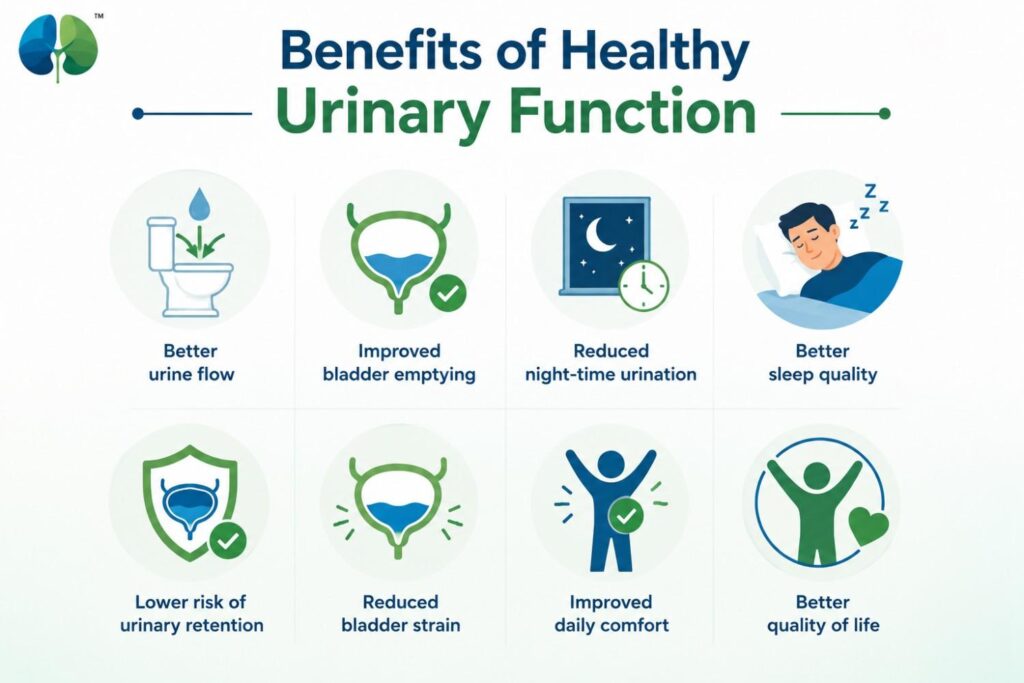
Benefits of Treating Weak Urine Flow Early
Early treatment can improve comfort and reduce the risk of complications. Many men delay care because they feel embarrassed, but weak urine flow is a common medical concern.
Daily Tips to Support Urinary Health
Simple habits can support better urinary health along with medical care.
Try these tips:
- Drink water regularly, but avoid excess fluid at night
- Reduce tea, coffee, and energy drinks if they worsen symptoms
- Avoid constipation by eating fiber-rich foods
- Stay active with regular walking or exercise
- Maintain healthy body weight
- Do not ignore repeated urinary symptoms
- Avoid smoking
- Manage diabetes and blood pressure if present
- Complete prescribed medicines
- Keep regular urology follow-ups
These steps may not cure the underlying cause, but they can support better bladder function.
Conclusion
Weak Urine Flow Treatment Abu Dhabi is important for Malayalee men living in Abu Dhabi who experience slow urination, weak stream, interrupted urine flow, night-time urination, or incomplete bladder emptying. Many men may ignore these symptoms due to hesitation, busy work schedules, or lack of awareness, but weak urine flow can sometimes be linked with enlarged prostate, urinary infection, urethral narrowing, bladder weakness, or prostate inflammation.
For Abu Dhabi Malayalees, getting timely urology consultation can help identify the real cause and choose the right treatment. Care may include lifestyle changes, medicines, minimally invasive options like Rezum, or surgical treatments like TURP, depending on the patient’s condition. Persistent urinary symptoms should not be ignored, because early diagnosis can support better treatment planning, improved comfort, healthier bladder function, and better quality of life.
For more detailed medical information about Benign Prostatic Hyperplasia, visit the Urology Care Foundation’s guide to BPH.