7 Powerful Rezum Therapy in Dubai Complete Patient Guide Now
Rezum Therapy in Dubai is becoming an increasingly popular treatment option for men experiencing symptoms of benign prostatic hyperplasia (BPH), also known as an enlarged prostate. This modern, minimally invasive procedure uses natural water vapor energy to reduce excess prostate tissue without major surgery. Many patients prefer this treatment because it offers effective symptom relief, a quicker recovery, and preservation of urinary and sexual function in most cases.
If you are exploring treatment options for an enlarged prostate, understanding how Rezum therapy works can help you make an informed decision. This guide explains everything you need to know, from symptoms and causes to treatment benefits, recovery, risks, and frequently asked questions.
What Is Rezum Therapy
Rezum Therapy is a minimally invasive treatment designed to relieve urinary symptoms caused by benign prostatic hyperplasia (BPH). Instead of removing prostate tissue through surgery, the procedure delivers controlled doses of sterile water vapor into the enlarged prostate tissue.
The steam releases stored thermal energy that destroys excess prostate cells. Over the following weeks and months, the body naturally absorbs the treated tissue, allowing the urethra to open and urine to flow more freely.
Unlike traditional surgery, Rezum Therapy generally:
- Does not require large incisions
- Can often be performed as a day-care procedure
- Uses natural water vapor technology
- Offers a shorter recovery period
- Preserves the prostate structure
Understanding Benign Prostatic Hyperplasia (BPH)
Benign prostatic hyperplasia is a non-cancerous enlargement of the prostate gland. As men age, the prostate often grows larger, placing pressure on the urethra and affecting normal urination.
Although BPH is common, it should not be ignored because symptoms may gradually worsen and affect quality of life.
Common Causes of Enlarged Prostate
Several factors contribute to prostate enlargement.
Age
The risk increases significantly after the age of 50.
Hormonal Changes
Changes in testosterone and other hormones may influence prostate growth.
Family History
A family history of prostate enlargement may increase the likelihood of developing BPH.
Lifestyle Factors
Certain lifestyle habits may contribute to worsening urinary symptoms, including:
- Lack of exercise
- Obesity
- Poor dietary habits
- Diabetes
- High blood pressure
Symptoms That May Indicate BPH
Many men experience mild symptoms initially, but they can gradually become more noticeable.
Common symptoms include:
- Frequent urination
- Night-time urination
- Weak urine stream
- Difficulty starting urination
- Stopping and starting during urination
- Feeling that the bladder is not completely empty
- Sudden urge to urinate
- Dribbling after urination
Persistent symptoms should always be medically evaluated.
Who May Benefit from Rezum Therapy
Rezum Therapy may be suitable for men who:
- Have moderate to severe urinary symptoms
- Have been diagnosed with benign prostatic hyperplasia
- Want to avoid major surgery
- Have not experienced sufficient relief with medications
- Prefer a minimally invasive treatment option
- Wish to maintain sexual function whenever possible
A proper medical evaluation determines whether a patient is a suitable candidate.
How Rezum Therapy Works
The procedure follows a simple scientific principle.
- A small device is inserted through the urethra.
- Controlled water vapor is delivered into enlarged prostate tissue.
- Heat from the steam destroys targeted cells.
- The body naturally removes treated tissue over time.
- The urinary passage gradually becomes wider.
- Symptoms improve as healing progresses.
No external incision is required
What Happens Before the Procedure
Preparation usually includes:
Medical History
The healthcare provider reviews symptoms, medications, and previous treatments.
Physical Examination
A complete assessment helps determine prostate size and overall health.
Diagnostic Tests
These may include:
- Urine analysis
- Blood tests
- PSA testing when appropriate
- Ultrasound
- Urine flow studies
- Cystoscopy in selected patients
During Rezum Therapy
The treatment generally follows these steps:
- Local anesthesia or light sedation may be used.
- A specialized instrument enters through the urethra.
- Water vapor injections are delivered into selected areas.
- The procedure usually takes only a few minutes.
- Patients are monitored before returning home.
Recovery After Rezum Therapy
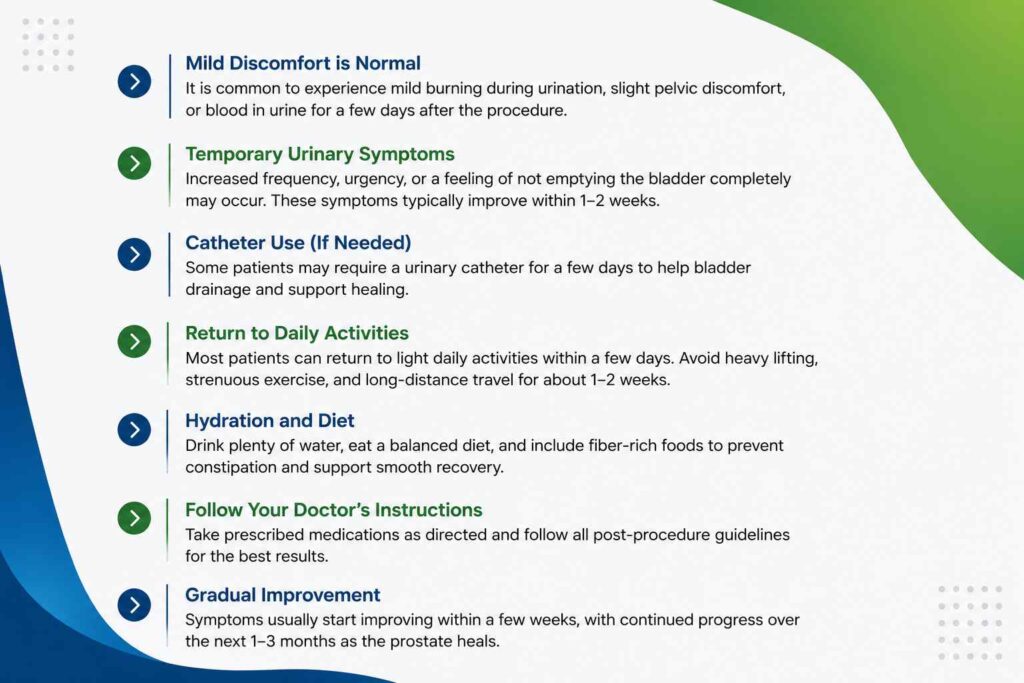
Recovery is generally quicker than traditional surgery.
First Few Days
Patients may experience:
- Mild burning during urination
- Increased urinary frequency
- Minor discomfort
- Temporary urgency
Catheter Use
Some patients require a temporary urinary catheter for a few days.
Returning to Daily Activities
Many individuals resume normal activities within several days while avoiding strenuous exercise for a short period.
Long-Term Improvement
Maximum symptom improvement often develops gradually over several weeks as the treated tissue is naturally absorbed.
Benefits of Rezum Therapy
Rezum Therapy offers numerous advantages.
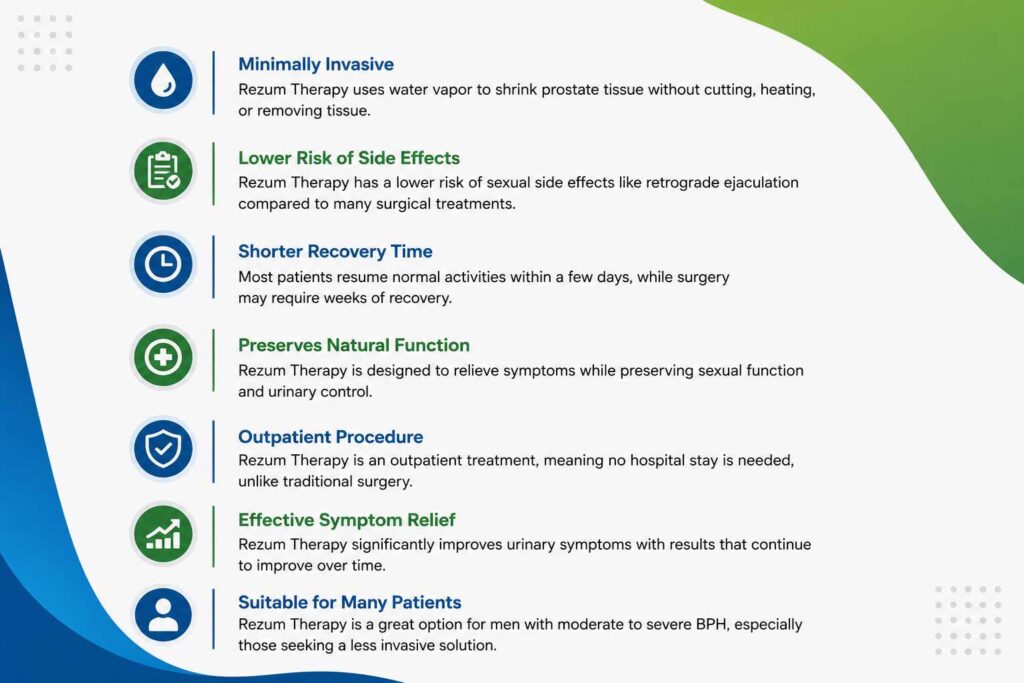
Minimally Invasive
No surgical incision is required.
Natural Technology
Water vapor provides controlled thermal energy without removing tissue surgically.
Short Procedure Time
Treatment is usually completed quickly.
Faster Recovery
Many patients recover sooner than after traditional prostate surgery.
Reduced Hospital Stay
Many cases are performed on a day-care basis.
Preserves Sexual Function
Many patients maintain erectile and ejaculatory function after treatment.
Effective Symptom Relief
Urinary flow often improves significantly.
Long-Term Results
Many patients experience lasting improvement.
Potential Risks and Side Effects
Like every medical procedure, Rezum Therapy carries some potential risks.
Temporary side effects may include:
- Blood in urine
- Burning sensation
- Frequent urination
- Mild pelvic discomfort
- Urinary urgency
- Temporary urinary retention
- Minor bleeding
Serious complications are uncommon but should be discussed with a healthcare provider.
Who May Not Be an Ideal Candidate
Some patients may require different treatment options if they have:
- Certain prostate anatomical variations
- Active urinary infections
- Untreated bladder conditions
- Specific neurological bladder disorders
- Other complex urinary tract problems
A complete evaluation determines the best treatment.
Comparing Rezum Therapy with Other BPH Treatments
Medications
Medication can reduce symptoms but often requires long-term use and may cause side effects.
TURP
Transurethral Resection of the Prostate removes tissue surgically and generally involves a longer recovery.
Laser Procedures
Laser treatments effectively remove tissue but may require different anesthesia and recovery considerations.
Open Surgery
Reserved mainly for very large prostates.
Rezum Therapy
Provides a minimally invasive alternative that balances symptom relief with faster recovery for many patients.
Lifestyle Tips After Treatment
Healthy habits can support recovery.
- Drink adequate water
- Avoid excessive caffeine initially
- Limit alcohol
- Eat a balanced diet
- Prevent constipation
- Walk regularly
- Follow medication instructions
- Attend follow-up appointments
- Avoid heavy lifting during recovery
Expected Results
Many patients notice gradual improvements including:
- Better urine flow
- Reduced urgency
- Less night-time urination
- Improved bladder emptying
- Greater comfort during urination
- Better overall quality of life
Improvement often continues over several months.
Possible Recovery Timeline
Week 1
- Temporary urinary symptoms
- Mild discomfort
- Catheter removal if used
Weeks 2–4
- Gradual symptom improvement
- Reduced swelling
One to Three Months
- Significant improvement for many patients
Three Months and Beyond
- Continued healing
- Stable urinary function
- Long-term symptom relief
Preparing for Your Consultation
Before discussing treatment, consider asking:
- Am I a suitable candidate?
- How large is my prostate?
- What tests are needed?
- What benefits should I expect?
- Are there alternatives?
- What risks apply to my situation?
- How long is recovery?
- When can I return to work?
- Will I need a catheter?
- What follow-up care is recommended?
Conclusion
Choosing the right treatment for benign prostatic hyperplasia depends on symptom severity, prostate size, medical history, and personal preferences. Rezum Therapy in Dubai offers many men an effective minimally invasive solution that combines symptom relief with a relatively quick recovery and minimal disruption to daily life. If urinary symptoms are affecting your quality of life, discussing modern treatment options with a qualified urology specialist can help determine whether Rezum Therapy in Dubai is the most appropriate approach for your individual needs. For reliable medical information about benign prostatic hyperplasia (BPH), visit the U.S. National Library of Medicine (MedlinePlus) to learn more about its symptoms, causes, diagnosis, and treatment options.
Frequently Asked Questions
What is Rezum Therapy
Rezum Therapy is a minimally invasive treatment that uses water vapor to reduce enlarged prostate tissue and improve urinary symptoms.
Who is eligible for Rezum Therapy
Men diagnosed with benign prostatic hyperplasia who meet clinical criteria may be suitable candidates after evaluation.
Is Rezum Therapy painful
Most patients experience only mild discomfort because local anesthesia or sedation is commonly used.
How long does the procedure take
The treatment itself usually takes only a few minutes, although the total visit is longer.
When will I notice improvement
Some improvement may occur within weeks, while maximum results often develop over two to three months.
Will I need a catheter
Some patients require a temporary catheter for a few days after the procedure.
Is hospitalization necessary
Many patients undergo the procedure on a day-care basis and return home the same day.
Can Rezum Therapy preserve sexual function
Many patients maintain normal erectile and ejaculatory function after treatment, although outcomes vary.
Are the results long lasting
Clinical studies show durable symptom improvement for many patients over several years.
Is Rezum Therapy safer than surgery
It is considered minimally invasive and generally has fewer risks than major prostate surgery, but the best option depends on individual medical conditions.