7 Powerful Reasons to Choose a Rezum Therapy Doctor in Dubai
Finding an experienced Rezum Therapy Doctor in Dubai can be an important step when urinary symptoms caused by an enlarged prostate begin affecting sleep, work, travel, or everyday comfort. Rezum is a minimally invasive procedure that uses controlled water vapour to treat excess prostate tissue. However, successful treatment begins with an accurate diagnosis, careful patient selection, realistic guidance, and proper follow-up from a qualified urology specialist.
What Is Rezum Therapy?
Rezum therapy is a minimally invasive treatment for benign prostatic hyperplasia, commonly known as BPH or an enlarged prostate.
During the procedure, controlled amounts of sterile water vapour are delivered into selected areas of enlarged prostate tissue. The thermal energy in the vapour affects the targeted cells. Over time, the body naturally absorbs the treated tissue, reducing pressure around the urethra.
As the urinary passage becomes less restricted, patients may experience:
- A stronger urine stream
- Less urgency
- Reduced night-time urination
- Easier bladder emptying
- Less straining while urinating
- Improved daily comfort
The procedure does not require an external surgical incision. It is often considered by patients who want an alternative to long-term medication or more invasive prostate surgery.

Why Choosing a Rezum Therapy Doctor in Dubai Matters
Rezum is not suitable for every person with urinary symptoms. Similar symptoms may be caused by infections, bladder conditions, prostate inflammation, neurological disorders, urethral narrowing, or prostate cancer.
A qualified doctor must first identify the actual cause of the symptoms. The specialist should also evaluate prostate size, structure, urinary flow, general health, current medication, and previous treatment history.
Choosing an experienced doctor is important for several reasons:
- Accurate diagnosis of the urinary condition
- Appropriate selection of patients for Rezum
- Careful treatment planning
- Safe delivery of water-vapour injections
- Proper catheter and recovery guidance
- Early management of temporary side effects
- Structured follow-up after treatment
The doctor’s role is not limited to performing the procedure. It includes supporting the patient throughout evaluation, preparation, treatment, recovery, and long-term monitoring.
Understanding Benign Prostatic Hyperplasia
The prostate is a small gland located below the bladder. It surrounds part of the urethra, which carries urine out of the body.
As men grow older, the prostate may gradually increase in size. This enlargement is usually non-cancerous. However, the growing tissue may press against the urethra and make normal urination difficult.
BPH can affect people differently. Some have an enlarged prostate with few symptoms, while others have significant urinary problems even when the enlargement is moderate.
The severity of symptoms, prostate anatomy, bladder function, and overall health must therefore be considered together.
Common Causes and Risk Factors for BPH
There is no single cause of benign prostatic hyperplasia. Several age-related, hormonal, genetic, and lifestyle factors may contribute to prostate growth.
- Increasing Age
Age is one of the strongest risk factors. Prostate enlargement becomes more common after the age of 50, although symptoms may begin earlier in some individuals.
- Hormonal Changes
Changes in testosterone, dihydrotestosterone, and other hormones may influence the growth of prostate cells over time.
- Family History
A person may have an increased likelihood of developing BPH when close family members have experienced prostate enlargement or related urinary problems.
- Metabolic Conditions
Conditions such as diabetes, obesity, and high blood pressure may be associated with worsening lower urinary tract symptoms.
- Limited Physical Activity
A sedentary lifestyle may contribute to weight gain, reduced metabolic health, and more noticeable urinary symptoms.
These factors do not confirm that a person has BPH. A medical assessment is needed to identify the exact cause.
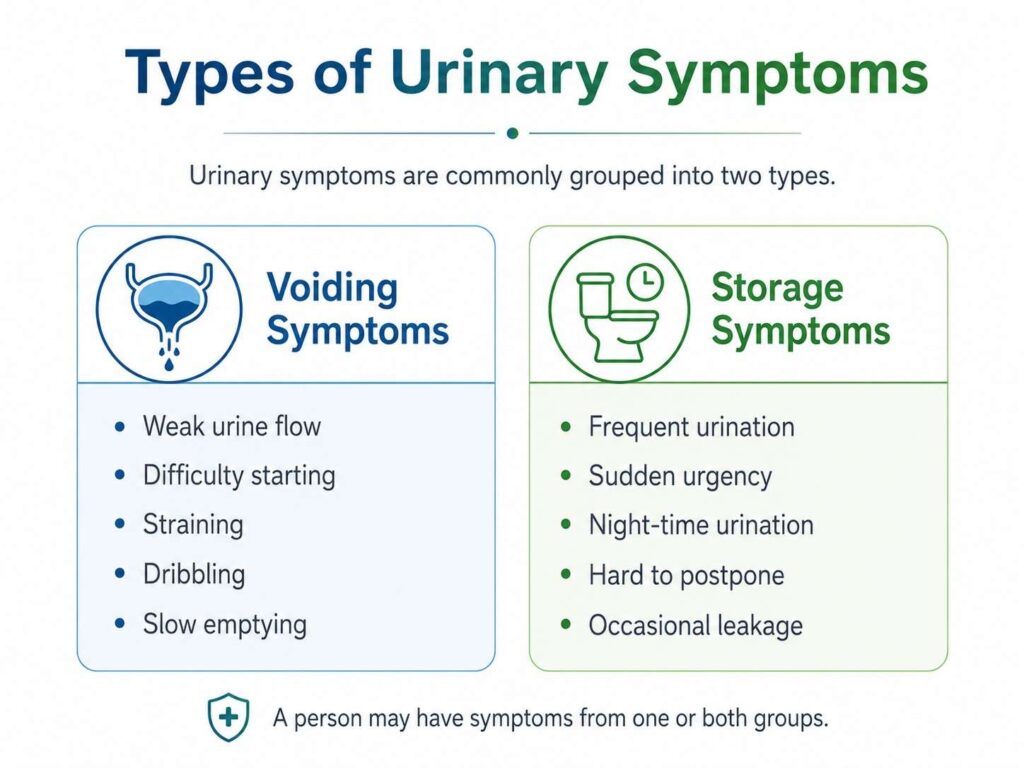
Types of Urinary Symptoms
Symptoms associated with an enlarged prostate are often divided into two main groups.
Voiding Symptoms
These occur while the bladder is being emptied and may include:
- Weak urine flow
- Difficulty starting urination
- Straining to urinate
- Interrupted urine stream
- Dribbling after urination
- Taking longer to empty the bladder
Storage Symptoms
These occur while the bladder is storing urine and may include:
- Frequent urination
- Sudden urinary urgency
- Waking several times at night
- Difficulty postponing urination
- Occasional leakage before reaching a toilet
A patient may experience symptoms from one or both groups. The symptom pattern helps the doctor understand how the prostate and bladder are functioning.
When Should You Consult a Rezum Specialist?
A medical consultation may be appropriate when urinary symptoms are persistent, worsening, or affecting daily life.
Arrange an assessment when you experience:
- A consistently weak urine stream
- Frequent night-time urination
- Difficulty beginning urination
- A feeling that the bladder remains full
- Sudden or frequent urges to urinate
- Repeated urinary tract infections
- Increasing dependence on urinary medication
- Interference with work, sleep, or travel
Urgent medical attention may be needed when there is an inability to pass urine, severe lower abdominal discomfort, visible blood in the urine, fever, or severe pain.
These symptoms do not always indicate BPH, so self-diagnosis should be avoided.
Who May Benefit from Rezum Therapy?
Rezum may be considered for men who:
- Have been diagnosed with benign prostatic hyperplasia
- Experience moderate or bothersome urinary symptoms
- Have received limited relief from medication
- Experience medication-related side effects
- Prefer a minimally invasive treatment
- Want to avoid major prostate surgery when appropriate
- Wish to reduce dependence on daily BPH medication
- Understand that improvement occurs gradually
Suitability depends on prostate anatomy, size, overall health, urinary function, and treatment goals.
Seven Benefits of Consulting a Rezum Therapy Doctor in Dubai
1. Personalised Evaluation
A proper assessment helps determine whether symptoms are caused by BPH or another urinary condition.
2. Minimally Invasive Treatment Planning
Rezum uses a device passed through the urethra, meaning no external surgical incision is usually required.
3. Short Procedure Time
The delivery of water vapour generally takes only a few minutes, although preparation, anaesthesia, and monitoring require additional time.
4. Day-Care Possibility
Many patients can return home on the same day, depending on their health and the doctor’s recommendation.
5. Gradual Symptom Improvement
As treated tissue is absorbed, pressure on the urinary channel may decrease and urinary flow may improve.
6. Attention to Sexual Function
Rezum is often considered by men concerned about preserving erectile and ejaculatory function. Individual risks must still be discussed before treatment.
7. Structured Follow-Up
Regular review helps the doctor monitor urinary improvement, catheter removal, medication changes, healing, and possible side effects.
Rezum Compared with Other BPH Treatments
BPH Medication
Medication may relax muscles around the prostate or influence prostate growth. It can help control symptoms but may require long-term use and can cause side effects.
TURP
Transurethral resection of the prostate surgically removes obstructing tissue. It can offer substantial relief but may involve anaesthesia, hospital care, and a longer recovery.
Laser Procedures
Laser treatments remove or vaporise prostate tissue. They can be effective, although the procedure and recovery differ from Rezum.
Prostatic Urethral Lift
This treatment uses small implants to move prostate tissue away from the urethra. Suitability depends on prostate structure.
Open or Robotic Surgery
More extensive surgery may be recommended for very large prostates or complicated conditions.
The right option depends on anatomy, symptom severity, medical fitness, priorities, and expected outcomes.
Conclusion
Choosing a qualified Rezum Therapy Doctor in Dubai helps ensure that urinary symptoms are accurately investigated before treatment begins. The right specialist can evaluate prostate health, explain available options, determine whether water-vapour therapy is suitable, and provide structured recovery support. Men experiencing persistent urinary difficulty should seek a professional urology assessment rather than relying on self-diagnosis or delaying care.
For reliable medical information about benign prostatic hyperplasia (BPH), visit the U.S. National Library of Medicine (MedlinePlus) to learn more about its symptoms, causes, diagnosis, and treatment options.
FREQUENTLY ASKED QUESTIONS
Who Is Eligible for Rezum Therapy?
Rezum Therapy may be suitable for men experiencing urinary symptoms caused by benign prostatic hyperplasia. A urologist evaluates prostate size, symptom severity, medical history, test results, and previous treatments before confirming eligibility.
Is Rezum Therapy Painful?
Anaesthesia or sedation is generally used to improve comfort during the procedure. Temporary burning during urination, urgency, pelvic discomfort, or mild soreness may occur during the early recovery period.
How Long Does the Rezum Procedure Take?
The water-vapour treatment itself commonly takes only a few minutes. However, preparation, anaesthesia, and post-procedure monitoring may increase the total time spent at the medical facility.
When Will I Notice Improvement?
Improvement is gradual because the body needs time to absorb the treated prostate tissue. Some patients notice changes within several weeks, while symptoms may continue improving over the following months.
Will I Need a Urinary Catheter?
Some patients require a temporary urinary catheter after treatment. This is because short-term swelling of the prostate may make urination difficult immediately after the procedure.
Is Hospitalisation Necessary?
Rezum Therapy is generally performed as a minimally invasive procedure and often does not require an overnight hospital stay. The exact arrangement depends on the patient’s health, anaesthesia, and recovery needs.
Can Rezum Therapy Preserve Sexual Function?
Rezum Therapy is designed to target enlarged prostate tissue while limiting unnecessary damage to surrounding structures. However, every treatment carries potential risks, which should be discussed with the urologist before proceeding.
Are Rezum Therapy Results Long-Lasting?
The treatment may provide lasting improvement in urinary symptoms. However, the prostate can continue changing with age, and some patients may require medication or additional treatment in the future.
How Does Water Vapour Reduce Prostate Tissue?
Controlled water vapour delivers thermal energy into selected areas of enlarged prostate tissue. The treated cells are gradually absorbed by the body, helping reduce pressure on the urethra and improve urine flow.
Can I Stop BPH Medication After Rezum Therapy?
BPH medication should only be stopped or changed under the doctor’s guidance. Some patients may need to continue medication temporarily while swelling reduces and healing progresses.