REZUM TREATMENT CLINIC IN SHARJAH
Benign Prostatic Hyperplasia (BPH) can gradually affect urinary comfort, sleep, daily routines, and overall quality of life. For men looking for modern, minimally invasive prostate treatment, a REZUM TREATMENT CLINIC IN SHARJAH may provide an option worth discussing with a qualified urologist. Rezum therapy uses controlled water vapor energy to treat targeted prostate tissue while aiming to preserve normal urinary and sexual function.
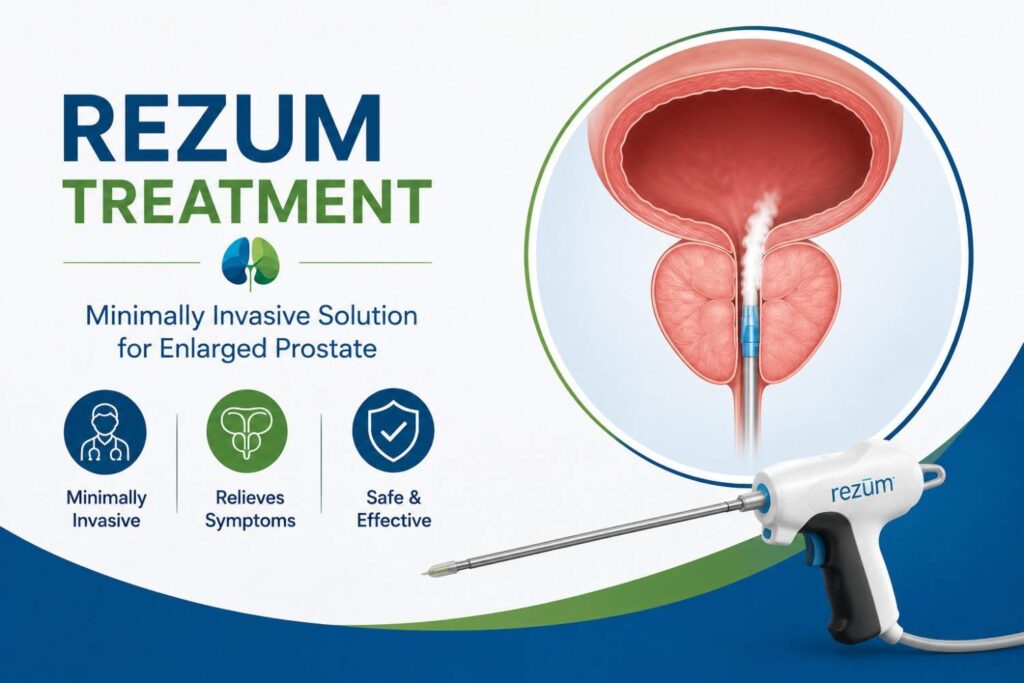
Table of Contents
- What Is Rezum Therapy?
- Why Is Rezum Used for BPH?
- How Does Rezum Treatment Work?
- Who May Be a Candidate for Rezum?
- Symptoms That May Lead to Treatment
- Benefits of Rezum Therapy
- Rezum Treatment Process
- Preparation Before Rezum
- Recovery After Rezum
- Possible Side Effects and Risks
- Rezum Compared With Other BPH Treatments
- How to Choose a REZUM TREATMENT CLINIC IN SHARJAH
- Tips for Better Recovery
- Frequently Asked Questions
- Conclusion
What Is Rezum Therapy?
Rezum therapy is a minimally invasive treatment for benign prostatic hyperplasia, commonly called BPH. BPH occurs when the prostate becomes enlarged and begins to affect the flow of urine through the urethra.A REZUM TREATMENT CLINIC IN SHARJAH may offer this therapy as part of a broader approach to managing prostate-related urinary symptoms.Instead of surgically removing prostate tissue, Rezum uses steam generated from sterile water. The water vapor is delivered into selected areas of the prostate through a specialized treatment device.The thermal energy damages targeted prostate cells. Over time, the treated tissue is naturally absorbed by the body, which can create more room for urine to pass.
Why Is Rezum Different?
Traditional surgical procedures may remove or cut prostate tissue. Rezum takes a different approach by using targeted thermal energy.
Important features include:
- Minimally invasive treatment
- Water-vapor energy
- Targeted treatment of prostate tissue
- No external surgical incision
- Usually performed as a short procedure
- Gradual improvement as treated tissue reduces
- Designed to preserve important surrounding structures
A consultation with a urologist is necessary to determine whether Rezum is appropriate for an individual patient.
Why Is Rezum Used for BPH?
BPH is associated with prostate enlargement, particularly as men age. The enlarged prostate can narrow the urethral passage and make bladder emptying more difficult.Symptoms may include:
- Frequent urination
- Urgency to urinate
- Weak urinary stream
- Difficulty starting urination
- Interrupted urine flow
- Feeling that the bladder has not completely emptied
- Increased night-time urination
- Dribbling after urination
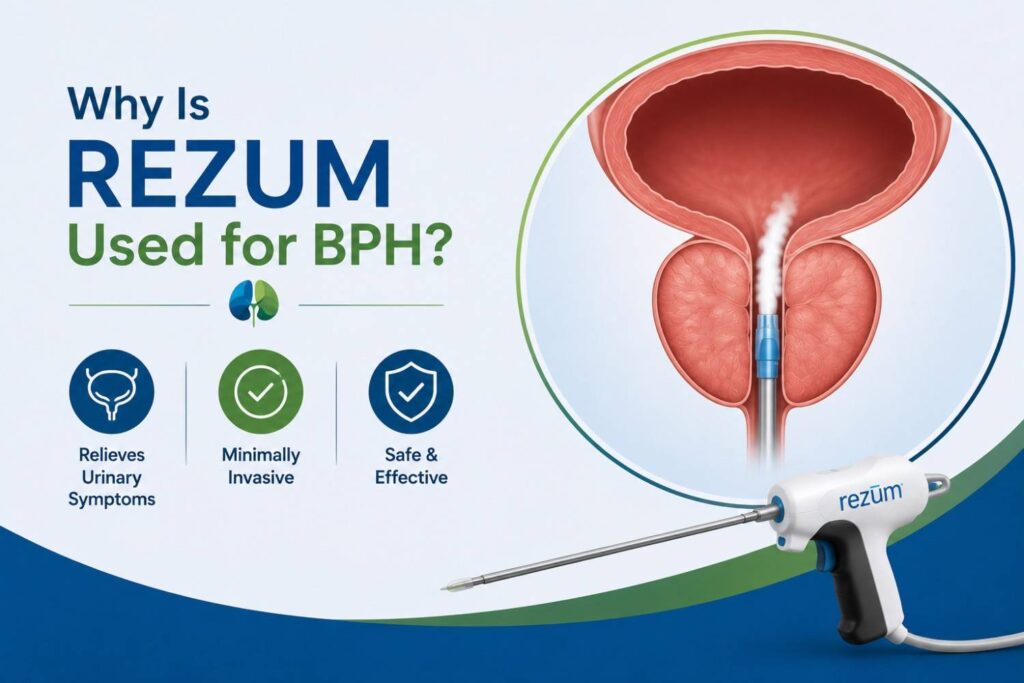
Medication may control symptoms for some men. However, medication is not suitable or effective for everyone.When symptoms remain troublesome, a urologist may discuss procedural options. Rezum is one minimally invasive treatment that may be considered depending on prostate anatomy, symptom severity, previous treatment, medications, and overall health.A REZUM TREATMENT CLINIC IN SHARJAH should evaluate the individual rather than recommending one treatment to every patient.
How Does Rezum Treatment Work?
Understanding the treatment process can make the procedure easier to discuss during a consultation.
Step 1: Urological Assessment
The doctor first evaluates the patient’s symptoms and medical history.
Assessment may include:
- Urinary symptom evaluation
- Physical examination
- Urine testing
- Prostate assessment
- Measurement of urinary flow
- Assessment of bladder emptying
- Other tests when clinically required
The doctor may also review current medications and previous BPH treatments.
Step 2: Treatment Planning
If Rezum is considered appropriate, the urologist identifies the areas of prostate tissue contributing to urinary obstruction.The number and location of steam treatments depend on prostate size and anatomy.
Step 3: Water-Vapor Treatment
A small treatment instrument is introduced through the urinary passage.Controlled water vapor is then delivered into targeted prostate tissue. Each treatment is brief, allowing the urologist to address selected areas.
Step 4: Natural Tissue Reduction
After treatment, the body gradually breaks down and absorbs the treated prostate tissue.As the obstructing tissue reduces, the urinary channel may have more space for urine flow.
Step 5: Gradual Symptom Improvement
Rezum does not usually provide an immediate final result. Improvement develops during the healing period.This is an important difference between Rezum and procedures that physically remove prostate tissue during surgery.
Who May Be a Candidate for Rezum?
A suitable candidate needs an individualized assessment. A REZUM TREATMENT CLINIC IN SHARJAH may consider factors such as:
- Persistent BPH-related urinary symptoms
- Prostate size and anatomy
- Response to medication
- Impact of symptoms on daily life
- Overall health
- Previous prostate treatments
- Patient expectations
- Urological examination findings
Men Who May Benefit From a Minimally Invasive Option
Rezum may be discussed with men who:
- Want an alternative to certain surgical procedures
- Have bothersome urinary symptoms
- Prefer a minimally invasive treatment approach
- Have been evaluated for BPH
- Have realistic expectations about recovery
- Want to discuss treatment options with a urologist
Not every patient with BPH is automatically suitable for Rezum. The decision should be based on clinical assessment.
Benefits of Rezum Therapy
One reason patients ask about a REZUM TREATMENT CLINIC IN SHARJAH is the availability of a minimally invasive approach to BPH management.Potential advantages may include:
- Minimally Invasive Approach
Rezum is performed through the urinary passage rather than through an external surgical incision.
- Targeted Treatment
The doctor can deliver water vapor into selected areas of prostate tissue.
- No Large Surgical Incision
Because the treatment is performed through the urethra, there is no external abdominal incision.
- Gradual Improvement
The body naturally processes the treated tissue, allowing urinary improvement to develop during recovery.
- Short Treatment
The procedure itself is generally relatively brief, although the total clinical experience depends on preparation, anesthesia, observation, and individual circumstances.
- Sexual Function Considerations
Rezum has been developed with preservation of sexual function as an important consideration. However, individual outcomes can vary, and patients should discuss possible sexual side effects with their urologist before treatment.
Rezum Treatment Process
The exact experience can vary between patients and healthcare settings.
A typical treatment pathway includes:
- Initial urology consultation
- Assessment of urinary symptoms
- Prostate evaluation
- Discussion of available BPH treatments
- Confirmation of suitability
- Treatment planning
- Rezum procedure
- Post-treatment monitoring
- Follow-up evaluation
- Assessment of symptom improvement
Patients should ask the clinic what type of anesthesia is used, whether a catheter is expected, how long observation lasts, and what follow-up schedule is recommended.
Preparation Before Rezum
Preparation depends on the patient’s medical history and the doctor’s instructions.
Before treatment, patients should tell their doctor about:
- Current prescription medicines
- Blood-thinning medicines
- Allergies
- Previous urinary procedures
- Previous prostate treatments
- Existing medical conditions
- Recent infections
- Previous anesthesia problems
Recovery After Rezum
Recovery is an important part of the overall treatment process.Some urinary symptoms may temporarily increase during the early healing period. This can happen because the urinary tract and prostate need time to recover after treatment.
A patient may experience temporary:
- Urinary frequency
- Urgency
- Mild burning during urination
- Blood in the urine
- Blood in semen
- Pelvic discomfort
- Changes in urinary flow
The doctor may prescribe medicines or provide specific instructions to manage the recovery period.
How Long Does Improvement Take?
Rezum results generally develop gradually rather than immediately.Some patients may begin noticing changes within several weeks, while continued improvement can occur over the following months.The recovery timeline depends on factors such as:
- Prostate characteristics
- Baseline urinary symptoms
- Individual healing
- Number of treatments
- Overall health
- Previous BPH treatment
Patients should follow their urologist’s instructions rather than comparing their recovery directly with another person’s experience.
Rezum Compared With Other BPH Treatments
Rezum is one option among several approaches to BPH management.
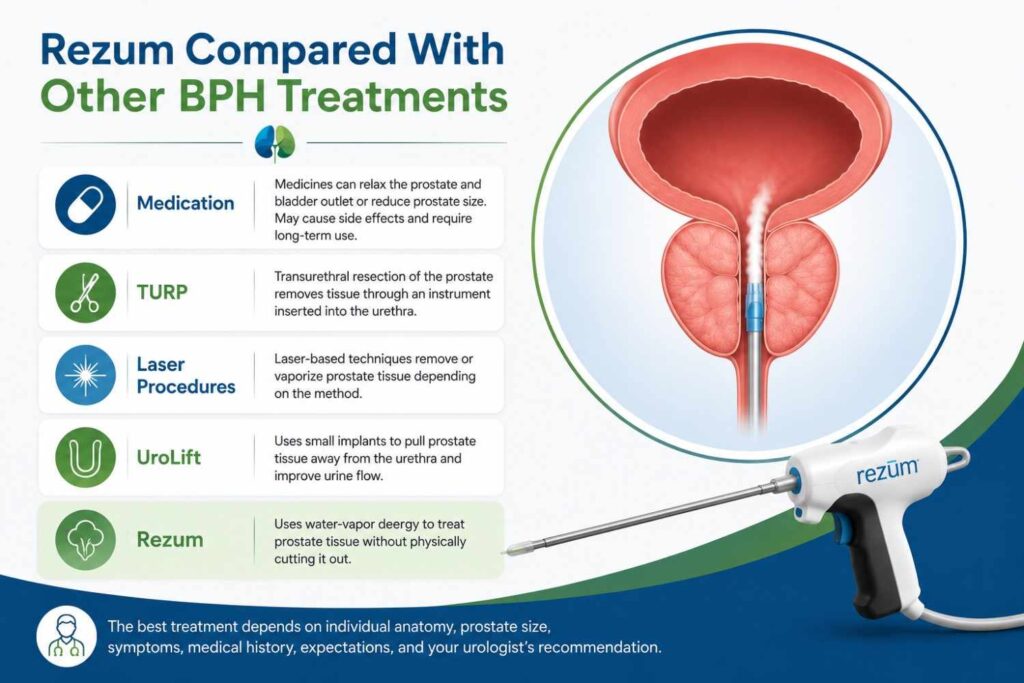
- Medication
Medicines can help relax the prostate and bladder outlet or reduce prostate size, depending on the medication.Medication may be suitable for some men but can cause side effects and may require long-term use.
- TURP
Transurethral resection of the prostate, or TURP, removes prostate tissue through an instrument inserted into the urethra.TURP has been used for many years and remains an important surgical treatment for BPH.
- Laser Procedures
Laser-based procedures can remove or vaporize prostate tissue depending on the technique.
- UroLift
UroLift uses small implants to pull prostate tissue away from the urethra and improve urinary passage.
- Rezum
Rezum uses water-vapor energy to treat selected prostate tissue without physically cutting it out.The appropriate treatment depends on individual anatomy, prostate size, symptoms, medical history, expectations, and the urologist’s recommendation.
How to Choose a REZUM TREATMENT CLINIC IN SHARJAH
Choosing a REZUM TREATMENT CLINIC IN SHARJAH should involve more than simply searching for a treatment name.
- Look at Urological Expertise
Consider whether the doctors have appropriate training and experience in BPH management and minimally invasive urology.
- Ask About Patient Assessment
A responsible clinic should assess the patient’s condition before recommending treatment.
- Understand the Technology
Ask what equipment and treatment system are used and how the procedure is performed.
- Discuss Alternatives
A good consultation should include relevant alternatives rather than presenting Rezum as the only possible option.
- Review Recovery Information
Patients should understand expected recovery, follow-up, temporary symptoms, and warning signs.
- Ask About Follow-Up
Ongoing follow-up allows the urologist to monitor recovery and urinary improvement.
- Focus on Individual Care
The most appropriate REZUM TREATMENT CLINIC IN SHARJAH is one where treatment decisions are based on clinical evaluation and individual needs.
When Should You See a Urologist?
Men should consider a urological assessment when urinary symptoms become persistent, troublesome, or progressively worse.Early evaluation can help determine whether symptoms are related to BPH or another urinary or prostate condition.A urologist may recommend lifestyle changes, medication, monitoring, or a procedure depending on the findings.Seeking an evaluation does not automatically mean that a patient needs surgery.
Conclusion
Choosing a REZUM TREATMENT CLINIC IN SHARJAH is an important decision for men considering minimally invasive treatment for BPH. Rezum uses targeted water-vapor energy to treat prostate tissue and may provide an alternative to certain medication-based or surgical approaches.
The right treatment depends on prostate anatomy, urinary symptoms, overall health, previous treatment, and individual goals. A qualified urologist can evaluate these factors, explain the available choices, and help patients understand the expected benefits, limitations, risks, and recovery process.For men considering a REZUM TREATMENT CLINIC IN SHARJAH, an individualized consultation is the appropriate first step toward understanding whether Rezum is a suitable option.For more detailed medical information about Benign Prostatic Hyperplasia, visit the Urology Care Foundation’s guide to BPH.