WHO IS A GOOD CANDIDATE FOR REZUM TREATMENT?
Understanding WHO IS A GOOD CANDIDATE FOR REZUM TREATMENT? is important for men experiencing urinary symptoms caused by benign prostatic hyperplasia (BPH). Rezum therapy is a minimally invasive treatment that uses controlled water-vapor energy to treat selected areas of enlarged prostate tissue. As the body gradually processes the treated tissue, the prostate may create more room for urine to pass through.
Not every man with BPH is automatically suitable for Rezum. A urologist needs to evaluate prostate size, anatomy, urinary symptoms, bladder function, medical history, previous treatments, and individual treatment goals. For men considering treatment at a REZUM TREATMENT CLINIC IN SHARJAH, an individualized urological assessment can help determine whether Rezum is an appropriate option.
Generally, a potential candidate is a man with bothersome urinary symptoms related to BPH who has been appropriately evaluated by a urologist and may benefit from a minimally invasive treatment approach.
Potential candidates may include men who:
- Have persistent BPH-related urinary symptoms
- Find their symptoms disruptive to daily activities or sleep
- Have not achieved adequate symptom control with medication
- Experience medication-related concerns or side effects
- Want to discuss a minimally invasive treatment option
- Have prostate characteristics that are appropriate for Rezum
- Have realistic expectations about recovery
- Understand that improvement develops gradually
However, these factors alone do not confirm eligibility.The final decision should be made after a complete medical and urological assessment.
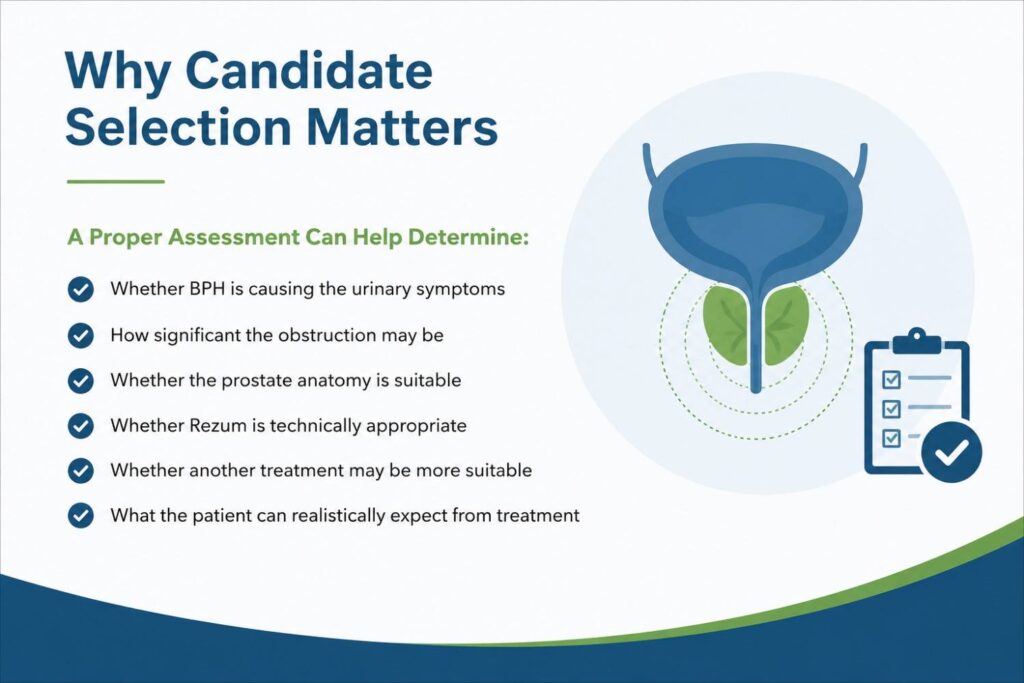
Why Candidate Selection Matters
Rezum is not a one-size-fits-all treatment.The prostate differs in size, shape, anatomy, and the location of tissue contributing to obstruction. Urinary symptoms can also be influenced by bladder function, infection, medications, neurological conditions, or other urinary problems.For this reason, a doctor needs to establish whether BPH is actually responsible for the patient’s symptoms.
A Proper Assessment Can Help Determine:
- Whether BPH is causing the urinary symptoms
- How significant the obstruction may be
- Whether the prostate anatomy is suitable
- Whether Rezum is technically appropriate
- Whether another treatment may be more suitable
- What the patient can realistically expect from treatment
A detailed evaluation can help prevent inappropriate treatment and support a more individualized care plan.
Common Signs That May Lead to Rezum
Men often begin considering BPH treatment when urinary symptoms become persistent or interfere with everyday life.
- Weak Urinary Stream
The flow of urine may become slower or weaker as an enlarged prostate restricts the urethra.
- Difficulty Starting Urination
Some men experience a delay between feeling the need to urinate and the beginning of urine flow.
- Frequent Urination
The need to urinate repeatedly during the day can become inconvenient and disruptive.
- Night-Time Urination
Repeatedly waking to urinate can interfere with sleep and contribute to daytime tiredness.
- Urinary Urgency
A sudden and difficult-to-delay need to urinate may affect travel, work, and social activities.
- Incomplete Emptying
Some men feel that urine remains in the bladder after urination.When several of these symptoms persist, a urologist can determine whether BPH is the underlying cause and whether treatment should be considered.
Prostate Factors Considered Before Treatment
One of the most important parts of determining WHO IS A GOOD CANDIDATE FOR REZUM TREATMENT? is evaluating the prostate itself.
- Prostate Size
The size of the prostate can influence treatment planning.
- Prostate Shape
Different prostate shapes can create different patterns of urinary obstruction.
- Location of Obstructing Tissue
The urologist needs to understand which areas are contributing to the restriction of urine flow.
- Median Lobe Considerations
The presence and characteristics of a median lobe may affect treatment planning. The doctor will assess whether the prostate anatomy is suitable for the procedure.
- Degree of Obstruction
The relationship between prostate enlargement and urinary symptoms is also important.The urologist may use clinical examination, imaging, urinary testing, or other assessments to understand these factors.

Men Who May Benefit From Rezum
There are several situations in which a urologist may discuss Rezum as a possible treatment.
- Men With Persistent Symptoms
A man whose BPH symptoms continue despite conservative management may discuss procedural options with his doctor.
- Men Looking for a Minimally Invasive Approach
Some patients prefer to explore minimally invasive options rather than procedures that physically remove prostate tissue.
- Men Concerned About Long-Term Medication
Some men may prefer to discuss procedural treatment if medication does not adequately control symptoms or causes unwanted effects.
- Men With Lifestyle Disruption
Urinary frequency, urgency, weak flow, and repeated night-time urination can interfere with everyday activities.When symptoms significantly affect quality of life, a urologist may discuss whether procedural treatment is appropriate.
- Men With Realistic Expectations
A good candidate understands that Rezum is not an instant solution.The treatment works through a gradual biological process, so symptom improvement develops over time.
Who May Need Another Treatment?
Understanding WHO IS A GOOD CANDIDATE FOR REZUM TREATMENT? also means understanding that Rezum may not be appropriate for everyone.
A urologist may recommend another approach when:
- Prostate anatomy is not suitable
- Symptoms have another underlying cause
- The prostate requires a different type of intervention
- There is significant bladder dysfunction
- Another medical condition is contributing to urinary symptoms
- The patient requires a treatment better suited to their specific circumstances
- The risks or limitations of Rezum outweigh its potential benefits
Alternative approaches may include:
- Lifestyle measures
- Medication
- TURP
- Laser prostate procedures
- UroLift
- Other minimally invasive treatments
- Other surgical procedures
The appropriate option depends on the individual clinical situation.
Preparing for Rezum Treatment
Once a patient has been identified as a suitable candidate, the healthcare provider will provide specific preparation instructions.Patients should tell their doctor about all medications and supplements they use.Particular attention may be given to:
- Blood-thinning medicines
- Prescription medicines
- Allergies
- Previous urinary procedures
- Previous infections
- Existing medical conditions
- Previous anesthesia reactions
Practical Preparation
Depending on the doctor’s instructions, patients may also need to:
- Arrange transportation if required
- Follow medication instructions
- Follow fasting instructions when applicable
- Understand catheter-related care
- Plan sufficient recovery time
- Attend pre-treatment assessments
Patients should follow the instructions provided by their healthcare team rather than relying on general online advice.
Recovery After Rezum
Recovery is an important consideration when determining WHO IS A GOOD CANDIDATE FOR REZUM TREATMENT?A good candidate should understand that Rezum does not usually produce its final effect immediately.During the early healing period, some urinary symptoms may temporarily become more noticeable.
Possible temporary effects include:
- Increased urinary frequency
- Urinary urgency
- Burning during urination
- Blood in the urine
- Blood in semen
- Pelvic discomfort
- Changes in urinary flow
- Temporary difficulty passing urine
Some patients may require a temporary urinary catheter.
Gradual Improvement
The treated prostate tissue gradually undergoes changes as the body processes it.Some patients may notice improvement during the first several weeks, while further improvement can continue over the following months.The recovery experience varies from person to person.
Lifestyle Measures Alongside BPH Treatment
Not every urinary symptom requires a procedure.Depending on the individual situation, a doctor may recommend lifestyle measures alongside other treatment.
These may include:
- Managing fluid intake according to medical advice
- Reducing excessive evening fluid intake
- Limiting beverages that worsen urinary urgency
- Maintaining regular physical activity
- Managing existing health conditions
- Taking prescribed medicines correctly
- Attending regular medical reviews
Lifestyle changes should not replace medical assessment when symptoms are persistent or worsening.
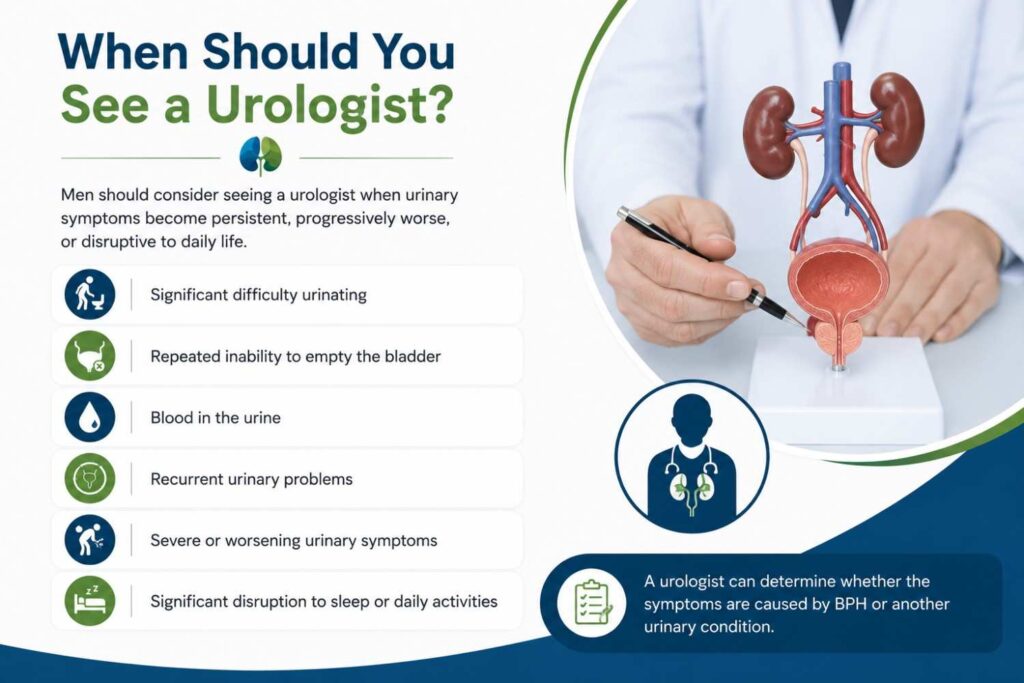
When Should You See a Urologist?
Men should consider seeing a urologist when urinary symptoms become persistent, progressively worse, or disruptive to daily life.A medical evaluation is particularly important when there is:
- Significant difficulty urinating
- Repeated inability to empty the bladder
- Blood in the urine
- Recurrent urinary problems
- Severe or worsening urinary symptoms
- Significant disruption to sleep or daily activities
A urologist can determine whether the symptoms are caused by BPH or another urinary condition.
Conclusion
So, WHO IS A GOOD CANDIDATE FOR REZUM TREATMENT? Generally, Rezum may be considered for men with bothersome urinary symptoms associated with BPH who have been appropriately evaluated and have prostate characteristics suitable for the procedure.A good candidate should also understand that Rezum is a minimally invasive treatment with a gradual recovery process. The treatment does not immediately remove the enlarged prostate tissue. Instead, controlled water-vapor energy treats selected tissue, which the body gradually processes during healing.For men considering Rezum, the decision should be based on professional assessment rather than symptoms alone. A qualified urologist can evaluate prostate size and anatomy, bladder function, previous treatment, overall health, and individual goals before recommending an appropriate BPH treatment.For more detailed medical information about Benign Prostatic Hyperplasia, visit the Urology Care Foundation’s guide to BPH.