How Long Does Rezum Treatment Take? Procedure Time, Recovery and Results
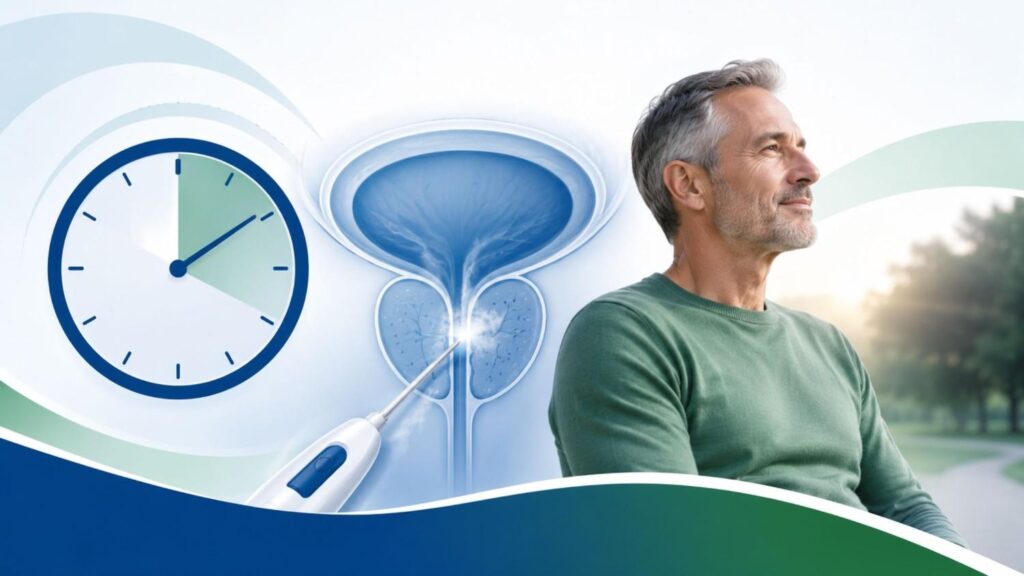
How long does Rezum treatment take? This is one of the most common questions men ask when considering a minimally invasive treatment for benign prostatic hyperplasia (BPH), or an enlarged prostate. The good news is that the actual Rezum procedure is relatively short. However, the time spent at the clinic, the recovery period, and the time needed to experience the full urinary benefits are different parts of the treatment journey.
Rezum uses controlled water-vapor energy to treat selected areas of enlarged prostate tissue. The treatment is performed through the urinary passage without an external surgical incision. Each individual steam treatment lasts only a few seconds, while the total procedure time depends on the size and anatomy of the prostate and the number of treatments required.
What Is Rezum Treatment?
Rezum is a minimally invasive treatment for BPH that uses controlled water-vapor energy to target excess prostate tissue. BPH can gradually narrow the urinary passage and contribute to symptoms such as frequent urination, urgency, weak urinary flow, difficulty starting urination, incomplete bladder emptying, and increased night-time urination.
Unlike procedures that remove prostate tissue using cutting or vaporization, Rezum delivers water vapor into selected areas of the prostate. The thermal energy damages the targeted cells, after which the body’s natural healing process gradually breaks down and absorbs the treated tissue.
This process creates additional space around the urethra and can improve urinary flow over time. The treatment is therefore designed around gradual tissue reduction rather than immediate removal of the obstructing prostate tissue. Rezum is a minimally invasive treatment for BPH that uses controlled water-vapor energy to target excess prostate tissue. BPH can gradually narrow the urinary passage and contribute to symptoms such as frequent urination, urgency, weak urinary flow, and difficulty emptying the bladder. For a broader overview of the treatment, read more about Rezum treatment for BPH.
How Long Does Rezum Treatment Take?
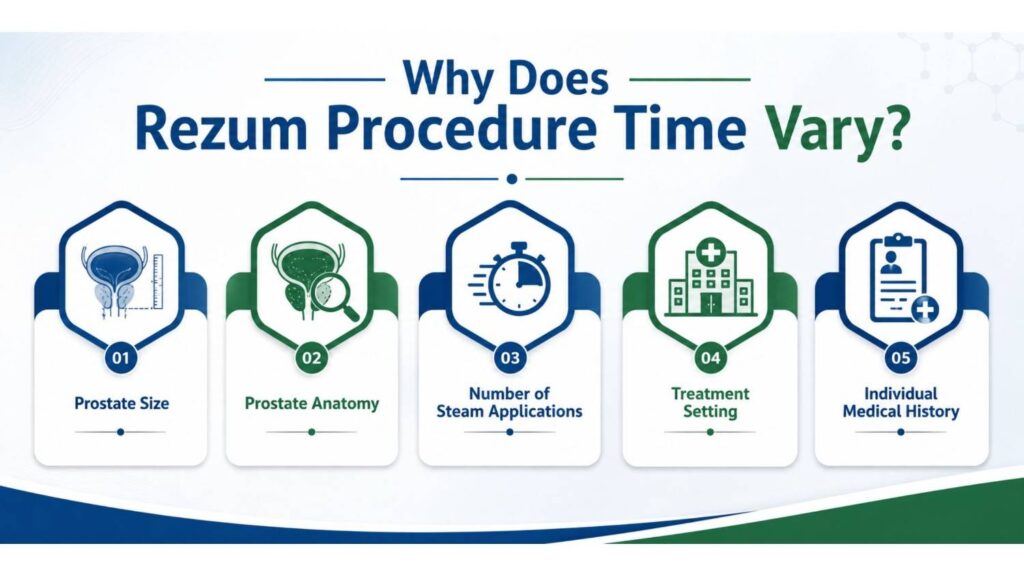
How long does Rezum treatment take? The actual treatment is generally short. Boston Scientific reports an average Rezum procedure time of approximately 5.3 minutes in its pivotal randomized controlled trial. Individual treatment time can vary depending on prostate anatomy and the number of water-vapor treatments required.
Each water-vapor treatment lasts approximately 9 seconds. The number of treatments is determined by the urologist according to the size and configuration of the prostate.
However, the answer to how long does Rezum treatment take should not be limited to those few minutes. The overall appointment may take longer because it can include:
- Pre-procedure assessment
- Preparation for treatment
- Anesthesia or sedation, depending on the treatment setting
- The Rezum procedure itself
- Immediate observation
- Catheter placement when required
- Post-procedure instructions
- Arrangements for follow-up
Therefore, patients should ask their urologist about the expected total appointment time rather than planning around the procedure time alone.
How Long Does the Actual Rezum Procedure Take?
When patients ask how long does Rezum treatment take, they are often asking specifically about the time during which the water-vapor therapy is being delivered.
The procedure itself is relatively brief. The official treatment information reports an average procedure time of just over five minutes in the pivotal trial. Each steam application lasts approximately nine seconds.
The number of applications varies between patients. A larger or differently shaped prostate may require more treatment applications than another prostate.
This means there is no single procedure duration that applies to every patient. A urologist first evaluates the prostate and determines which areas are contributing to the urinary obstruction. The treatment is then tailored to that anatomy.
What Happens During the Rezum Procedure?
Understanding the steps can make the question how long does Rezum treatment take easier to answer.
Step 1: Urological Assessment
Before treatment, the urologist evaluates urinary symptoms, medical history, prostate characteristics, previous BPH treatment, medications, and other relevant factors.
Depending on the individual situation, assessment may include:
- Urinary symptom evaluation
- Physical examination
- Urine testing
- Prostate assessment
- Urinary flow assessment
- Bladder-emptying assessment
- Additional investigations when clinically necessary
Step 2: Treatment Planning
Once Rezum is considered appropriate, the urologist determines which prostate areas require treatment.
The number and location of steam applications depend on the prostate’s size and anatomy.
Step 3: Water-Vapor Treatment
A specialized treatment device is introduced through the urinary passage. Controlled water vapor is then delivered into targeted prostate tissue.
Each application lasts around nine seconds.
Step 4: Completion and Observation
After the planned treatment applications are completed, the patient is monitored according to the treating team’s protocol.
A catheter may be used temporarily because swelling during the early healing period can affect urination.
How Long Does the Clinic Visit Take?
Another important distinction is the difference between procedure time and appointment time.
The procedure itself may take only several minutes, but patients should not assume that the entire clinic visit will last the same amount of time.
The appointment may involve:
- Registration and preparation
- Medical review
- Anesthesia or sedation preparation
- Rezum treatment
- Recovery and observation
- Catheter management if required
- Discharge instructions
- Follow-up planning
The exact duration depends on the treatment setting and the patient’s circumstances.
For this reason, patients asking how long does Rezum treatment take should confirm the expected arrival time, procedure time, observation period, and discharge requirements with their urology team before scheduling the treatment.
When Do Urinary Symptoms Improve After Rezum?
If someone asks how long does Rezum treatment take because they want to know when they will feel better, the answer is different from the procedure-time answer.
Rezum does not usually provide its complete benefit immediately after the steam applications. The treated tissue is gradually processed by the body’s natural healing response.
According to official patient information, many patients begin experiencing symptom relief as soon as approximately two weeks after treatment, while maximum benefit may occur within about three months. Individual responses can vary.
This creates three different timelines:
- Procedure: usually only several minutes
- Early recovery: generally begins immediately and may involve temporary urinary symptoms
- Symptom improvement: develops gradually over weeks and can continue for months
Understanding these timelines gives a much more accurate answer to how long does Rezum treatment take.
Does Rezum Provide Immediate Relief?
No, patients should not expect the final urinary result immediately after treatment.
The purpose of Rezum is to treat targeted prostate tissue so that the body can gradually absorb it. The prostate therefore needs time to heal and reduce the treated tissue.
During the early healing stage, some urinary symptoms may temporarily become more noticeable. This can include frequency, urgency, burning, or changes in urinary flow.
The gradual nature of improvement is an important part of setting realistic expectations.
What Can You Expect During the First Few Days?
The first few days are focused mainly on recovery rather than judging the final treatment result.
A patient may experience temporary urinary discomfort or changes in urinary habits. Depending on the individual case, a catheter may be required for a period after treatment.
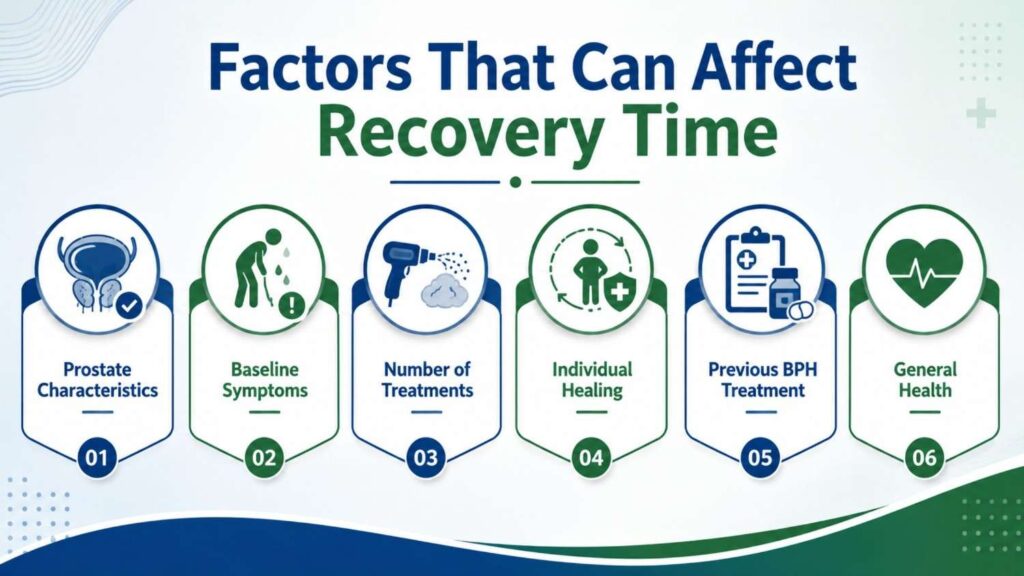
In the pivotal trial, patients had a catheter for an average of approximately 3.4 days, although catheter duration can vary according to the patient, prostate characteristics, physician technique, and clinical circumstances.
Patients should follow their urologist’s instructions regarding:
- Medication
- Fluid intake
- Physical activity
- Catheter care
- Sexual activity
- Follow-up appointments
- Warning signs requiring medical attention
What Happens During the Following Weeks?
The following weeks are when the body’s healing response becomes increasingly important.
The treated prostate tissue is gradually reabsorbed. As the obstructing tissue reduces, the urinary passage may have more room for urine flow.
Some patients begin noticing improvement within the first few weeks, while others may take longer. Official patient information indicates that symptom relief may begin as soon as two weeks, with maximum benefit potentially developing by around three months.
This means that how long does Rezum treatment take should never be confused with how long it takes to achieve the final urinary result.
Rezum Compared With Other BPH Treatments
Rezum is one of several approaches available for managing BPH.
Rezum
Rezum uses water-vapor energy to treat selected prostate tissue. It is minimally invasive and does not require an external surgical incision. The procedure itself is relatively short.
TURP
Transurethral resection of the prostate, or TURP, removes prostate tissue through an instrument inserted through the urethra. It is a well-established surgical treatment for BPH.
Laser Procedures
Laser techniques can be used to remove or vaporize prostate tissue depending on the specific procedure.
UroLift
UroLift uses small implants to reposition prostate tissue and improve the urinary passage.
The most appropriate treatment depends on prostate anatomy, symptom severity, medical history, treatment goals, and the urologist’s assessment.
How to Prepare for Rezum Treatment
Once the question how long does Rezum treatment take has been answered, patients should also understand what they need to do before the procedure.
Preparation may vary according to the individual’s medical history.
Tell the urologist about:
- Prescription medications
- Blood-thinning medications
- Allergies
- Previous urinary procedures
- Previous prostate treatments
- Existing medical conditions
- Recent urinary infections
- Previous problems with anesthesia or sedation
Do not stop or change prescribed medication unless the treating doctor specifically instructs you to do so.
Patients should also arrange transportation if their treatment plan involves sedation or if their medical team recommends that they avoid driving afterward.
Questions to Ask Your Urologist
A consultation is the best place to get an individualized answer to how long does Rezum treatment take.
Useful questions include:
- How long is the actual Rezum procedure expected to take in my case?
- How long should I expect to stay at the clinic?
- Will I need anesthesia or sedation?
- Will I need a catheter after treatment?
- How long might the catheter remain in place?
- When can I return to normal activities?
- When should I expect urinary symptoms to improve?
- What temporary symptoms should I expect?
- When is my first follow-up appointment?
- What symptoms should prompt me to contact the medical team?
These questions help separate the short procedure itself from the longer recovery and symptom-improvement timeline.
Conclusion
How long does Rezum treatment take? The actual Rezum procedure is relatively short, with an average procedure time of approximately 5.3 minutes reported in the pivotal randomized controlled trial. Each water-vapor treatment lasts around nine seconds, although the number of treatments depends on the individual prostate anatomy.
However, the complete Rezum treatment journey takes longer than the procedure itself. Preparation, observation, possible catheter use, early recovery, and gradual prostate tissue reduction are all part of the process. Many patients may begin noticing urinary symptom improvement within approximately two weeks, while maximum benefit can develop over the following months. The procedure itself is relatively brief. Boston Scientific reports an average procedure time of just over five minutes in the pivotal randomized controlled trial. For more information, read about how Rezum treatment works and what to expect.
Frequently Asked Questions
In some cases, additional treatment may be considered after evaluating the cause of persistent or returning symptoms.
This should be discussed with your urologist. Never stop blood-thinning medication without medical advice.
Yes. Rezum is commonly performed without general anesthesia, although the approach depends on the treatment setting and patient.
Rezum is designed to preserve sexual function, but individual results can vary.
Yes, selected patients with a median lobe may be suitable for Rezum after urological assessment.
Rezum is generally performed as an outpatient procedure, although the exact setting can vary.
Some patients may continue medication temporarily or as advised by their urologist during recovery.
Temporary worsening can occur during healing. Significant or unexpected symptoms should be reported to the treating urologist.
Rezum is designed to preserve sexual function, but no treatment can guarantee identical outcomes for every patient.
Follow-ups help the urologist monitor healing, urinary symptoms, catheter status when applicable, and overall recovery.