Symptoms of Enlarged Prostate in Men
The symptoms of enlarged prostate in men can develop gradually and may initially seem like a normal part of getting older. However, changes such as frequent urination, a weak urine stream, difficulty starting urination, or waking repeatedly at night should not simply be ignored.An enlarged prostate, medically known as benign prostatic hyperplasia (BPH), is a common condition in older men. Although BPH is not prostate cancer, prostate enlargement can affect the urethra and make it harder for urine to pass normally.Recognizing the symptoms of enlarged prostate in men early can encourage timely evaluation and help identify the most appropriate approach to management. Some men may need only monitoring and lifestyle adjustments, while others may benefit from medication or a procedure.

What Is an Enlarged Prostate?
The prostate is a gland located below the bladder and around part of the urethra. Its position means that changes in prostate size can affect urinary flow.As men age, prostate tissue can gradually increase in size. When the prostate becomes enlarged, it may place pressure around the urethra and contribute to changes in bladder function.This can lead to different symptoms of enlarged prostate in men, ranging from mild urinary inconvenience to more troublesome problems with bladder emptying.BPH is benign, meaning it is not cancer. However, urinary symptoms should still be evaluated because similar symptoms can occur with other urinary or prostate conditions.
What Causes an Enlarged Prostate?
The exact reason why the prostate enlarges is complex, but aging and hormonal changes are considered important factors.
Risk may be influenced by:
- Increasing age
- Changes in male hormones
- Family history
- Metabolic health
- Lifestyle factors
- Existing medical conditions
Not every man with an enlarged prostate develops significant urinary symptoms. Some men may have prostate enlargement without experiencing major changes in urination.The severity of symptoms does not always directly correspond to the size of the prostate. A relatively smaller enlargement can sometimes cause noticeable obstruction, while some men with a larger prostate may have fewer symptoms.
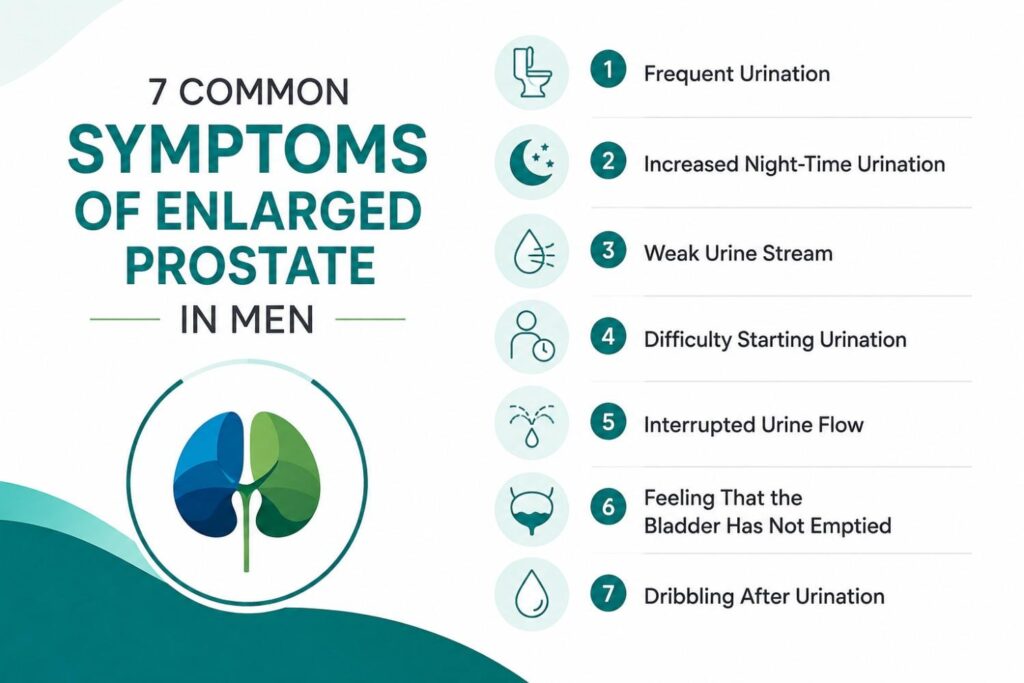
7 Common Symptoms of Enlarged Prostate in Men
Understanding the most common symptoms of enlarged prostate in men can make it easier to recognize changes that deserve medical attention.
1. Frequent Urination
One of the common symptoms is needing to urinate more frequently than before.A man may find that he needs to use the bathroom repeatedly throughout the day. This can become inconvenient at work, while travelling, or during social activities.Frequent urination can occur because an enlarged prostate may interfere with normal bladder emptying. The bladder may also become more sensitive over time.
2. Increased Night-Time Urination
Waking during the night to urinate is another common symptom.This is known as nocturia. Some men may wake once, while others may need to get up several times during the night.Repeated nighttime urination can interfere with sleep and may contribute to daytime tiredness.However, nocturia can have many causes, so it should not automatically be assumed to result from an enlarged prostate.
3. Weak Urine Stream
A noticeable reduction in the strength of the urinary stream can be one of the important symptoms of enlarged prostate in men.A man may feel that urine is coming out more slowly or with less force than it did previously.An enlarged prostate can contribute to resistance around the urethra, affecting the flow of urine from the bladder.A gradually weakening stream should be discussed with a healthcare professional, particularly if it continues or becomes worse.
4. Difficulty Starting Urination
Some men experience difficulty getting urine to start flowing.You may stand at the toilet for a while before the stream begins. This symptom is sometimes called urinary hesitancy.It may occur because the bladder needs to generate more pressure to push urine through a narrowed passage.Difficulty starting urination can also have causes other than BPH, making a proper evaluation important.
5. Interrupted Urine Flow
Another possible symptom is a urine stream that starts and stops.Instead of maintaining a continuous flow, urine may pause and then begin again.Interrupted flow can make urination take longer and may leave a person feeling that the bladder has not emptied properly.
6. Feeling That the Bladder Has Not Emptied
A persistent sensation that urine remains in the bladder is another symptom worth discussing.Even after urinating, a man may feel that he needs to go again shortly afterward.This can occur when the bladder does not empty completely.If incomplete emptying becomes significant, it may require medical assessment because urinary retention can lead to complications.
7. Dribbling After Urination
Some men experience urine leakage or dribbling shortly after they believe they have finished urinating.This may happen when a small amount of urine remains in the urethra.Although occasional dribbling can happen for various reasons, persistent post-urination dribbling can be one of the symptoms of enlarged prostate in men and should be mentioned during a medical consultation.
Other Urinary Changes to Watch For
The symptoms of enlarged prostate in men are not limited to the seven commonly discussed changes above.
Some men may also experience:
- A sudden need to urinate
- Difficulty postponing urination
- A longer time needed to empty the bladder
- Urine leakage associated with urgency
- Changes in the usual urinary pattern
- Increased effort while urinating
Symptoms may develop slowly, so men may not immediately recognize that their urinary habits have changed.One useful approach is to compare your current urinary pattern with how you were urinating several months or years ago.
Why Do These Symptoms Happen?
Understanding the mechanism behind the symptoms of enlarged prostate in men can make the condition easier to understand.The urethra carries urine from the bladder through the prostate and out of the body.When prostate tissue enlarges around the urethra, it can increase resistance to urine flow. The bladder may have to work harder to push urine through the narrowed passage.
Over time, bladder changes can contribute to symptoms such as:
- Frequency
- Urgency
- Weak flow
- Hesitancy
- Interrupted flow
- Incomplete emptying
This explains why BPH can affect both urine flow and the way the bladder behaves.
When Should You See a Urologist?
Men should consider speaking with a urologist when urinary changes become persistent, progressively worse, or disruptive to everyday life.
A consultation may be particularly appropriate if you notice:
- A consistently weak urine stream
- Increasing nighttime urination
- Difficulty starting urination
- Repeated urgency
- A persistent feeling of incomplete emptying
- Increasing urinary frequency
- Recurrent urinary problems
Seeking medical advice does not automatically mean that treatment or surgery will be required.A urologist can first determine the likely cause and discuss appropriate management.
Symptoms of Enlarged Prostate in Men and Daily Life
The symptoms of enlarged prostate in men can affect more than urination.
For some men, urinary problems can influence:
- Sleep quality
- Work routines
- Travel
- Social activities
- Exercise
- Confidence
- Daily planning
For example, a man who needs to urinate frequently may begin planning outings around bathroom availability.Repeated nighttime urination may also interfere with restful sleep.Recognizing these effects is important because treatment decisions are often based not only on medical findings but also on how symptoms affect quality of life.
Can an Enlarged Prostate Be Prevented?
There is no guaranteed way to prevent age-related prostate enlargement.However, maintaining overall health can be beneficial for general urinary and cardiovascular well-being.
Helpful habits may include:
- Staying physically active
- Maintaining a healthy weight
- Eating a balanced diet
- Managing existing health conditions
- Limiting excessive caffeine when it worsens symptoms
- Avoiding excessive alcohol intake
- Attending medical checkups
- Discussing persistent urinary changes with a doctor
These habits should be viewed as part of general health management rather than a guaranteed way to prevent BPH.
Symptoms of Enlarged Prostate in Men: When Symptoms Become Urgent
Most BPH symptoms develop gradually, but certain urinary problems require prompt medical attention.Seek urgent medical care if you are unable to urinate.Acute urinary retention can be uncomfortable and requires medical assessment.
You should also seek medical attention for concerning symptoms such as:
- Severe urinary difficulty
- Significant blood in the urine
- Severe pain
- Fever associated with urinary symptoms
- Chills or other signs of possible infection
- Sudden inability to pass urine
Do not attempt to manage severe urinary obstruction on your own.
Conclusion
Recognizing the symptoms of enlarged prostate in men is an important step toward understanding changes in urinary health. Frequent urination, nighttime urination, weak urine flow, difficulty starting, interrupted flow, incomplete emptying, and post-urination dribbling are among the common symptoms associated with BPH.However, these symptoms are not exclusive to an enlarged prostate. A proper medical evaluation can help identify the underlying cause and determine whether monitoring, lifestyle changes, medication, minimally invasive treatment, or surgery may be appropriate.Men experiencing persistent urinary changes in Sharjah should consider discussing their symptoms with a qualified urologist rather than assuming they are simply a normal part of aging. Early evaluation can provide a clearer understanding of the condition and available management options.For more detailed medical information about Benign Prostatic Hyperplasia, visit the Urology Care Foundation’s guide to BPH.