When Should You See a Urologist for BPH? 7 Key Warning Signs
Knowing when should you see a urologist for BPH can help you address urinary problems before they begin affecting your comfort, sleep, bladder health, or daily routine. Benign prostatic hyperplasia (BPH), commonly called an enlarged prostate, becomes more common with age and can gradually interfere with the normal flow of urine.
BPH is a non-cancerous enlargement of the prostate gland. Although BPH itself is not prostate cancer, its symptoms can sometimes become troublesome or lead to complications if left untreated.
Some men experience mild symptoms that remain stable for years, while others develop progressively weaker urine flow, frequent urination, nighttime urination, or difficulty emptying the bladder.
So, when should you see a urologist for BPH? The answer depends on the severity, duration, and impact of your symptoms.
What Is BPH
Benign prostatic hyperplasia is a condition in which the prostate gradually becomes larger. The prostate sits below the bladder and surrounds part of the urethra, the tube that carries urine out of the body.
As the prostate grows, it can put pressure on the urethra and affect urine flow. The bladder may also need to work harder to push urine through the narrowed passage.
BPH is common in older men and is not considered a form of prostate cancer. However, symptoms should not automatically be attributed to BPH because other urinary and prostate conditions can cause similar problems.
A urologist can evaluate your symptoms and determine whether BPH is the likely cause.
When Should You See a Urologist for BPH
There is no need to wait until urinary symptoms become severe before seeking medical advice. A urologist can assess persistent or worsening symptoms and determine whether treatment is necessary.
1. Your Urine Flow Becomes Weak
A weak or slow urinary stream is one of the common symptoms associated with an enlarged prostate.
You may notice that urination takes longer than it used to, or that the stream stops and starts. You might also need to wait before urine begins flowing.
A gradual reduction in urine flow should be evaluated, particularly when it continues for several weeks or becomes progressively worse.
2. You Frequently Need to Urinate
Increased urinary frequency can be another sign that the lower urinary tract is being affected.
You may find yourself needing to urinate more often during the day, even when you have not significantly increased your fluid intake.
Frequent urination can interfere with work, travel, exercise, social activities, and everyday comfort.
If frequent urination becomes persistent, discussing it with a urologist can help identify the underlying cause.
3. You Wake Up Several Times at Night to Urinate
Nighttime urination, also known as nocturia, is a common reason men seek evaluation for urinary symptoms.
Getting up once occasionally may not be concerning. However, repeatedly waking two, three, or more times every night can disrupt sleep and contribute to daytime tiredness.
A urologist can determine whether BPH is responsible or whether other urinary or medical factors may be contributing.
4. You Have Difficulty Starting Urination
Some men with BPH experience hesitancy, meaning they have difficulty getting the urine stream started.
You may feel that you need to urinate but have to wait before urine begins flowing. You might also strain to start or maintain the stream.
Persistent urinary hesitancy deserves evaluation because it can indicate obstruction or another urinary tract problem.
5. You Feel That Your Bladder Is Not Empty
A sensation of incomplete bladder emptying is another important symptom.
After urinating, you may still feel that urine remains in your bladder. You might return to the bathroom shortly afterward and pass more urine.
Repeated incomplete emptying can increase the risk of urinary retention and other complications.
6. Your Symptoms Are Affecting Daily Life
Even moderate urinary symptoms can become important when they interfere with normal activities.
For example, you may avoid long journeys because you are worried about finding a bathroom. You may limit evening activities because of frequent urination or avoid drinking fluids before going out.
When urinary symptoms begin controlling your routine, it is reasonable to seek professional evaluation rather than simply adapting your lifestyle around them.
7. Your Symptoms Are Getting Worse
BPH symptoms can develop gradually. A problem that was manageable several months ago may eventually become much more noticeable.
Worsening symptoms may include:
- Increasing urinary frequency
- More nighttime urination
- Progressively weaker urine flow
- Greater difficulty starting urination
- More frequent urgency
- Increased dribbling
- A growing feeling of incomplete emptying
A change in symptom severity is a good reason to schedule a urology evaluation.
Common Symptoms of BPH
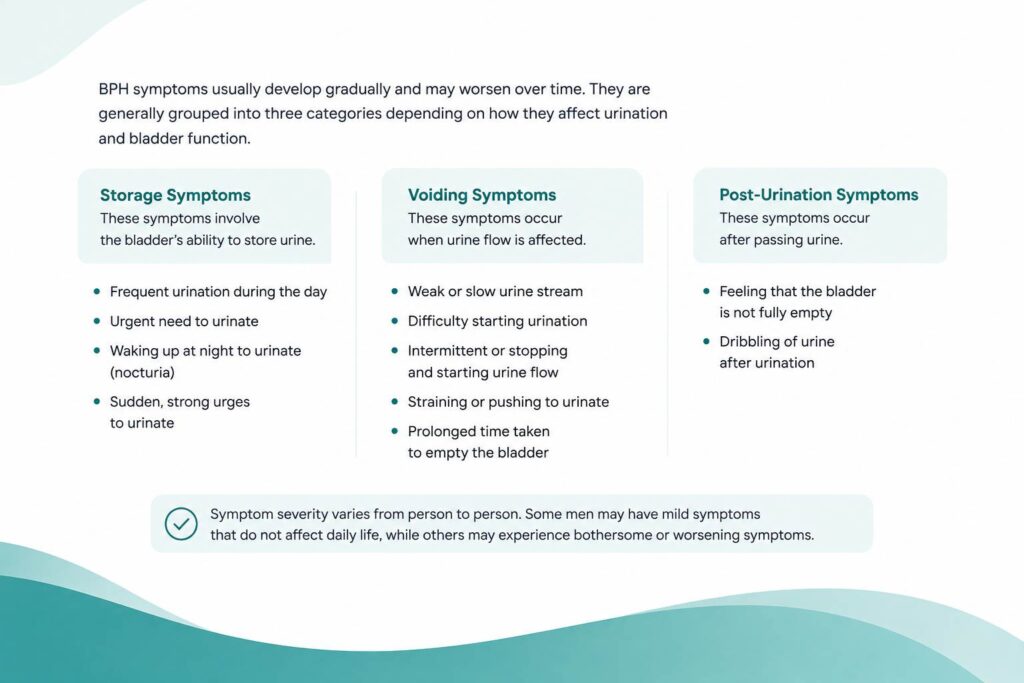
BPH symptoms generally involve problems with storing urine, passing urine, or completely emptying the bladder.
Storage Symptoms
These can include:
- Frequent urination
- Urinary urgency
- Nighttime urination
- Sudden urges to urinate
Voiding Symptoms
These may include:
- Weak urine stream
- Hesitancy
- Intermittent urine flow
- Straining during urination
- A prolonged urination time
Post-Urination Symptoms
These may include:
- Feeling that the bladder has not emptied
- Urine dribbling after urination
Symptoms vary from person to person. The size of the prostate also does not always correspond directly to symptom severity. A relatively small enlargement can sometimes cause significant urinary obstruction, while a larger prostate may cause fewer symptoms.
What Causes BPH
The exact cause of BPH is not completely understood, but aging and hormonal changes are important factors.
As men age, changes involving testosterone, dihydrotestosterone (DHT), and other hormones may contribute to prostate tissue growth.
BPH is therefore strongly associated with advancing age.
Other factors that may be associated with urinary symptoms or BPH progression include:
- Increasing age
- Family history
- Metabolic health factors
- Obesity
- Reduced physical activity
- Cardiovascular risk factors
- Diabetes
Not every man with these factors will develop significant BPH symptoms.
Types of BPH Symptoms
BPH is a single condition, but the symptoms can appear in different patterns.
Obstructive Symptoms
Obstructive symptoms occur when prostate enlargement restricts urine movement through the urethra.
Examples include:
- Weak stream
- Hesitancy
- Straining
- Interrupted flow
- Incomplete emptying
Irritative or Storage Symptoms
Storage symptoms occur when the bladder becomes more sensitive or works harder because of urinary obstruction.
Examples include:
- Urgency
- Frequency
- Nocturia
Understanding your specific symptom pattern helps a urologist determine the appropriate evaluation and treatment strategy.
Why Early BPH Evaluation Matters
Knowing when should you see a urologist for BPH is important because persistent symptoms should not simply be accepted as a normal part of aging.
Early evaluation may help:
- Identify the likely cause of urinary symptoms
- Assess symptom severity
- Determine whether the bladder is emptying properly
- Identify complications
- Discuss appropriate treatment options
- Monitor changes over time
- Improve urinary comfort and quality of life
Evaluation does not necessarily mean that you will need surgery or long-term medication. Some men with mild symptoms may only require monitoring and lifestyle adjustments.
What Happens During a BPH Evaluation
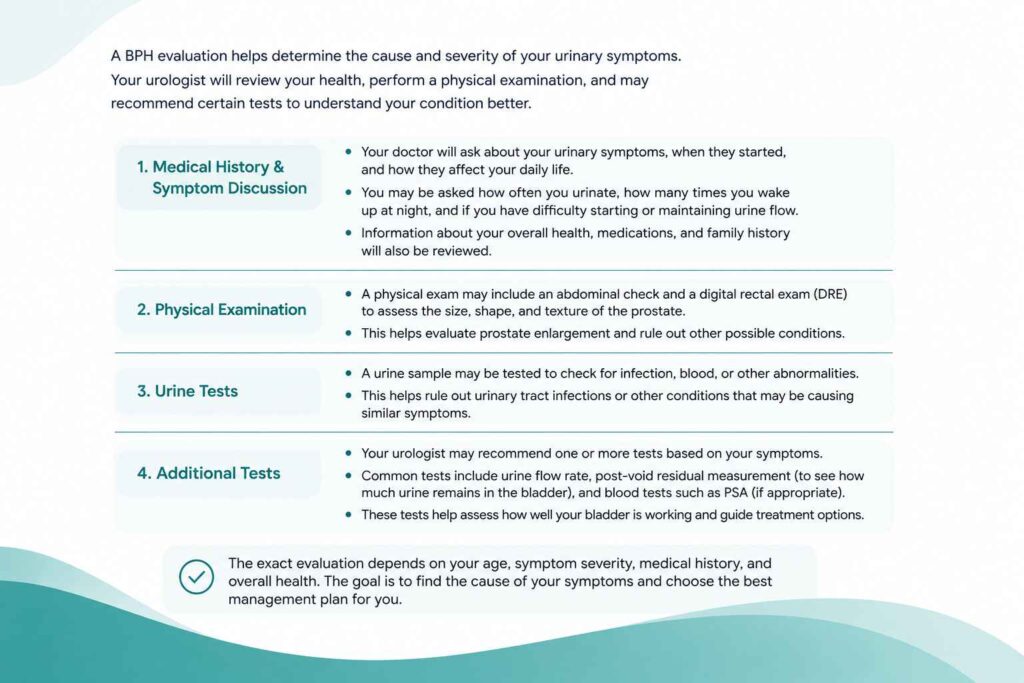
A urologic assessment generally begins with a discussion about your symptoms and medical history.
Your healthcare professional may ask:
- How often do you urinate?
- How many times do you wake at night?
- Is your urine stream weak?
- Do you have difficulty starting urination?
- Do you experience urgency?
- Do you feel your bladder is not empty?
- Have your symptoms become worse?
- Are the symptoms affecting sleep or daily activities?
A symptom questionnaire may also be used to measure the severity of lower urinary tract symptoms.
Depending on your situation, evaluation may include a physical examination, urine testing, prostate assessment, measurement of urine flow, or assessment of bladder emptying.
The exact tests depend on your symptoms, age, medical history, and clinical findings.
BPH Treatment Options
Treatment depends on symptom severity, complications, overall health, and personal preferences.
Lifestyle Changes
For mild symptoms, lifestyle adjustments may sometimes provide useful symptom relief.
Possible strategies include:
- Reducing fluids shortly before bedtime
- Limiting excessive caffeine
- Limiting alcohol if it worsens urinary symptoms
- Avoiding unnecessary fluid restriction during the day
- Maintaining physical activity
- Preventing constipation
- Practicing double voiding when appropriate
- Reviewing medications that may worsen urinary symptoms with a healthcare professional
Lifestyle changes may not eliminate prostate enlargement, but they can sometimes reduce symptom burden.
Watchful Waiting
Men with mild symptoms that do not significantly affect quality of life may be monitored rather than treated immediately.
This approach generally involves tracking symptoms and having periodic medical reviews.
If symptoms become worse, treatment can be reconsidered.
Medicines
Several medication categories can be used to manage BPH-related urinary symptoms.
Alpha blockers can relax smooth muscle around the prostate and bladder neck, helping urine pass more easily.
Other medications can reduce prostate volume over time in selected patients with an enlarged prostate.
Some men may receive combination therapy when appropriate.
Medication choice depends on prostate characteristics, symptoms, other health conditions, and potential side effects. It should be determined by a qualified healthcare professional.
Minimally Invasive Procedures
When medication does not provide adequate relief or is unsuitable, minimally invasive procedures may be considered.
These treatments aim to improve urine flow while limiting the invasiveness associated with traditional surgery.
The most appropriate procedure depends on prostate size, anatomy, symptoms, urinary function, and individual treatment goals.
Surgical Treatment
Surgery may be recommended when BPH causes significant obstruction, persistent symptoms, or complications.
Different surgical techniques are available, including procedures that remove or reduce obstructing prostate tissue.
Surgery is generally considered when the expected benefits outweigh the risks and other management options are not sufficient.
When BPH May Become an Urgent Problem
Some urinary symptoms require prompt medical attention rather than a routine appointment.
Acute Urinary Retention
Suddenly being unable to urinate despite having a strong urge to do so can represent acute urinary retention.
This can be painful and requires urgent medical evaluation.
Blood in the Urine
Visible blood in the urine should be evaluated rather than automatically assuming it is caused by BPH.
There are multiple possible causes of blood in the urine, including urinary tract conditions and prostate problems.
Recurrent Urinary Tract Infections
Repeated urinary tract infections may occur when the bladder does not empty effectively.
Recurrent infections warrant evaluation to identify possible underlying urinary obstruction or other causes.
Severe Urinary Symptoms
Severe pain, inability to urinate, fever associated with urinary symptoms, or significant changes in urinary function should receive prompt medical attention.
Tips for Managing BPH Symptoms
If you have mild urinary symptoms, several practical habits may help.
Keep Track of Your Symptoms
Record how often you urinate, how frequently you wake at night, and whether your urine flow changes.
A simple symptom diary can provide useful information during a medical consultation.
Be Careful With Evening Fluids
If nighttime urination is a problem, reducing excessive fluid intake close to bedtime may help.
However, avoid becoming dehydrated. Your overall fluid needs depend on your health and circumstances.
Monitor Caffeine and Alcohol
Coffee, tea, energy drinks, and alcohol may worsen urinary frequency or urgency in some people.
If you notice a clear relationship, reducing these beverages may help.
Stay Physically Active
Regular physical activity supports general health and may be beneficial for urinary function and metabolic health.
Avoid Ignoring Progressive Symptoms
One of the most important tips is to pay attention to changes.
If your urinary stream becomes weaker, nighttime urination increases, or bladder emptying becomes more difficult, arrange an evaluation rather than continually adjusting your routine around the problem.
BPH vs Prostate Cancer
BPH and prostate cancer are different conditions.
BPH is a non-cancerous enlargement of the prostate. Prostate cancer involves abnormal cancerous growth of prostate cells.
The urinary symptoms of BPH are common, but urinary symptoms alone cannot determine whether someone has prostate cancer.
That is why persistent or changing prostate-related symptoms should be appropriately evaluated.
A urologist can determine which tests, if any, are appropriate based on your individual circumstances.
Benefits of Seeing a Urologist for BPH
Seeking professional evaluation can provide several advantages.
Accurate Assessment
A urologist can determine whether symptoms are consistent with BPH or another condition.
Personalized Treatment
Treatment can be selected according to symptom severity, prostate characteristics, urinary function, and personal needs.
Prevention of Complications
Evaluation can help identify problems such as significant urinary retention, recurrent infections, bladder dysfunction, or kidney-related concerns.
Better Quality of Life
Effective management may improve sleep, daily activities, confidence when traveling, and overall urinary comfort.
Conclusion
Understanding when should you see a urologist for BPH can help you take action before urinary symptoms become more disruptive or lead to complications. Persistent weak urine flow, difficulty starting urination, frequent nighttime urination, incomplete bladder emptying, or worsening symptoms should not be ignored.
BPH is common and treatable, and not every man requires surgery. Depending on symptom severity, management may range from lifestyle adjustments and monitoring to medication, minimally invasive procedures, or surgery.
If urinary symptoms are affecting your sleep, daily activities, travel, or overall quality of life, a professional evaluation can help identify the cause and determine the most appropriate next step.