7 Effective Enlarged Prostate Treatment in Sharjah Guide Now
An enlarged prostate is a common condition in men, particularly with increasing age. It can cause frequent urination, a weak urine stream, difficulty starting urination, or the feeling that the bladder has not completely emptied. Understanding the available enlarged prostate treatment in Sharjah options can help men seek appropriate care before urinary symptoms become more disruptive.
The medical term for an enlarged prostate is benign prostatic hyperplasia (BPH). Although BPH is not prostate cancer, the symptoms can significantly affect sleep, daily activities, travel, work, and overall quality of life. Early assessment can help identify the cause of urinary problems and determine an appropriate treatment approach.
What Is an Enlarged Prostate
The prostate is a small gland located below the bladder and surrounding part of the urethra. It plays an important role in the male reproductive system.
As men age, prostate tissue may gradually increase in size. When the enlarged tissue presses against the urethra or affects bladder function, it can interfere with normal urine flow.
BPH does not automatically mean that a man has prostate cancer. However, similar urinary symptoms can occur with other prostate or urinary conditions. Therefore, proper medical evaluation is important.
Enlarged Prostate Treatment in Sharjah: Understanding BPH
The right enlarged prostate treatment in Sharjah depends on several factors, including:
- Severity of urinary symptoms
- Prostate size
- Bladder function
- Overall health
- Medication history
- Response to previous treatments
- Presence of urinary complications
- Personal preferences and treatment goals
Some men with mild symptoms may only require lifestyle changes and regular monitoring. Others may benefit from prescription medicines or minimally invasive and surgical procedures.
Causes of an Enlarged Prostate
The exact reason why the prostate enlarges with age is not completely understood. However, hormonal changes associated with ageing are believed to contribute to prostate tissue growth.
Several factors may influence the development or progression of BPH.
Age
Age is one of the strongest risk factors. Prostate enlargement becomes increasingly common as men grow older.
Hormonal Changes
Changes in male hormones and their interaction with prostate cells may contribute to prostate growth over time.
Family History
Men with a family history of prostate enlargement may have a greater likelihood of experiencing BPH symptoms.
Lifestyle Factors
Certain lifestyle factors may influence urinary symptoms. Limited physical activity, excessive intake of caffeine or alcohol, and poor bladder habits may make symptoms more noticeable in some men.
Types and Stages of Prostate Enlargement
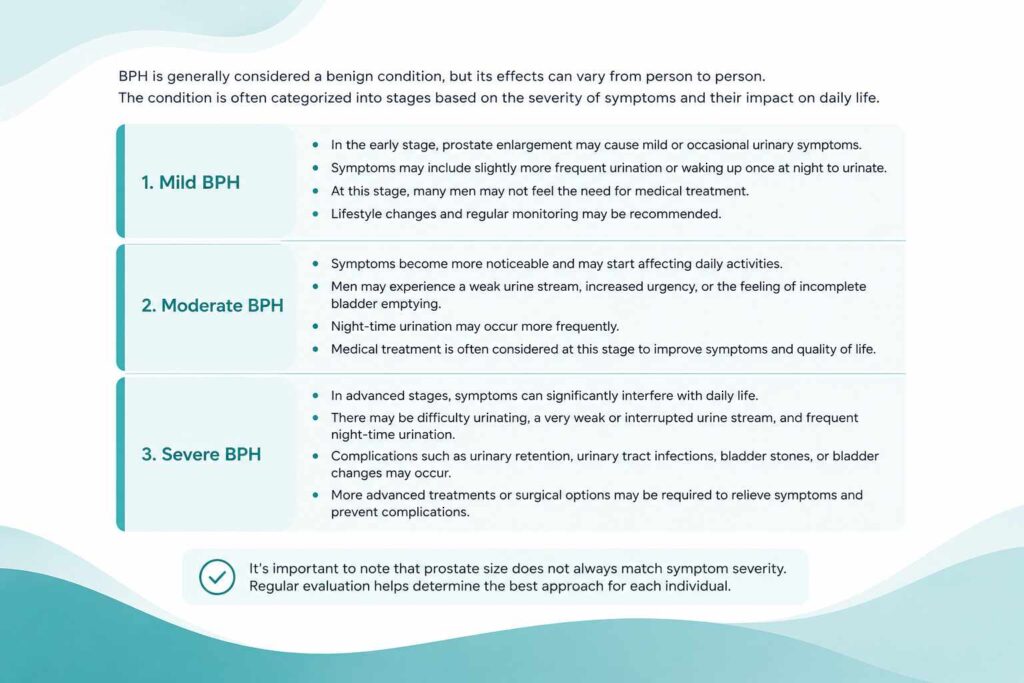
BPH is generally considered a benign condition, but its effects can vary from person to person.
Mild BPH
Mild enlargement may cause occasional urinary symptoms. Some men may not require immediate medical treatment.
Moderate BPH
Moderate symptoms can begin affecting daily life. Men may experience increased urinary frequency, urgency, or a weaker stream.
Severe BPH
Advanced symptoms may significantly interfere with sleep and everyday activities. Some men may develop urinary retention, recurrent urinary infections, bladder stones, or other complications.
The size of the prostate does not always correspond directly to symptom severity. A relatively small enlargement can sometimes cause significant obstruction, while a larger prostate may produce fewer symptoms.
Common Symptoms of an Enlarged Prostate
Recognizing symptoms early can encourage timely evaluation.
Common BPH symptoms include:
- Frequent urination, particularly at night
- Sudden urinary urgency
- Difficulty starting urination
- Weak or slow urine stream
- Urine flow that stops and starts
- Dribbling after urination
- Feeling that the bladder has not fully emptied
- Increased time spent in the bathroom
- Needing to urinate repeatedly during the day
Symptoms can gradually develop, so some men may become accustomed to them and assume they are simply a normal part of ageing.
However, persistent or worsening urinary symptoms should not be ignored.
When Should You Seek Medical Evaluation
A medical evaluation is advisable when urinary symptoms become persistent, bothersome, or progressively worse.
Seek prompt medical attention if you experience:
- Inability to urinate
- Blood in the urine
- Severe lower abdominal discomfort
- Repeated urinary tract infections
- Significant pain during urination
- Sudden worsening of urinary symptoms
Urinary retention, in particular, can require urgent treatment.
How Is an Enlarged Prostate Diagnosed
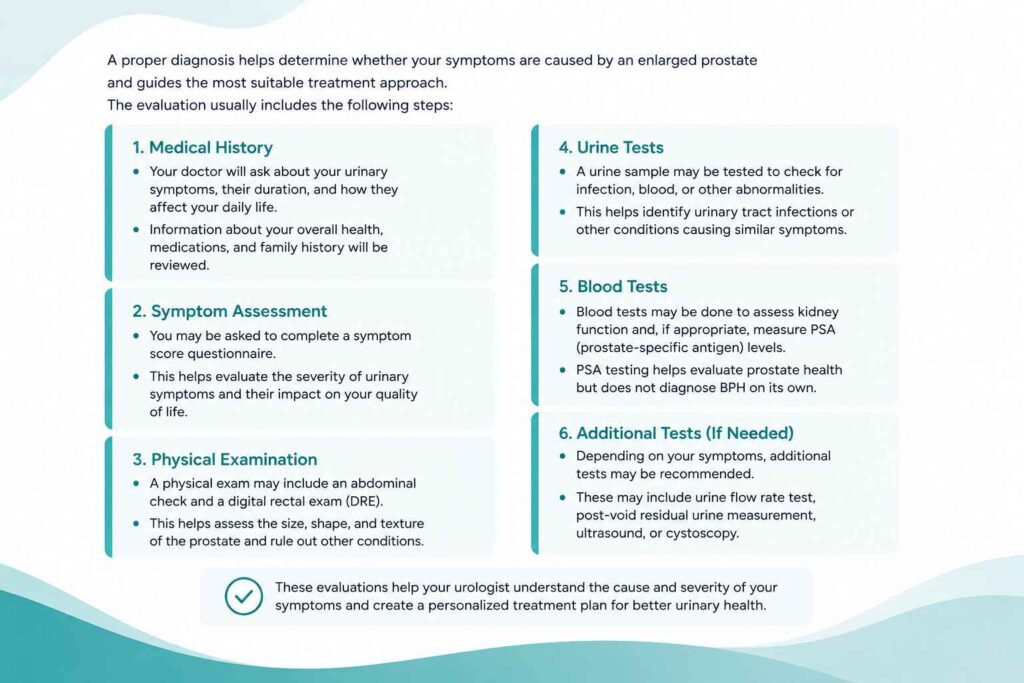
Before selecting an enlarged prostate treatment in Sharjah, a healthcare professional generally needs to understand the symptoms and determine whether BPH is responsible.
Medical History
The evaluation may begin with questions about:
- Urination frequency
- Night-time urination
- Urinary urgency
- Stream strength
- Difficulty starting urination
- Previous urinary problems
- Current medications
- Other health conditions
Symptom Assessment
A standardized questionnaire may be used to assess the severity of lower urinary tract symptoms and their effect on quality of life.
Physical Examination
A physical examination may help assess the prostate and identify other possible causes of urinary symptoms.
Urine Testing
Urine tests can help identify infection, blood, or other abnormalities that may contribute to urinary problems.
Blood Tests
Depending on the situation, blood testing may be recommended to evaluate kidney function or assess prostate-related concerns.
Additional Testing
Some men may require tests such as:
- Ultrasound
- Uroflowmetry
- Post-void residual urine measurement
- Cystoscopy
- Additional prostate evaluation
The specific tests depend on symptoms and clinical findings.
7 Effective Enlarged Prostate Treatment Options
There is no single treatment that is ideal for every man. The goal is to relieve symptoms, improve urinary flow, prevent complications, and maintain quality of life.
1. Watchful Waiting
Men with mild symptoms may not require immediate medication or surgery.
Instead, healthcare professionals may recommend monitoring symptoms and making lifestyle adjustments.
Regular follow-up can determine whether the condition is stable or progressing.
2. Lifestyle Changes
Lifestyle measures can sometimes reduce urinary discomfort.
Helpful strategies may include:
- Reducing fluids close to bedtime
- Limiting excessive caffeine
- Moderating alcohol intake
- Avoiding prolonged holding of urine
- Maintaining physical activity
- Emptying the bladder fully
- Reviewing medications that may worsen urinary symptoms with a healthcare professional
Lifestyle changes are generally more useful for symptom management than for physically reducing prostate size.
3. Alpha-Blocker Medicines
Alpha-blockers relax muscles around the prostate and bladder neck. This can improve urine flow and make urination easier.
They may work relatively quickly for some men, but they do not necessarily shrink the prostate.
Possible side effects can include dizziness, low blood pressure, or changes in ejaculation, depending on the medication.
4. 5-Alpha-Reductase Inhibitors
These medicines can reduce the effects of hormones involved in prostate growth and may gradually decrease prostate volume.
They are generally more useful for men with larger prostates and may take longer to produce noticeable benefits.
Possible side effects may include reduced libido, erectile difficulties, or changes in ejaculation.
5. Combination Medication
Some men may benefit from combining different types of BPH medicines.
Combination treatment may address both urinary obstruction and prostate growth, particularly when symptoms are more significant.
The choice should be based on prostate characteristics, symptoms, other medications, and individual health factors.
6. Minimally Invasive Procedures
When medication does not provide sufficient relief, minimally invasive treatments may be considered.
Depending on the patient’s condition and the available technology, options can include procedures designed to reduce prostate tissue or relieve obstruction while minimizing tissue damage.
Potential advantages may include:
- Less invasive treatment
- Shorter recovery in some cases
- Improved urinary flow
- Reduction in bothersome symptoms
Suitability varies between patients.
7. Surgical Treatment
Surgery may be recommended when symptoms are severe, medications are ineffective or unsuitable, or complications develop.
Procedures may remove or reduce obstructing prostate tissue to improve urine flow.
The specific procedure depends on factors such as prostate size, anatomy, symptoms, previous treatments, and overall health.
Benefits of Appropriate BPH Treatment
Choosing suitable enlarged prostate treatment in Sharjah can provide several potential benefits.
Improved Urine Flow
Treatment can reduce obstruction and help urine pass more easily.
Fewer Night-Time Urination Episodes
Better symptom control may reduce the need to wake repeatedly during the night.
Better Bladder Emptying
Reducing obstruction can help improve bladder emptying in appropriate patients.
Improved Daily Comfort
Urinary urgency and frequent bathroom visits can interfere with work, travel, social activities, and sleep. Effective treatment may reduce these disruptions.
Reduced Risk of Complications
Appropriate management can help reduce the likelihood of complications associated with significant urinary obstruction.
What Happens If an Enlarged Prostate Is Left Untreated
Not every case of BPH requires immediate treatment. However, persistent and worsening symptoms should be evaluated.
Untreated significant obstruction may contribute to:
- Acute or chronic urinary retention
- Recurrent urinary infections
- Bladder stones
- Bladder muscle changes
- Kidney-related complications in severe cases
- Increasingly bothersome urinary symptoms
Regular evaluation helps determine whether observation remains appropriate.
Tips for Managing Enlarged Prostate Symptoms
Alongside medical treatment, practical habits may help manage symptoms.
Reduce Evening Fluid Intake
Drinking large quantities of fluid shortly before bedtime can increase night-time urination.
Limit Caffeine
Coffee, tea, energy drinks, and other caffeinated beverages may increase urinary frequency or urgency in some men.
Be Careful With Alcohol
Alcohol can affect bladder function and may increase urine production.
Stay Physically Active
Regular physical activity supports general health and may help with urinary symptoms.
Do Not Ignore Persistent Symptoms
Gradually worsening urinary symptoms should not simply be attributed to ageing. An evaluation can determine the underlying cause.
Enlarged Prostate Treatment and Quality of Life
BPH is not always a serious condition, but its symptoms can have a substantial effect on everyday life.
Repeatedly waking during the night can contribute to daytime tiredness. Urinary urgency may make travel or social activities uncomfortable. A weak stream or difficulty starting urination can make bathroom visits longer and more frustrating.
Effective treatment focuses not only on prostate size but also on how symptoms affect the individual.
The best approach is therefore personalized rather than based solely on age or prostate measurements.
How to Choose the Right Treatment
The appropriate enlarged prostate treatment in Sharjah should be determined after considering the complete clinical picture.
Important factors include:
- Symptom severity
- Prostate size
- Urinary flow
- Residual urine volume
- Bladder health
- Existing medical conditions
- Current medicines
- Previous BPH treatments
- Potential treatment side effects
- Personal treatment preferences
A treatment that works well for one person may not be appropriate for another.
Conclusion
An enlarged prostate is common with ageing, but bothersome urinary symptoms should not simply be accepted as an unavoidable part of getting older. From lifestyle management and medicines to minimally invasive procedures and surgery, there are several approaches to enlarged prostate treatment in Sharjah. A proper evaluation can identify the severity of BPH, rule out other causes of urinary symptoms, and help determine the most suitable treatment strategy for each individual. For trusted information on BPH diagnosis and treatment options, visit Mayo Clinic’s BPH diagnosis and treatment guide.