
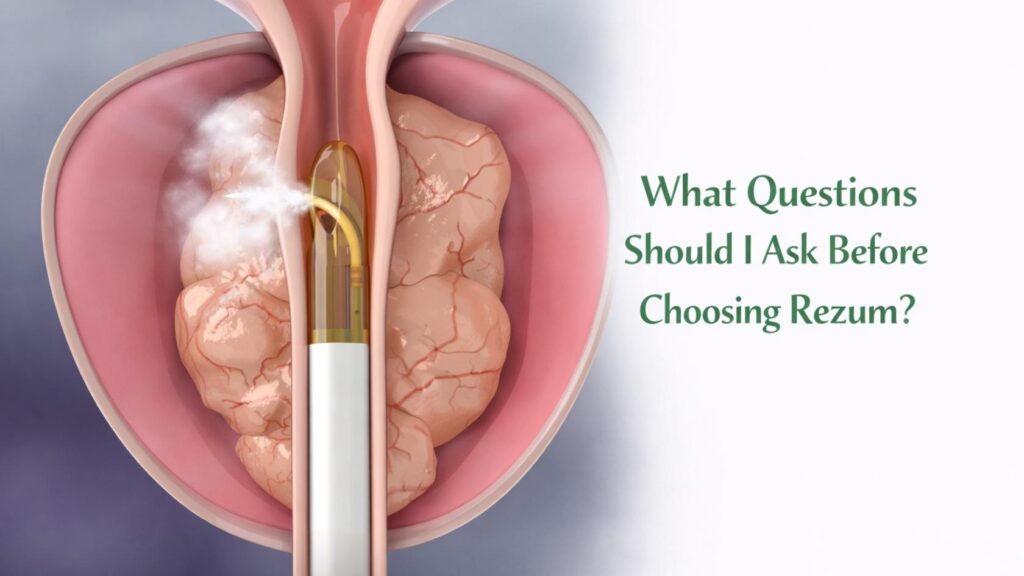
What Questions Should I Ask Before Choosing Rezum?
Questions before choosing Rezum are important for anyone considering this minimally invasive treatment for benign prostatic hyperplasia (BPH). Understanding candidacy, risks, recovery, and expected outcomes helps ensure confident decision-making.. Since Rezum is a minimally invasive treatment, understanding candidacy, procedure details, recovery expectations, and possible risks is essential before making a decision.
This page outlines the key questions you should ask during your consultation so you can make an informed and confident treatment choice.
Why Asking the Right Questions Matters
Before undergoing any medical procedure, especially one that affects urinary and sexual function, it is important to fully understand:
Whether you are an ideal candidate
How the procedure works
What risks are involved
What recovery will be like
What results you can realistically expect
Discussing these aspects helps you align treatment expectations with your personal health condition.
1. Questions About Candidacy and Assessment
Not every patient with prostate enlargement is automatically suitable for Rezum therapy. The first step is confirming whether your prostate characteristics and overall health make you a good candidate.
Questions to Ask:
Based on my prostate size and shape, am I an ideal candidate for Rezum?
(Rezum is typically suitable for prostates between 30 cm³ and 80 cm³ and often for those with a median lobe.)Have my recent PSA levels been reviewed?
Has a prostate ultrasound been performed to rule out other conditions?
How does my overall health affect treatment success, including:
Existing urinary issues
Bladder function
Cardiovascular health
What diagnostic tests will be performed to confirm candidacy?
These may include:Urine analysis
Flow rate testing
Residual urine measurement
These assessments help ensure that symptoms are truly due to benign prostate enlargement.
2. Questions About the Procedure and Technology
Understanding how the procedure is performed allows you to feel prepared and comfortable.
Questions to Ask:
Will this procedure be done in a clinic setting or hospital?
What type of anesthesia or sedation will be used?
Most Rezum treatments are performed using:Local anesthesia
Oral medication
Light sedation
How many steam injections will I likely need?
How long does the procedure usually take?
How does Rezum compare with other treatment options I may be considering, such as:
UroLift
TURP
Discussing alternatives helps you understand why Rezum may be recommended for your condition.
3. Questions About Risks, Side Effects, and Sexual Function
Because prostate procedures can affect urinary and sexual health, discussing possible risks is essential.
Questions to Ask:
What are the most common short-term side effects?
These may include:Temporary urinary urgency
Frequency
Mild blood in urine or semen
What is the risk of needing a long-term catheter?
How likely is reduced ejaculation volume?
Will this procedure affect erectile function?
What are the chances of:
Urethral narrowing
Urinary leakage
Understanding these aspects helps you weigh benefits against potential side effects.
4. Questions About Recovery and Expected Results
Recovery is a gradual process after Rezum therapy. Asking about the timeline helps set realistic expectations.
Questions to Ask:
How long will I need to use a urinary catheter afterward?
(Typically 3–7 days.)When should I expect improvement in urine flow?
Early improvement: around 2–4 weeks
Maximum benefit: up to 3 months
How long do Rezum results usually last?
If the procedure does not provide enough relief, can it be repeated?
These discussions help you plan work leave and personal activities.
5. Questions About Preparation and Logistics
Planning ahead reduces last-minute confusion.
Questions to Ask:
Do I need to stop taking blood thinners or other medications?
Will I need antibiotics before or after the procedure?
How long will I need to take off from work?
When can I resume:
Exercise
Driving
Normal daily activities
Is this procedure covered by insurance?
These practical considerations help avoid surprises.
Summary Checklist for Suitable Candidates
You may be considered a suitable candidate if:
You are over 50 years old
You have an enlarged prostate
Prostate volume is between 30cc and 80cc
You experience moderate to severe urinary symptoms
This checklist should always be confirmed through professional evaluation.
Final Thoughts
Asking the right questions before choosing Rezum therapy helps you understand your eligibility, the procedure itself, recovery expectations, and possible outcomes. A thorough consultation ensures that treatment decisions are personalized and aligned with your health needs.
Taking time to discuss candidacy, risks, and long-term results allows you to approach Rezum therapy with clarity and confidence.
Frequently Asked Questions
1. Why is it important to ask questions before choosing Rezum therapy?
Asking questions helps you understand eligibility, risks, recovery, and expected results before undergoing Rezum treatment.
2. What should I ask about my suitability for Rezum therapy?
You should ask whether your prostate size, shape, and health condition make you an ideal candidate for the procedure.
3. What tests are needed before choosing Rezum treatment?
Common tests may include PSA testing, ultrasound, urine analysis, and urine flow rate assessment.
4. Should I ask about anesthesia options for Rezum?
Yes, it is important to understand what type of anesthesia or sedation will be used during the procedure.
5. What risks should I discuss before Rezum therapy?
Discuss possible short-term side effects like urinary urgency, temporary discomfort, or mild blood in urine.
6. Will Rezum affect sexual function?
It is important to ask about potential effects on ejaculation or erectile function, even though risks are generally low.
7. How long is the recovery after Rezum therapy?
Most improvements begin within weeks, while full results may develop over a few months.
8. Can Rezum treatment be repeated if needed?
Yes, in some cases the procedure may be repeated if symptoms return or improvement is limited.
9. Should I ask about medication adjustments before Rezum?
Yes, some medications like blood thinners may need temporary adjustment before treatment.
10. Is it important to discuss alternative treatments before choosing Rezum?
Yes, comparing Rezum with other options like TURP or UroLift helps you make an informed decision.