7 Powerful Reasons to Choose Rezum Therapy Specialist in Dubai
An enlarged prostate can gradually affect daily life by causing frequent urination, weak urine flow, interrupted sleep, and difficulty emptying the bladder. Many men look for treatments that can relieve these symptoms while avoiding major surgery. If you are searching for a Rezum Therapy Specialist in Dubai, understanding how this modern treatment works can help you make an informed decision. This guide explains everything from symptoms and diagnosis to treatment, recovery, benefits, and long-term care in simple language.
Rezum therapy has become a preferred minimally invasive treatment for benign prostatic hyperplasia (BPH). Instead of removing prostate tissue through surgery, it uses the natural energy stored in water vapor to shrink enlarged prostate tissue. The procedure is designed to improve urinary symptoms while preserving surrounding healthy structures.
Whether you have recently been diagnosed with BPH or are exploring alternatives to long-term medication, learning about Rezum therapy can help you understand why it has become a widely accepted treatment option.
What Is Rezum Therapy
Rezum therapy is a minimally invasive procedure developed to treat benign prostatic hyperplasia (BPH), also known as an enlarged prostate.
The treatment works by delivering controlled doses of sterile water vapor directly into the enlarged prostate tissue. As the steam releases thermal energy, excess prostate cells are destroyed naturally. Over the following weeks, the body gradually absorbs these treated cells, reducing prostate size and improving urine flow.
Unlike conventional surgery, Rezum therapy does not involve cutting away prostate tissue. This approach often results in a shorter recovery period and a lower risk of complications for suitable patients.
How Rezum Therapy Works
The procedure follows a straightforward process:
- A small handheld device is inserted through the urethra.
- Tiny injections of sterile water vapor are delivered into targeted prostate tissue.
- The steam transfers heat to enlarged cells.
- The treated cells gradually die.
- The body naturally removes these cells over several weeks.
- Pressure on the urethra decreases.
- Urinary symptoms continue improving as healing progresses.
Since only the enlarged tissue is treated, healthy surrounding structures remain largely unaffected.
Understanding Benign Prostatic Hyperplasia (BPH)
Benign prostatic hyperplasia is a non-cancerous enlargement of the prostate gland. It commonly develops as men grow older.
The prostate surrounds part of the urethra. As it enlarges, it compresses the urinary passage, making it difficult for urine to flow normally.
Common urinary problems include:
- Weak urine stream
- Frequent urination
- Urgency to urinate
- Difficulty starting urination
- Dribbling after urination
- Feeling that the bladder is not completely empty
- Interrupted sleep due to nighttime urination
Without treatment, severe BPH may eventually lead to bladder damage, urinary retention, recurrent urinary infections, or kidney complications.
Causes of Enlarged Prostate
Several factors contribute to prostate enlargement.
Aging
The most common cause is the natural aging process. The likelihood of BPH increases significantly after the age of 50.
Hormonal Changes
Changes in testosterone and other hormones can stimulate prostate tissue growth over time.
Family History
Men with close relatives who have experienced BPH may have a greater chance of developing the condition.
Lifestyle Factors
Certain lifestyle habits may increase the risk, including:
- Physical inactivity
- Obesity
- Poor dietary habits
- Metabolic disorders
Chronic Health Conditions
Conditions such as diabetes and cardiovascular disease may also contribute to prostate enlargement.
Symptoms That May Indicate You Need a Rezum Therapy Specialist
Many urinary symptoms gradually worsen over time.
Common symptoms include:
- Frequent daytime urination
- Frequent nighttime urination
- Sudden urge to urinate
- Difficulty starting urination
- Weak urinary stream
- Interrupted urine flow
- Dribbling after urination
- Feeling of incomplete bladder emptying
- Straining while urinating
- Recurrent urinary tract infections
- Urinary retention
If medications are no longer providing relief, evaluation for Rezum therapy may be considered.
Who Can Benefit from a Rezum Therapy Specialist
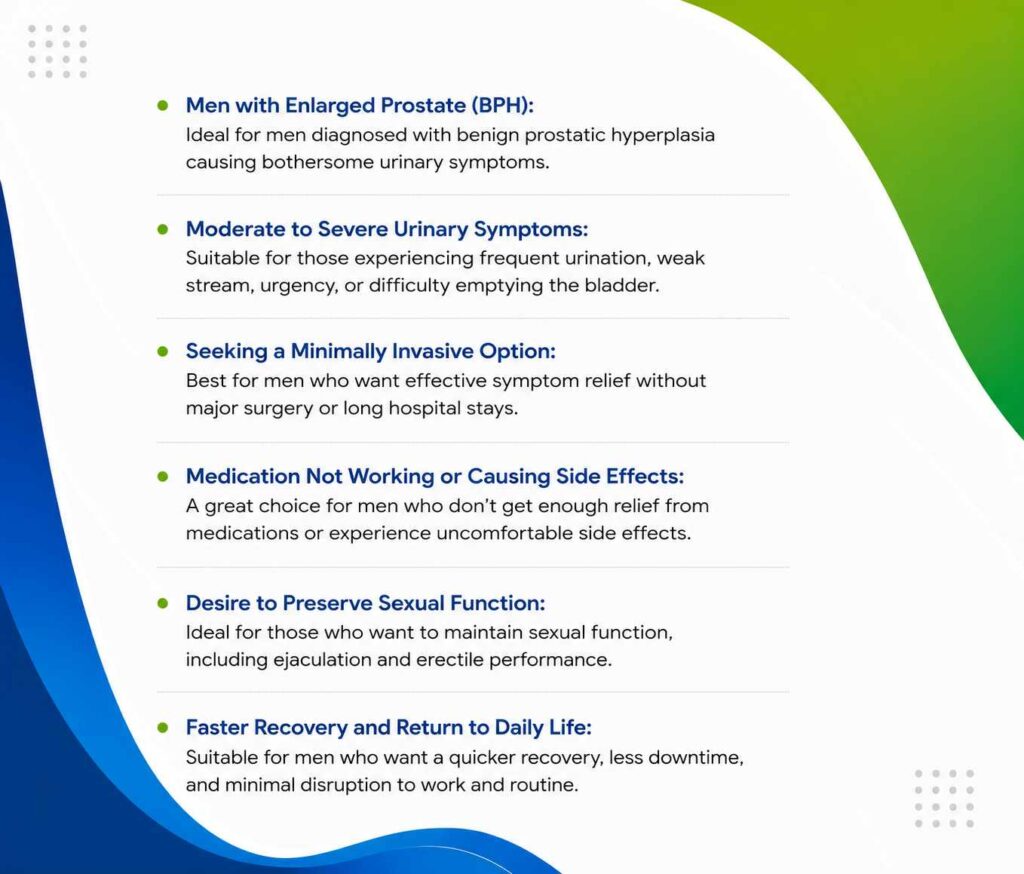
Many patients with moderate urinary symptoms may be suitable candidates.
People who often benefit include:
- Men diagnosed with benign prostatic hyperplasia
- Patients wishing to avoid major surgery
- Individuals seeking minimally invasive treatment
- Men experiencing medication side effects
- Patients with moderate prostate enlargement
- Individuals wanting faster recovery
- Men looking to preserve normal daily activities
Suitability depends on prostate size, anatomy, overall health, and individual symptoms.
When Is Rezum Therapy Recommended?
A healthcare provider may recommend Rezum therapy when:
- Symptoms interfere with daily life.
- Medications no longer provide adequate relief.
- Side effects from medication become troublesome.
- Surgery is not preferred.
- The enlarged prostate is causing bladder obstruction.
- Quality of life continues to decline.
A complete medical evaluation determines whether this treatment is appropriate.
Diagnosis Before Rezum Therapy
Before recommending treatment, several assessments help determine the underlying cause of urinary symptoms.
Medical History
Your symptoms, medications, previous illnesses, and overall health are carefully reviewed.
Physical Examination
A physical examination helps assess prostate enlargement and identify other possible concerns.
Digital Rectal Examination (DRE)
This examination allows evaluation of the prostate’s size and consistency.
Urine Testing
Urine tests help rule out infection or blood in the urine.
Blood Tests
Blood investigations may include prostate-specific antigen (PSA) and kidney function tests.
Ultrasound
Imaging evaluates prostate size and urinary tract anatomy.
Uroflowmetry
This test measures urine flow strength.
Post-Void Residual Measurement
It determines how much urine remains inside the bladder after urination.
Cystoscopy
A thin camera may be used when detailed visualization of the urinary tract is necessary.
Different Types of BPH Treatment
Treatment depends on symptom severity, prostate size, and patient preference.
Lifestyle Management
For mild symptoms, simple lifestyle adjustments may help improve bladder function.
Examples include:
- Limiting caffeine
- Reducing alcohol intake
- Drinking fluids earlier in the day
- Regular exercise
- Maintaining healthy weight
Medication
Several medications relax prostate muscles or reduce prostate size.
These medications may relieve symptoms but often require long-term use.
Minimally Invasive Procedures
Options include:
- Rezum Therapy
- UroLift
- Water-based therapies
- Other minimally invasive procedures
These approaches aim to improve symptoms with less recovery time than traditional surgery.
Surgical Treatments
For larger prostates or severe obstruction, surgery may be recommended.
Common procedures include:
- TURP
- HoLEP
- Laser prostate surgery
- Open prostate surgery
Why Many Patients Choose a Rezum Therapy Specialist
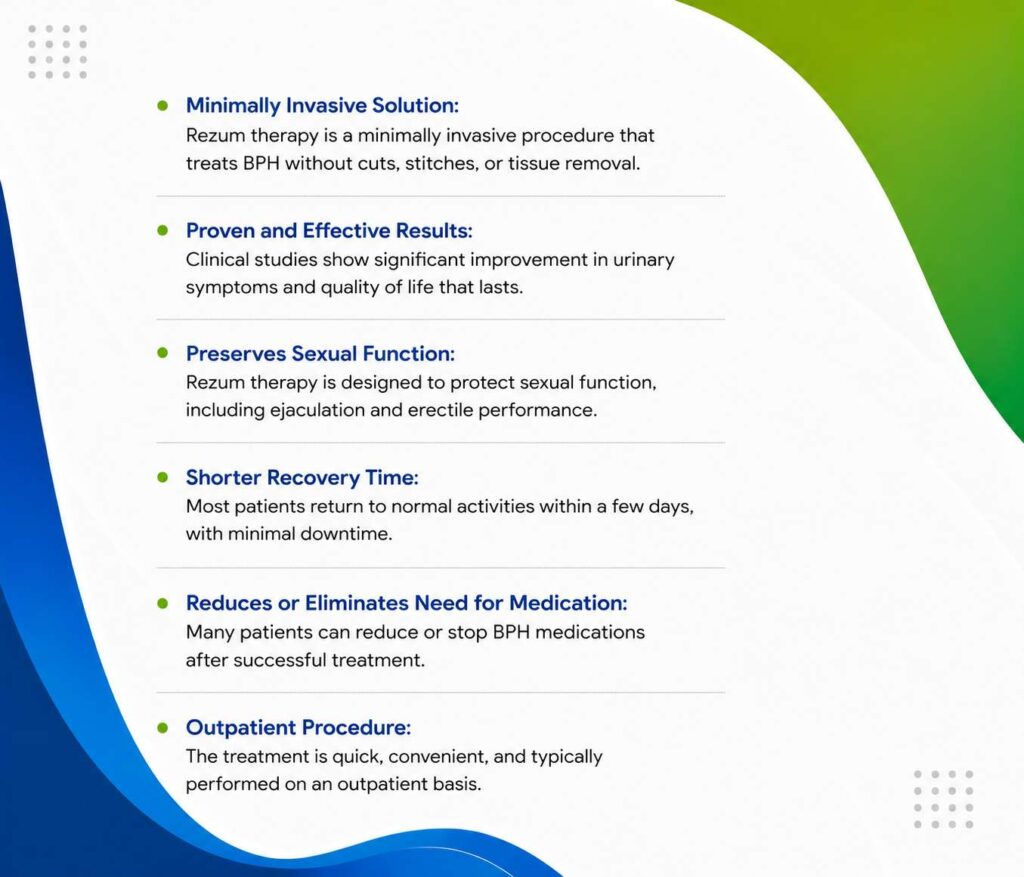
Rezum therapy offers several advantages compared with conventional treatment.
Some important reasons include:
- No surgical incision
- Minimally invasive procedure
- Short treatment duration
- Natural removal of excess tissue
- Reduced hospital stay
- Faster return to daily activities
- Lower risk of significant bleeding
- Preservation of surrounding structures
- Long-lasting symptom improvement
- Reduced dependence on medication
Preparing for Rezum Therapy
Proper preparation improves safety and recovery.
Patients are commonly advised to:
- Discuss all current medications
- Inform the healthcare team about allergies
- Follow fasting instructions if required
- Arrange transportation after the procedure
- Complete recommended blood tests
- Undergo imaging if advised
- Follow pre-procedure instructions carefully
The Rezum Therapy Procedure: Step by Step
Understanding what happens during the procedure can help reduce anxiety and prepare you for treatment.
Before the Procedure
Before treatment begins, the healthcare team confirms your medical history and reviews test results. The procedure is usually performed using local anesthesia, sedation, or another suitable form of anesthesia based on your condition.
You may be asked to empty your bladder before the procedure starts.
During the Procedure
The treatment generally follows these steps:
- A specialized device is gently inserted through the urethra.
- The enlarged prostate tissue is identified.
- Controlled doses of sterile water vapor are delivered into specific areas of the prostate.
- Each steam injection lasts only a few seconds.
- Multiple injections may be required depending on prostate size.
- The device is removed after treatment is complete.
The actual treatment usually takes only a short time, although preparation and observation may extend your visit.
How Rezum Therapy Improves Urinary Symptoms
Rezum therapy treats the underlying cause of urinary obstruction rather than simply masking symptoms.
Once the treated prostate cells begin to disappear naturally, pressure on the urethra decreases. As healing continues, patients often notice gradual improvements in urinary function.
Many people experience improvement in:
- Urine flow
- Bladder emptying
- Urinary urgency
- Frequent urination
- Nighttime urination
- Urinary comfort
- Overall quality of life
Symptom improvement is usually gradual rather than immediate because the body needs time to absorb the treated tissue.
Benefits of Choosing a Rezum Therapy Specialist
One reason many patients prefer Rezum therapy is its balance between effectiveness and minimal invasiveness.
Minimally Invasive Treatment
No surgical cuts or large incisions are required.
Short Procedure Time
The procedure is generally completed within a relatively short period.
Faster Recovery
Compared with traditional prostate surgery, recovery is often quicker for suitable patients.
Lower Risk of Bleeding
Because tissue is treated with water vapor rather than surgically removed, significant bleeding is less common.
Preserves Healthy Tissue
Only the enlarged prostate tissue is targeted.
Long-Lasting Relief
Many patients continue to experience improvement for years following treatment.
Reduced Need for Medication
Some patients are able to reduce or discontinue long-term BPH medications after successful treatment.
Improved Sleep
Reduced nighttime urination often leads to better sleep quality.
Better Daily Comfort
Improved bladder function can make work, travel, and daily activities more comfortable.
Outpatient Procedure
Many patients return home the same day.
Possible Risks and Side Effects
Like any medical procedure, Rezum therapy has potential risks. Most side effects are temporary and improve during healing.
Possible temporary side effects include:
- Mild burning during urination
- Blood in the urine
- Blood in the semen
- Increased urinary frequency
- Mild discomfort
- Urgent need to urinate
- Temporary urinary retention
- Mild pelvic soreness
Less common complications may include:
- Urinary tract infection
- Difficulty urinating requiring temporary catheterization
- Inflammation
- Delayed healing
Most patients recover without major complications when post-procedure instructions are followed carefully.
Recovery After Rezum Therapy
Recovery is generally smoother than with many traditional surgical procedures, although healing varies between individuals.
First Few Days
Patients may notice:
- Mild urinary discomfort
- Frequent urination
- Slight burning sensation
- Small amounts of blood in the urine
These symptoms are usually temporary.
First Few Weeks
During the healing period:
- Swelling gradually decreases.
- The body absorbs treated prostate tissue.
- Urinary flow begins to improve.
- Bladder function becomes more comfortable.
Long-Term Recovery
Many patients continue noticing improvement over several weeks and months as healing progresses.
Catheter Care After Treatment
Some patients may temporarily require a urinary catheter after the procedure.
If a catheter is used:
- Keep the drainage bag below bladder level.
- Wash your hands before handling the catheter.
- Keep the catheter area clean.
- Drink adequate fluids unless otherwise advised.
- Contact your healthcare provider if drainage stops or severe discomfort develops.
The catheter is usually removed after a short period, depending on recovery.
Post-Treatment Care Tips
Following aftercare instructions can support healing and improve outcomes.
Helpful recovery tips include:
- Drink enough water.
- Avoid heavy lifting for several days.
- Take prescribed medications as directed.
- Avoid strenuous exercise until cleared.
- Do not ignore the urge to urinate.
- Attend all follow-up appointments.
- Follow catheter care instructions if applicable.
- Eat a balanced diet.
- Get adequate rest.
- Report persistent fever, severe pain, or inability to urinate.
Lifestyle Habits That Support Prostate Health
Healthy lifestyle choices may help improve urinary health and overall well-being.
Stay Physically Active
Regular exercise supports healthy circulation and weight management.
Maintain a Healthy Weight
Excess weight may worsen urinary symptoms.
Eat a Balanced Diet
Include foods such as:
- Fruits
- Vegetables
- Whole grains
- Healthy fats
- Lean protein
Stay Hydrated
Drink sufficient fluids while avoiding excessive intake close to bedtime.
Limit Bladder Irritants
Some people find symptom relief by reducing:
- Caffeine
- Alcohol
- Carbonated beverages
- Highly spicy foods
Avoid Smoking
Smoking may negatively affect overall urinary and vascular health.
Manage Chronic Conditions
Proper control of diabetes, blood pressure, and heart disease contributes to better overall health.
When to Contact Your Healthcare Provider
Seek medical advice if you experience:
- Persistent fever
- Severe pain
- Heavy bleeding
- Complete inability to urinate
- Large blood clots
- Persistent catheter blockage
- Symptoms that worsen instead of improving
Prompt evaluation helps prevent complications.
Rezum Therapy Compared with Other BPH Treatments
| Treatment | Invasiveness | Hospital Stay | Recovery | Tissue Removal |
|---|---|---|---|---|
| Rezum Therapy | Minimally invasive | Usually same day | Relatively quick | No surgical removal |
| Medication | Non-invasive | Not required | Immediate use | No |
| TURP | Surgical | Often required | Longer | Yes |
| HoLEP | Laser surgery | Often required | Moderate | Yes |
| Open Prostate Surgery | Major surgery | Required | Longest | Yes |
Each treatment has its own advantages. The most appropriate option depends on prostate size, symptom severity, overall health, and personal treatment goals.
Long-Term Outlook After Rezum Therapy
Many patients experience meaningful improvement in urinary symptoms and quality of life after treatment. Regular follow-up helps monitor recovery and assess symptom improvement over time.
Maintaining healthy lifestyle habits, attending scheduled reviews, and reporting any recurring urinary problems early can contribute to long-term success after Rezum therapy.
Conclusion
Choosing a Rezum Therapy Specialist in Dubai can be an important step toward managing the symptoms of benign prostatic hyperplasia (BPH) with a minimally invasive approach. Rezum therapy uses the natural energy of water vapor to reduce enlarged prostate tissue, helping improve urine flow while preserving surrounding healthy structures.
Although every patient is different, many people experience lasting symptom relief, improved bladder function, and a quicker recovery compared with traditional surgical treatments. A thorough evaluation helps determine whether this treatment is suitable based on prostate size, symptoms, and overall health. By understanding the procedure, preparing properly, and following recommended aftercare, patients can support a smoother recovery and better long-term outcomes. If persistent urinary symptoms are affecting your quality of life, consulting a Rezum Therapy Specialist in Dubai can help you explore the most appropriate treatment options. For more information about benign prostatic hyperplasia (BPH) and its treatment options, visit the official Urology Care Foundation .
Frequently Asked Questions
What is Rezum therapy
Rezum therapy is a minimally invasive treatment for benign prostatic hyperplasia (BPH) that uses sterile water vapor to shrink enlarged prostate tissue and improve urinary symptoms.
Who is a suitable candidate for Rezum therapy
Men with moderate urinary symptoms caused by an enlarged prostate who want an alternative to long-term medication or major surgery may be suitable candidates after medical evaluation.
How long does the Rezum procedure take
The treatment itself is usually completed within a short period, although the total visit may take longer due to preparation and recovery.
Is Rezum therapy painful
Most patients receive local anesthesia or sedation to keep the procedure comfortable. Mild discomfort during recovery is generally temporary.
How soon will I notice improvement
Some patients notice gradual improvement within a few weeks, while maximum benefits may continue developing over several months as the body absorbs the treated tissue.
Are there any side effects
Temporary side effects may include burning during urination, frequent urination, mild blood in the urine, urinary urgency, or temporary discomfort.
Will I need a urinary catheter
Some patients require a temporary catheter after the procedure. The duration depends on individual recovery and medical advice.
Can Rezum therapy replace prostate surgery
For many suitable patients, Rezum therapy offers an effective minimally invasive alternative to traditional surgery, although treatment recommendations vary depending on prostate size and overall condition.
How long do the results last
Many patients continue to experience symptom improvement for several years, though regular follow-up is important to monitor long-term outcomes.
What lifestyle changes support recovery after Rezum therapy
Drinking enough water, following medication instructions, avoiding heavy lifting during recovery, maintaining a healthy weight, exercising regularly, and attending follow-up appointments all help support healing.