7 Powerful Facts About Rezum Treatment for Enlarged Prostate
Rezum Treatment is a minimally invasive procedure used to treat urinary problems caused by an enlarged prostate, also known as benign prostatic hyperplasia (BPH). For men looking for an alternative to long-term medication or more invasive prostate procedures, this treatment can be an important option to discuss with a qualified healthcare professional. In Thrissur, understanding how Rezum Treatment works can help men make informed decisions about managing prostate-related urinary symptoms.
An enlarged prostate is common as men get older. Although BPH is not prostate cancer, the enlarged tissue can press against the urethra and interfere with normal urine flow. This may lead to frequent urination, a weak urine stream, difficulty starting urination, or the feeling that the bladder has not emptied completely.
Rezum Treatment uses controlled steam energy to target excess prostate tissue. Over time, the treated tissue shrinks, helping to reduce pressure around the urethra and improve urine flow.
What Is Rezum Treatment
Rezum Treatment is a water-vapor therapy designed to reduce excess prostate tissue responsible for urinary obstruction. Instead of cutting or removing prostate tissue, the procedure delivers small amounts of sterile steam directly into targeted areas of the prostate.
The heat from the steam damages selected prostate cells. During the weeks and months following treatment, the body’s natural healing process removes the treated tissue. As the tissue decreases, the prostate may place less pressure on the urethra.
How Does Rezum Treatment Work?
The procedure generally involves several important steps:
- A healthcare professional evaluates the prostate and urinary symptoms.
- A thin treatment device is guided through the urethra.
- Small amounts of steam are delivered into selected areas of prostate tissue.
- The steam transfers thermal energy into the targeted tissue.
- Treated cells gradually break down and are absorbed by the body.
- The prostate gradually becomes less obstructive.
- Urine can pass through the urethra more easily.
Unlike procedures that physically remove large amounts of prostate tissue, Rezum Treatment works through targeted thermal therapy.
What Causes an Enlarged Prostate
The prostate is a gland located below the bladder and surrounding part of the urethra. With aging, prostate cells can gradually increase in number, causing the gland to become larger.
The exact cause of BPH is not completely understood, but aging and hormonal changes are considered important factors.
Common Factors Associated With BPH
Factors that may be associated with prostate enlargement include:
- Increasing age
- Changes in male hormone levels
- Family history of prostate problems
- Metabolic and cardiovascular health factors
- Lifestyle-related factors
An enlarged prostate does not necessarily cause severe symptoms. Some men have significant prostate enlargement with relatively mild urinary problems, while others experience considerable symptoms despite a less enlarged prostate.
What Are the Symptoms of an Enlarged Prostate
The symptoms of BPH are usually related to changes in urination. Rezum Treatment is intended to address urinary symptoms associated with obstruction from an enlarged prostate.
Common symptoms include:
- Frequent urination
- Increased nighttime urination
- Difficulty starting urination
- Weak or slow urine stream
- Urine flow that stops and starts
- Urgency to urinate
- Dribbling after urination
- Feeling that the bladder has not completely emptied
- Needing to strain to urinate
Symptoms can gradually become more noticeable. Some men initially manage them by changing fluid intake or using medication. If symptoms continue or become troublesome, other treatment options may need to be considered.
Rezum Treatment for an Enlarged Prostate
One of the main purposes of Rezum Treatment is to reduce the obstruction caused by excess prostate tissue.
During the procedure, steam is delivered into specific areas of the prostate. The thermal energy affects the targeted tissue without requiring conventional surgical removal of the prostate.
The treated tissue does not disappear immediately. Instead, the body gradually processes the damaged cells. Because of this, improvement in urinary symptoms is generally progressive rather than instant.
Why Does Shrinking Prostate Tissue Help?
When the prostate becomes enlarged, it can narrow the passage through which urine leaves the bladder. This creates resistance to urine flow.
When Rezum Treatment reduces the amount of obstructive prostate tissue, there may be more space around the urethra. This can reduce resistance and allow urine to pass more effectively.
The improvement depends on individual factors, including prostate anatomy, symptom severity, bladder function, and the extent of obstruction.
Types of Prostate Treatments
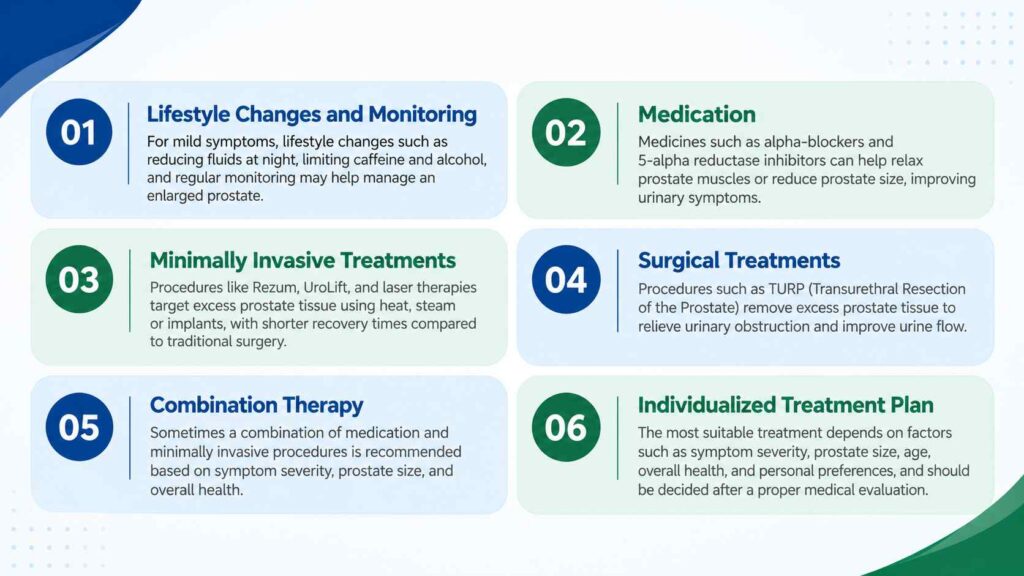
There is no single treatment that is appropriate for every man with BPH. Treatment is usually selected according to symptoms, prostate size, overall health, urinary function, previous treatment, and personal preferences.
Lifestyle Changes and Monitoring
Men with mild symptoms may sometimes be managed through observation and lifestyle changes. These may include reducing fluids before bedtime, limiting beverages that worsen urinary frequency, and maintaining healthy bladder habits.
Medication
Several types of medication can be used to manage BPH symptoms. Some medicines relax muscles around the prostate and bladder neck, while others may help reduce prostate size over time.
Medication can be useful, but some men experience side effects or continue to have bothersome symptoms despite treatment.
Rezum Treatment
Rezum Treatment is a minimally invasive option that uses water-vapor thermal energy to treat obstructive prostate tissue.
It may be considered when medication does not provide adequate relief or when a patient prefers to discuss a minimally invasive procedural approach.
Other Minimally Invasive Procedures
Other procedures are available for treating BPH. Depending on prostate anatomy and individual circumstances, options may include different forms of heat therapy, implants, laser procedures, or other tissue-removing techniques.
The most suitable treatment should be determined following an appropriate medical evaluation.
Benefits of Rezum Treatment
A major advantage of Rezum Treatment is that it is designed to treat the obstructive prostate tissue without conventional surgical removal.
Potential benefits may include:
- Minimally invasive treatment
- Targeted treatment of prostate tissue
- No large external surgical incision
- Treatment performed through the urinary passage
- Potential improvement in urinary symptoms
- Short procedural time in appropriate patients
- A potential alternative to long-term medication
- Preservation of prostate tissue rather than extensive tissue removal
The benefits vary between individuals. A healthcare professional can explain expected outcomes based on prostate size, anatomy, symptoms, and medical history.
Sexual Function Considerations
Sexual function is an important consideration for many men evaluating BPH treatment. One reason minimally invasive options receive attention is the potential to reduce certain treatment-related sexual side effects compared with some traditional surgical procedures.
However, no procedure should be assumed to have zero risk of sexual or reproductive effects. Men should discuss erectile function, ejaculation, fertility considerations, and other sexual-health concerns before treatment.
What Happens During Rezum Treatment
The exact experience can vary depending on the healthcare facility and individual circumstances.
Generally, the patient is prepared for the procedure and appropriate anesthesia or sedation is provided. A specialized device is then guided through the urethra to reach the prostate.
The treatment device delivers controlled steam into selected prostate areas. Each steam application typically lasts only a short period, allowing thermal energy to affect the targeted tissue.
The number of applications depends on the size and shape of the prostate and the areas requiring treatment.
After the procedure, the patient is monitored and given instructions for recovery.
Recovery After Rezum Treatment
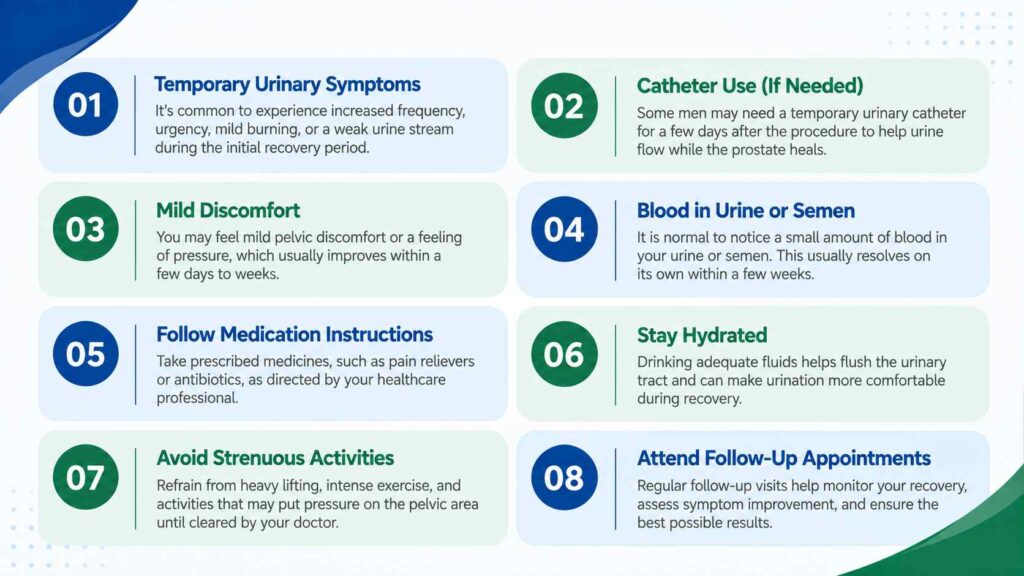
Recovery following Rezum Treatment is an important part of the overall process. Urinary symptoms may temporarily change because the prostate and surrounding tissues can become irritated or swollen after the procedure.
Some men may experience:
- Increased urinary frequency
- Urinary urgency
- Mild discomfort while urinating
- Blood in the urine
- Blood in the semen
- Temporary changes in urinary flow
- Pelvic discomfort
These effects can occur during the healing period and should be discussed with the treating healthcare professional.
Tips for a Comfortable Recovery
Helpful recovery measures may include:
- Follow all post-procedure instructions carefully.
- Take prescribed medicines according to instructions.
- Drink fluids as recommended.
- Avoid strenuous activity until cleared.
- Avoid activities that may irritate the urinary tract.
- Attend scheduled follow-up appointments.
- Report unusual or severe symptoms promptly.
The prostate needs time to heal, so patients should not expect the final result immediately after treatment.
When Does Rezum Treatment Start Working
One important point about Rezum Treatment is that symptom improvement is gradual.
The steam-treated tissue needs time to undergo the body’s healing and tissue-removal process. Some men may notice changes earlier, while others require several weeks or longer before significant improvement becomes apparent.
The final improvement can continue to develop over the following months.
This gradual process is different from procedures that physically remove prostate tissue during the operation itself. Patience during recovery is therefore important.
Risks and Limitations of Rezum Treatment
Although Rezum Treatment is minimally invasive, it is still a medical procedure and has potential risks.
Possible temporary or procedure-related effects can include:
- Urinary irritation
- Burning during urination
- Blood in urine
- Blood in semen
- Urinary urgency
- Difficulty urinating
- Urinary infection
- Temporary worsening of urinary symptoms
- Need for catheterization during recovery
- Need for additional treatment in some cases
The suitability of the procedure also depends on prostate anatomy and individual medical circumstances.
A thorough evaluation is important before choosing Rezum Treatment.
Who May Consider Rezum Treatment
Rezum Treatment may be considered for men who have bothersome lower urinary tract symptoms caused by BPH and who are seeking a minimally invasive treatment option.
A healthcare professional may assess:
- Severity of urinary symptoms
- Prostate size
- Prostate anatomy
- Urine flow
- Bladder function
- Current medications
- Previous prostate treatments
- General health
- Personal treatment preferences
Not every enlarged prostate requires a procedure. Likewise, not every patient with BPH is an appropriate candidate for the same treatment.
How Is Rezum Treatment Different From Traditional Surgery
Traditional prostate surgery can involve removing or cutting prostate tissue to improve urinary flow. Rezum Treatment, in comparison, uses steam energy to target prostate tissue without conventional surgical removal.
This distinction may make the procedure attractive to some men who want a minimally invasive approach.
However, treatment selection should not be based solely on the invasiveness of a procedure. Factors such as symptom severity, prostate anatomy, expected effectiveness, recovery requirements, possible complications, and long-term goals should all be considered.
Tips for Choosing an Enlarged Prostate Treatment
Choosing a BPH treatment should involve more than simply comparing procedures. Consider the following:
- Understand what is causing your urinary symptoms.
- Ask whether your symptoms are related to prostate enlargement.
- Discuss prostate size and anatomy.
- Review medication options and their potential side effects.
- Ask about minimally invasive treatments.
- Understand expected recovery time.
- Discuss sexual and urinary outcomes.
- Ask about possible complications.
- Consider your long-term treatment goals.
- Follow up regularly after treatment.
Having a clear understanding of your options can make the treatment decision more informed and personalized.
Conclusion
Rezum Treatment offers a minimally invasive approach to managing urinary symptoms associated with an enlarged prostate. By delivering controlled steam energy into selected areas of prostate tissue, the treatment can reduce obstructive tissue and potentially improve urine flow over time.
The procedure may be an option for men who continue to experience bothersome BPH symptoms despite medication or who want to explore minimally invasive alternatives. However, suitability varies from person to person, and a proper prostate and urinary evaluation is essential before treatment.
If you are considering Rezum Treatment for an enlarged prostate, discuss your symptoms, treatment goals, potential risks, recovery expectations, and available alternatives with a qualified healthcare professional in Thrissur before making a decision. For additional information on enlarged prostate symptoms and treatment options, visit the National Institute of Diabetes and Digestive and Kidney Diseases (NIDDK).