What Happens During Rezum Therapy
Understanding what happens during Rezum therapy can make the treatment process feel much clearer for men considering a minimally invasive option for benign prostatic hyperplasia (BPH). Rezum therapy uses controlled water-vapor energy to treat selected areas of enlarged prostate tissue. Instead of cutting the prostate tissue out, the treatment delivers steam directly into targeted areas, after which the body gradually processes the treated tissue.For anyone researching what happens during Rezum therapy, it is important to understand that the procedure is only one part of the overall experience. Assessment before treatment, preparation, anesthesia, the water-vapor treatment itself, catheter use when required, recovery, and follow-up all play important roles.The information below explains what happens during Rezum therapy, why it is used, what patients may experience during recovery, and how it compares with other BPH treatment options. The supplied pillar content also describes Rezum as a minimally invasive BPH treatment that uses targeted water-vapor energy and allows treated tissue to reduce gradually over time.
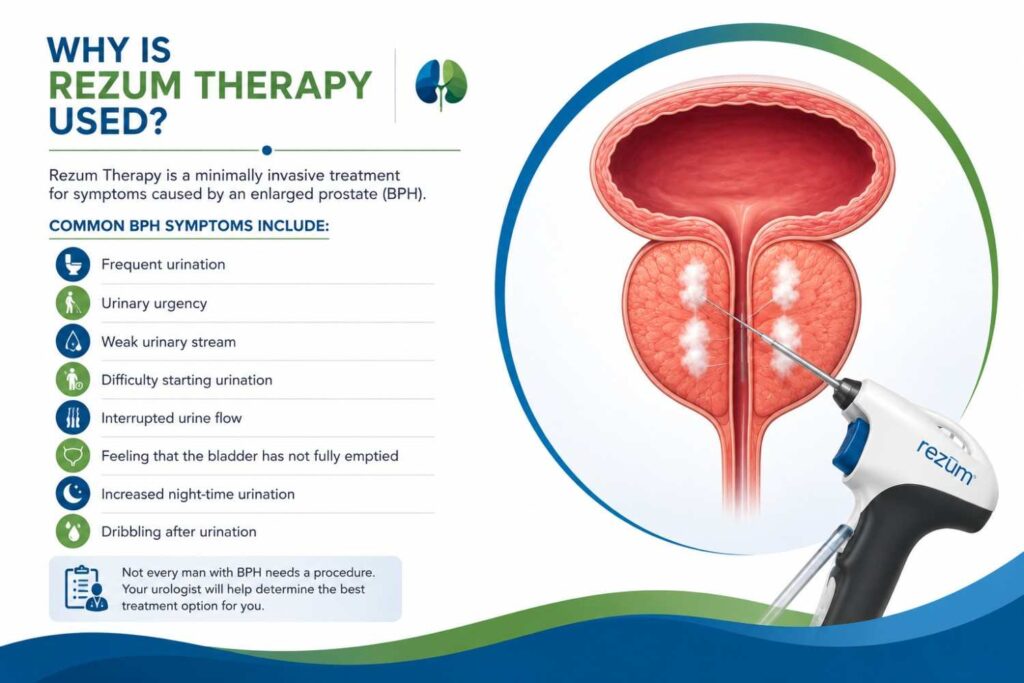
Why Is Rezum Therapy Used?
Before understanding what happens during Rezum therapy, it helps to understand why a urologist may recommend it.
An enlarged prostate can narrow the urethral passage and make bladder emptying more difficult. This may result in lower urinary tract symptoms that affect daily activities and sleep.
Common BPH symptoms include:
- Frequent urination
- Urinary urgency
- Weak urinary stream
- Difficulty starting urination
- Interrupted urine flow
- Feeling that the bladder has not fully emptied
- Increased night-time urination
- Dribbling after urination
Not every man with BPH needs a procedure. Some patients can manage symptoms with lifestyle changes, monitoring, or medication. When symptoms remain troublesome, a urologist may discuss minimally invasive or surgical treatment options.
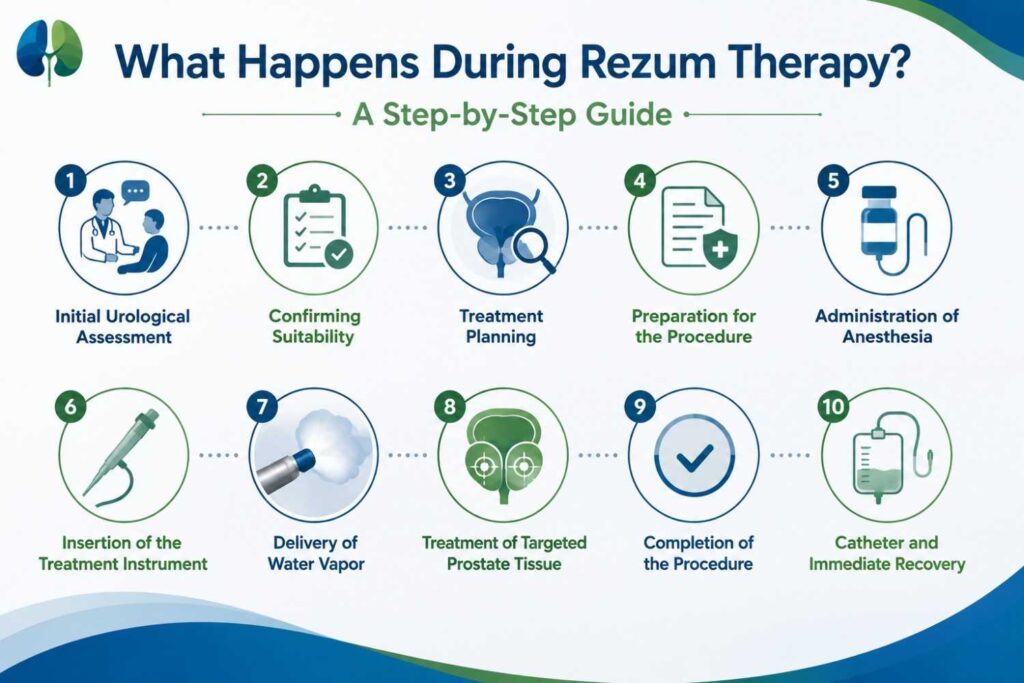
What Happens During Rezum Therapy? A Step-by-Step Guide
Knowing what happens during Rezum therapy can help patients understand each stage rather than thinking of the procedure as a single event.
1. Initial Urological Assessment
The process generally begins with a consultation. The urologist reviews urinary symptoms, medical history, medications, previous BPH treatment, and general health.
Depending on the individual situation, assessment may include:
- Urinary symptom evaluation
- Physical examination
- Urine testing
- Prostate assessment
- Urinary flow measurement
- Evaluation of bladder emptying
- Additional tests when clinically necessary
This stage is important because Rezum is not automatically suitable for every patient.
2. Confirming Suitability
The doctor considers whether the patient’s prostate characteristics and symptoms make Rezum an appropriate option.
Factors that may be considered include:
- Prostate size and anatomy
- Severity of urinary symptoms
- Response to medication
- Previous prostate procedures
- Overall health
- Current medicines
- Patient expectations
A personalized assessment helps determine whether Rezum, medication, another minimally invasive procedure, or a surgical approach may be more appropriate.
3. Treatment Planning
Once Rezum is selected, the urologist plans which areas of prostate tissue need treatment.The number and placement of water-vapor applications can vary according to prostate anatomy and size. This is why what happens during Rezum therapy is not identical for every patient.The treatment plan is individualized rather than based on a fixed number of steam applications for every man.
4. Preparation for the Procedure
Preparation varies according to the patient’s health and the healthcare provider’s instructions.
Patients should tell their doctor about:
- Prescription medications
- Blood-thinning medicines
- Allergies
- Previous urinary procedures
- Previous prostate treatments
- Existing medical conditions
- Recent infections
- Previous anesthesia problems
The urology team will explain any medication adjustments, fasting requirements, anesthesia arrangements, and other preparation instructions that apply to the individual.
5. Administration of Anesthesia
Anesthesia or another form of pain-control medication is used according to the treatment setting and the patient’s circumstances.Patients should ask their urologist beforehand what type of anesthesia is planned and what they should expect during the procedure.The purpose is to make the treatment experience as controlled and comfortable as reasonably possible.
6. Insertion of the Treatment Instrument
The Rezum treatment device is introduced through the urinary passage. There is no external abdominal incision.This is one of the key features to understand when asking what happens during Rezum therapy. The doctor reaches the prostate through the urethra rather than making an external surgical opening.
7. Delivery of Water Vapor
Controlled water vapor is then delivered into targeted areas of prostate tissue.Each steam application is brief. The urologist places the treatment device carefully so that the selected areas receive the intended thermal treatment.The water vapor carries thermal energy into the targeted prostate tissue. This is the central part of what happens during Rezum therapy.
8. Treatment of Targeted Prostate Tissue
The goal is to treat the prostate tissue that contributes to urinary obstruction.Rezum does not simply treat the prostate as a whole. Instead, the urologist identifies relevant areas and delivers the water-vapor treatment accordingly.This targeted approach is one reason patient assessment and treatment planning are important.
9. Completion of the Procedure
After the planned treatment applications have been delivered, the device is removed and the medical team monitors the patient according to the clinical setting.The total time spent at the facility may include preparation, anesthesia, the actual procedure, recovery, and observation.Therefore, the procedure time itself should not be confused with the total time a patient spends at the healthcare facility.
10. Catheter and Immediate Recovery
Some patients may need a urinary catheter temporarily after treatment. Whether a catheter is required and how long it remains in place depends on individual circumstances and the urologist’s assessment.Patients should ask specifically about catheter expectations before treatment.This is another important part of understanding what happens during Rezum therapy, because the immediate post-treatment experience can vary from one person to another.
What Happens to the Prostate After Rezum Therapy?
- One of the most important things to understand about what happens during Rezum therapy is that the final improvement does not normally occur immediately.
- The thermal energy affects the treated prostate tissue. During the healing period, the body gradually breaks down and absorbs the treated tissue.
- As the tissue reduces, the urinary channel may have more room for urine flow.
- This gradual process means patients should not expect the final outcome immediately after leaving the treatment facility.
What Symptoms Can Occur After Rezum Therapy?
Recovery is an important part of what happens during Rezum therapy.
Temporary urinary symptoms can occur as the prostate and urinary tract heal. Some patients may experience:
- Increased urinary frequency
- Urinary urgency
- Mild burning while urinating
- Blood in the urine
- Blood in semen
- Pelvic discomfort
- Temporary changes in urinary flow
These symptoms can be part of the healing process, but patients should follow their own urologist’s instructions and report concerning or unexpected symptoms.The supplied pillar content similarly notes that temporary urinary frequency, urgency, mild burning, blood in urine or semen, pelvic discomfort, and changes in urinary flow can occur during recovery.
How Long Does It Take to See Results?
A common question about what happens during Rezum therapy is how quickly urinary symptoms improve.Rezum is generally associated with gradual improvement rather than an instant final result. Some men may notice changes within several weeks, while continued improvement may occur over the following months.
The recovery timeline can depend on:
- Prostate characteristics
- Existing urinary symptoms
- Individual healing
- Number of treatments
- Overall health
- Previous BPH treatment
It is important not to compare one person’s recovery with another person’s experience.
Who May Be Considered for Rezum?
Not every patient with BPH is automatically a candidate. When discussing what happens during Rezum therapy, suitability should always be considered before treatment.
Rezum may be discussed with men who have:
- Persistent BPH-related urinary symptoms
- An appropriate prostate size and anatomy
- Symptoms that remain troublesome despite medication
- An interest in minimally invasive treatment
- Realistic expectations about recovery
- A clinical evaluation supporting the procedure
The final decision should be made with a qualified urologist after an individualized assessment.
When Should You Speak With a Urologist?
Persistent urinary symptoms should not simply be attributed to aging.A urological assessment can help determine whether symptoms are related to BPH or another urinary or prostate condition.
A doctor may recommend:
- Monitoring
- Lifestyle changes
- Medication
- Rezum therapy
- Another minimally invasive procedure
- Surgical treatment
Seeking an evaluation does not automatically mean that a patient needs a procedure.
Conclusion
Knowing what happens during Rezum therapy can help patients approach a BPH treatment consultation with realistic expectations. The process typically involves urological assessment, treatment planning, water-vapor applications through the urinary passage, post-treatment monitoring, and a gradual healing period.The key point is that what happens during Rezum therapy does not end when the steam treatment is completed. Recovery is an important part of the process, and urinary improvement may develop gradually as the body processes the treated prostate tissue.Rezum may be an option for selected men with bothersome BPH symptoms, but treatment decisions should always be based on prostate anatomy, symptoms, medical history, overall health, and individual goals. A qualified urologist can explain what happens during Rezum therapy, discuss alternatives, and help determine whether this minimally invasive approach is appropriate. For patients exploring BPH treatment options, an individualized consultation is the right starting point.For more detailed medical information about Benign Prostatic Hyperplasia, visit the Urology Care Foundation’s guide to BPH.