7 Powerful Facts About What Is Rezum Therapy Explained Today
If you are searching for What Is Rezum Therapy, you are probably looking for a minimally invasive solution for an enlarged prostate. Many men experience urinary problems as they age, and finding a treatment that offers relief without major surgery is important. Patients in Thrissur and many other places are increasingly learning about this innovative procedure because it offers effective symptom relief with minimal downtime.
What Is Rezum Therapy is a modern treatment designed to reduce excess prostate tissue using the natural energy stored in water vapor. Instead of removing the prostate through surgery, this procedure delivers controlled steam into the enlarged tissue, causing the unwanted cells to shrink over time. As the body naturally absorbs the treated tissue, urine flow improves and urinary symptoms gradually decrease.
This guide explains What Is Rezum Therapy, how it works, its benefits, eligibility, recovery, risks, expected results, and much more.
Understanding What Is Rezum Therapy
What Is Rezum Therapy is a minimally invasive procedure developed to treat benign prostatic hyperplasia (BPH), commonly known as an enlarged prostate.
The treatment uses sterile water vapor (steam) to target enlarged prostate tissue. When the steam enters the prostate, the stored thermal energy destroys the unwanted cells. Over the following weeks, the body’s natural healing process removes these cells, reducing prostate size and relieving urinary obstruction.
Unlike conventional surgery, What Is Rezum Therapy preserves surrounding healthy tissue while improving urinary function.
Key Highlights
- Minimally invasive
- Uses natural water vapor
- No surgical incision
- Preserves sexual function in many patients
- Short procedure time
- Usually performed as an outpatient treatment
What Is Benign Prostatic Hyperplasia (BPH)
To fully understand What Is Rezum Therapy, it’s helpful to first understand BPH.
Benign Prostatic Hyperplasia is a non-cancerous enlargement of the prostate gland. As men age, the prostate gradually increases in size, compressing the urethra and restricting urine flow.
Although BPH is not cancer, it can significantly affect daily life.
Common Causes of Enlarged Prostate
Several factors contribute to prostate enlargement.
Age
The biggest risk factor is aging.
Hormonal Changes
Changes in testosterone and other hormones contribute to prostate growth.
Family History
Genetics may increase the likelihood of developing BPH.
Lifestyle Factors
Obesity
Poor diet
Lack of exercise
Metabolic syndrome
These may contribute to worsening symptoms.
Symptoms That May Require Treatment
Understanding symptoms helps determine whether What Is Rezum Therapy could be a suitable treatment option.
Common symptoms include:
- Frequent urination
- Night-time urination
- Weak urine stream
- Difficulty starting urination
- Interrupted urine flow
- Urgency
- Feeling of incomplete bladder emptying
- Dribbling after urination
- Urinary retention
- Recurrent urinary tract infections
Symptoms usually worsen gradually.
How Does Rezum Therapy Work
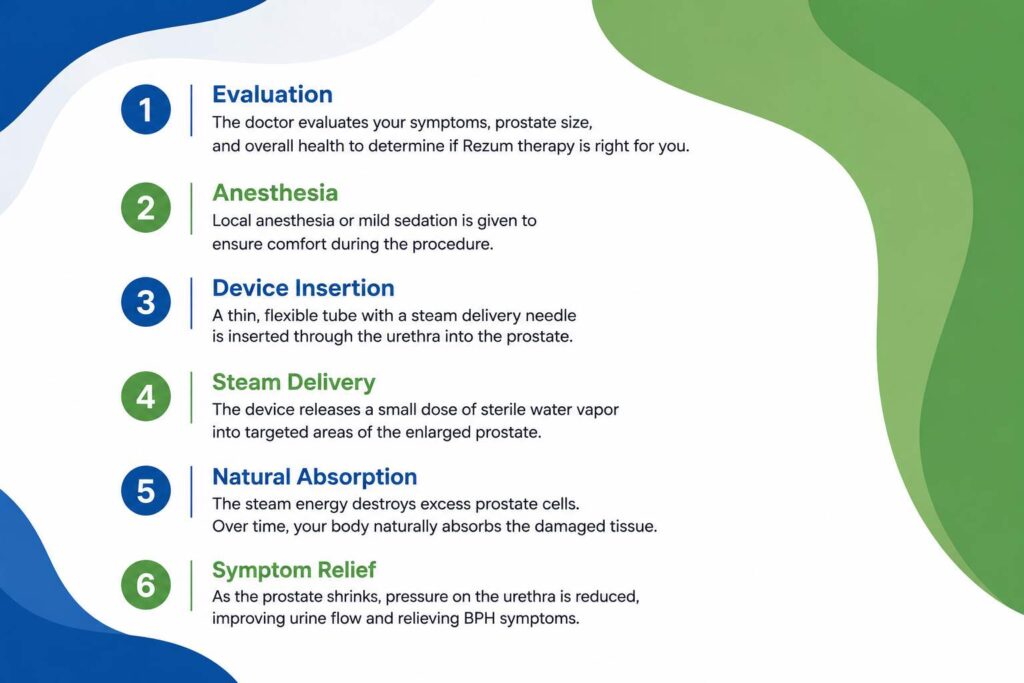
The science behind What Is Rezum Therapy is surprisingly simple.
Step 1: Evaluation
The doctor evaluates:
- Prostate size
- Urinary symptoms
- Medical history
- Imaging tests
- Urine flow
Step 2: Local Anesthesia
The procedure usually requires local anesthesia or mild sedation.
Step 3: Steam Delivery
A specialized device delivers controlled water vapor directly into enlarged prostate tissue.
Each steam injection lasts only a few seconds.
Step 4: Natural Cell Death
The heat energy destroys targeted cells.
Step 5: Healing
Over several weeks, the body absorbs the treated tissue.
Step 6: Improved Urine Flow
As swelling decreases, urine flow improves naturally.
Benefits of What Is Rezum Therapy
One reason many patients choose What Is Rezum Therapy is its numerous advantages.
Minimally Invasive
No large incision.
Quick Procedure
Most procedures take around 10–20 minutes.
Faster Recovery
Patients usually return home the same day.
Reduced Hospital Stay
Often performed as an outpatient procedure.
Lower Risk
Compared with major surgery, complications are generally fewer.
Natural Healing
The body removes treated tissue naturally.
Preserves Sexual Function
Many patients maintain erectile and ejaculatory function.
Long-Term Symptom Relief
Clinical studies have shown durable improvements for many patients.
Who Is a Good Candidate for What Is Rezum Therapy
What Is Rezum Therapy may be suitable for men who:
- Have moderate BPH symptoms
- Want to avoid major surgery
- Have urinary obstruction
- Want faster recovery
- Prefer minimally invasive treatment
- Have not responded well to medications
- Wish to preserve sexual function when possible
Eligibility depends on medical evaluation.
Who May Not Be Suitable
Although What Is Rezum Therapy is effective, it may not be appropriate for everyone.
It may not be recommended for patients with:
- Certain prostate cancers
- Active urinary infection
- Very large prostate glands
- Certain urinary tract abnormalities
- Untreated bladder disorders
Medical evaluation determines suitability.
Types of BPH Treatments
Several treatments are available.
Lifestyle Changes
Suitable for mild symptoms.
Medications
Help relax muscles or shrink the prostate.
Minimally Invasive Treatments
Including What Is Rezum Therapy.
Laser Procedures
Remove excess prostate tissue.
Surgical Procedures
Reserved for severe cases.
Preparing for What Is Rezum Therapy
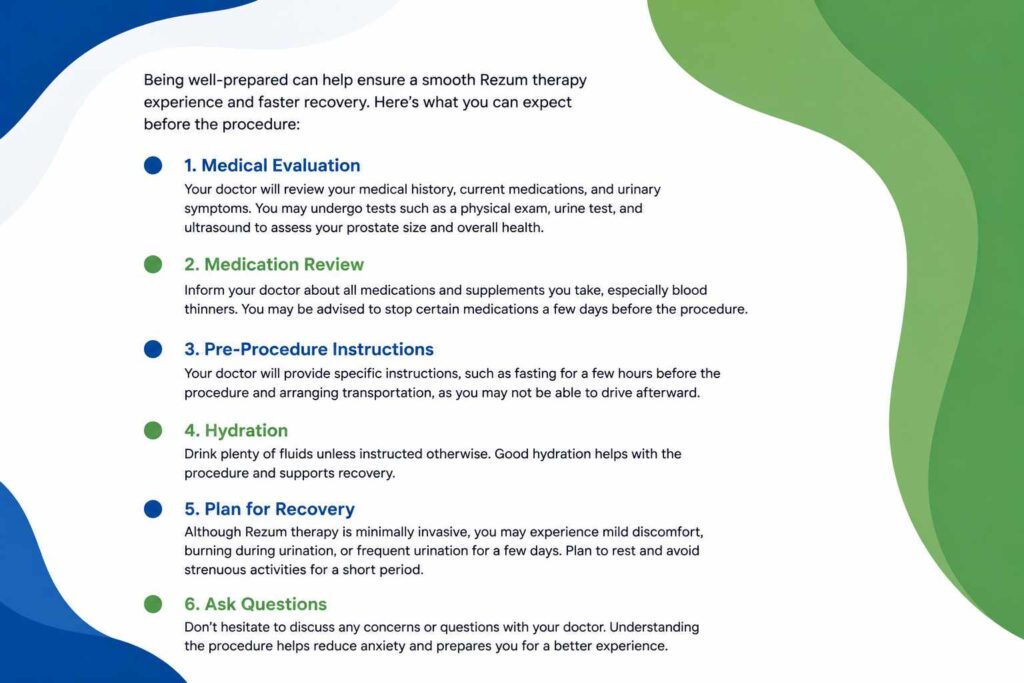
Preparation generally includes:
- Medical examination
- Blood tests
- Urine analysis
- Medication review
- Prostate imaging
- Urine flow measurement
Your healthcare provider will provide personalized instructions.
What Happens During the Procedure
The procedure generally follows these steps:
- Patient preparation
- Local anesthesia
- Insertion of treatment device
- Steam injections
- Device removal
- Observation
- Same-day discharge in most cases
Recovery After What Is Rezum Therapy
Recovery is usually faster than traditional surgery.
Patients may experience:
- Mild discomfort
- Frequent urination
- Burning sensation
- Temporary urgency
- Small amount of blood in urine
These symptoms often improve gradually.
A urinary catheter may be required temporarily.
Recovery Tips
To support healing:
- Drink plenty of water
- Avoid heavy lifting
- Follow medication instructions
- Attend follow-up appointments
- Avoid strenuous exercise initially
- Eat a balanced diet
- Prevent constipation
Expected Results
Results are not immediate.
Many patients notice gradual improvement within several weeks.
Maximum improvement often occurs over the following months as treated tissue is naturally absorbed.
Risks and Possible Side Effects
Like every medical procedure, What Is Rezum Therapy has potential risks.
Possible temporary side effects include:
- Burning during urination
- Blood in urine
- Blood in semen
- Frequent urination
- Urgency
- Mild discomfort
- Temporary urinary retention
Serious complications are relatively uncommon.
How Long Do Results Last
Research suggests symptom improvement may last several years for many patients.
Regular medical follow-up remains important.
Lifestyle Tips After Treatment
Healthy habits can support urinary health.
Consider:
- Staying hydrated
- Maintaining healthy weight
- Regular exercise
- Limiting alcohol
- Reducing caffeine
- Avoiding smoking
- Eating fruits and vegetables
- Regular medical reviews
Myths About What Is Rezum Therapy
Myth 1
It is major surgery.
Fact: It is minimally invasive.
Myth 2
Recovery takes months.
Fact: Recovery is generally quicker.
Myth 3
Everyone experiences severe pain.
Fact: Most patients experience manageable discomfort.
Myth 4
Results appear immediately.
Fact: Improvement develops gradually.
Myth 5
It removes the entire prostate.
Fact: Only targeted enlarged tissue is treated.
Comparing What Is Rezum Therapy with Traditional Surgery
| Feature | Rezum Therapy | Traditional Surgery |
|---|---|---|
| Incision | No | Usually Yes |
| Hospital Stay | Usually Same Day | Longer |
| Recovery | Faster | Longer |
| Procedure Time | Short | Longer |
| Tissue Removal | Steam Therapy | Surgical Removal |
| Return to Routine | Earlier | Later |
When Should You Seek Medical Advice
Consult a healthcare professional if you experience:
- Persistent urinary difficulty
- Blood in urine
- Severe urinary retention
- Frequent infections
- Worsening urinary symptoms
- Painful urination
- Reduced quality of life
Early evaluation allows timely management.
Conclusion
Understanding What Is Rezum Therapy helps patients make informed decisions about managing enlarged prostate symptoms. This minimally invasive treatment uses natural water vapor to reduce excess prostate tissue while promoting gradual healing and improved urinary flow. Compared with traditional surgical options, What Is Rezum Therapy offers shorter recovery, fewer disruptions to daily life, and lasting symptom relief for many suitable candidates. If urinary symptoms are affecting your quality of life, discussing available treatment options with a qualified healthcare professional can help determine the most appropriate approach. Patients seeking information in Thrissur can also benefit from consulting experienced urology specialists for personalized evaluation. For more information about enlarged prostate and available treatment options, visit the National Institute of Diabetes and Digestive and Kidney Diseases .
Frequently Asked Questions
What Is Rezum Therapy
It is a minimally invasive treatment that uses water vapor to reduce enlarged prostate tissue and improve urinary symptoms.
Is Rezum Therapy painful
Most patients experience only mild discomfort because local anesthesia or sedation is typically used.
How long does the procedure take
The treatment usually takes around 10–20 minutes, although the total visit may be longer.
When will I notice improvement
Many patients begin noticing improvement within a few weeks, with continued progress over several months.
Is hospitalization required
In many cases, the procedure is performed on an outpatient basis.
Can medications be stopped after treatment
Some patients may reduce or discontinue medications after medical evaluation, depending on their response.
Does Rezum Therapy affect sexual function
Many patients maintain erectile and ejaculatory function, although outcomes vary.
Who is eligible for Rezum Therapy?
Men with moderate urinary symptoms caused by benign prostate enlargement may be suitable candidates after evaluation.
Is the procedure safe
It has been widely used and is considered safe for appropriately selected patients.
Can symptoms return
Some patients may require additional treatment in the future, although many experience long-lasting symptom relief.