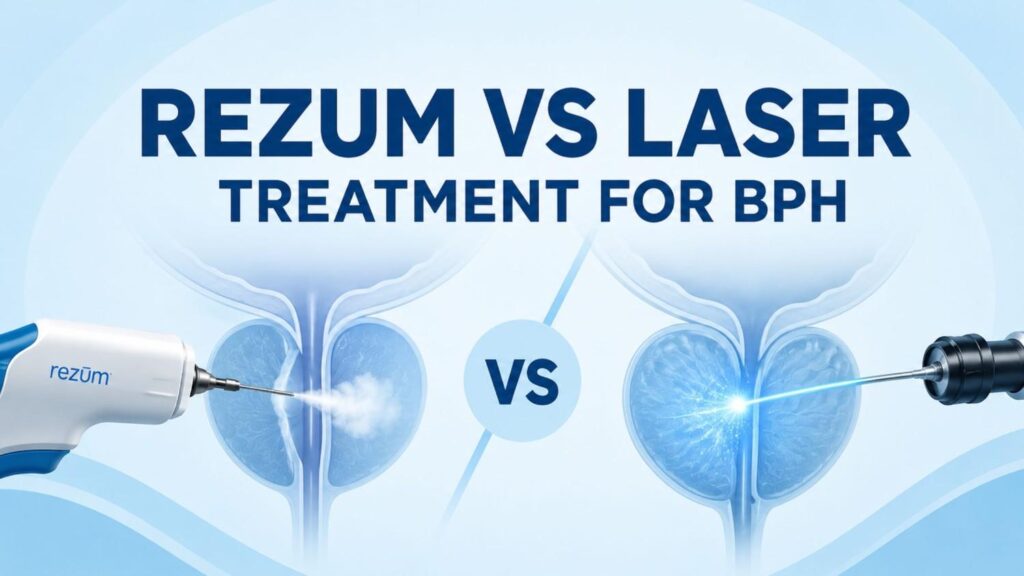
REZUM vs Laser Treatment for BPH
REZUM vs Laser Treatment for BPH is a common comparison made by men looking for effective treatment options for Benign Prostatic Hyperplasia (BPH). Both procedures are designed to relieve urinary symptoms caused by an enlarged prostate, but they differ in how they work, recovery time, suitability, and long-term outcomes. Understanding these differences can help patients discuss the most appropriate option with their urologist.
Choosing between REZUM vs Laser Treatment for BPH depends on several factors, including prostate size, symptom severity, overall health, and individual treatment goals. A detailed urological evaluation helps determine which approach offers the greatest benefit for each patient.
Table of Contents
- What Is Benign Prostatic Hyperplasia (BPH)?
- REZUM vs Laser Treatment for BPH
- How REZUM Therapy Works
- How Laser Treatment for BPH Works
- REZUM vs Laser Treatment for BPH: Key Differences
- Benefits of REZUM Therapy
- Benefits of Laser Treatment
- Who Is a Suitable Candidate?
- Which Treatment Offers Faster Recovery?
- Factors to Consider Before Choosing Treatment
- Frequently Asked Questions
- Conclusion
What Is Benign Prostatic Hyperplasia (BPH)?
Benign Prostatic Hyperplasia (BPH) is a non-cancerous enlargement of the prostate gland that commonly affects men as they grow older. As the prostate enlarges, it can compress the urethra and interfere with normal urine flow.
Common symptoms include:
- Frequent urination
- Weak urine stream
- Difficulty starting urination
- Interrupted urine flow
- Urgency
- Nocturia (frequent nighttime urination)
- Feeling of incomplete bladder emptying
Early evaluation allows patients to explore modern treatment options before symptoms become more severe.
REZUM vs Laser Treatment for BPH
When comparing REZUM vs Laser Treatment for BPH, it is important to understand that both treatments are effective but are designed for different clinical situations.
REZUM Therapy uses the natural energy stored in water vapor to shrink excess prostate tissue without removing it surgically.
Laser Treatment for BPH uses high-energy laser technology to remove or vaporize enlarged prostate tissue that blocks urine flow.
Both procedures aim to improve urinary symptoms, but patient selection plays a significant role in determining which treatment is most appropriate. To understand how these procedures compare with other available therapies, explore our comprehensive guide to BPH Treatment.
How REZUM Therapy Works
REZUM Therapy is a minimally invasive treatment that delivers sterile water vapor directly into enlarged prostate tissue.
The treatment works by:
- Delivering targeted water vapor
- Shrinking excess prostate tissue
- Reducing pressure on the urethra
- Improving urine flow
- Preserving surrounding structures
- Supporting long-term symptom relief
The procedure is typically completed without major surgery and generally allows a relatively quick recovery.
How Laser Treatment for BPH Works
Laser treatment removes obstructing prostate tissue using concentrated laser energy.
During treatment, the surgeon may:
- Vaporize enlarged prostate tissue
- Improve urinary flow
- Remove obstructing tissue
- Reduce urinary symptoms
- Improve bladder emptying
- Restore urinary function
Laser procedures have become well-established treatment options for selected patients with moderate to severe BPH.
REZUM vs Laser Treatment for BPH: Key Differences
Although both procedures treat BPH, there are important differences.
| Feature | REZUM Therapy | Laser Treatment |
|---|---|---|
| Treatment Type | Minimally invasive | Surgical |
| Technology | Water vapor | Laser energy |
| Tissue Removal | No | Yes |
| Hospital Stay | Usually shorter | May vary |
| Recovery | Generally quicker | Depends on procedure |
| Anaesthesia | Often less extensive | Usually regional or general |
| Suitable for | Selected BPH patients | Mild to severe BPH |
A urologist recommends the most appropriate treatment after evaluating each patient’s condition.
Benefits of REZUM Therapy
When considering REZUM vs Laser Treatment for BPH, many patients choose REZUM because of its minimally invasive nature.
Potential benefits include:
- No major surgical incision
- Minimally invasive procedure
- Faster recovery
- Short treatment duration
- Relief of urinary symptoms
- Reduced hospital stay
- Preservation of normal anatomy
- Improved quality of life
Suitability depends on individual clinical evaluation.
Benefits of Laser Treatment
Laser treatment also provides several important advantages for appropriate patients.
Benefits may include:
- Effective removal of obstructing tissue
- Significant improvement in urine flow
- Long-term symptom relief
- Reduced bleeding compared with some traditional surgeries
- Suitable for larger prostates in selected cases
- Proven clinical outcomes
Treatment recommendations vary according to prostate size and overall health.
Who Is a Suitable Candidate?
Choosing between REZUM vs Laser Treatment for BPH depends on several clinical factors.
Your urologist may consider:
- Prostate size
- Severity of urinary symptoms
- Overall health
- Age
- Current medications
- Previous prostate treatments
- Personal treatment preferences
A comprehensive evaluation helps determine the most appropriate option.
Which Treatment Offers Faster Recovery?
Recovery varies between patients and the procedure performed.
REZUM Therapy
Patients often experience:
- Faster return to daily activities
- Minimal discomfort
- Short recovery period
- Outpatient treatment in many cases
Laser Treatment
Patients may require:
- Temporary catheter placement
- Short recovery period
- Follow-up monitoring
- Gradual improvement in urinary symptoms
Following post-treatment instructions supports optimal recovery regardless of the chosen procedure.
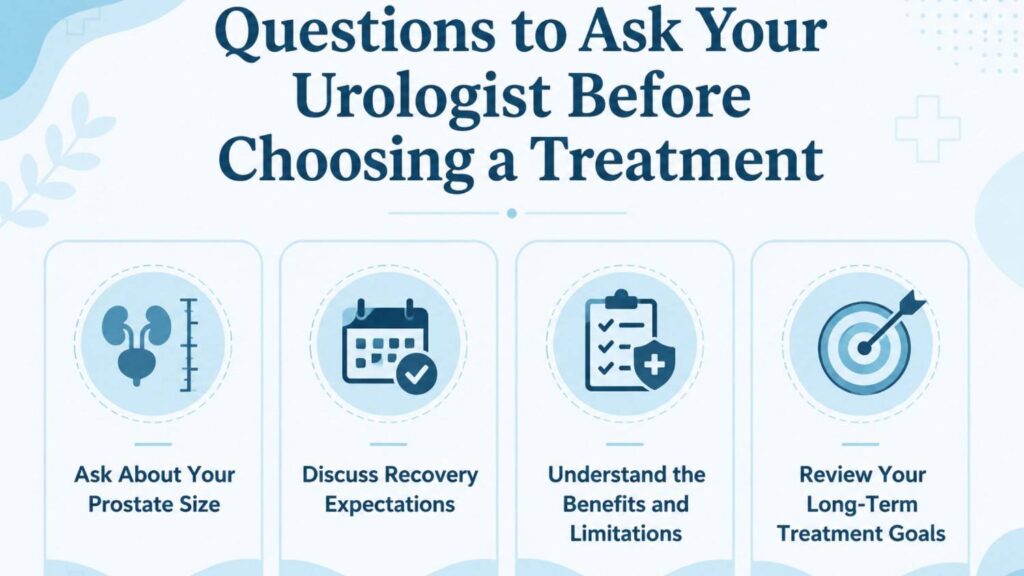
Factors to Consider Before Choosing Treatment
Understanding REZUM vs Laser Treatment for BPH involves more than comparing procedures.
Important considerations include:
- Size of the prostate
- Severity of symptoms
- Lifestyle expectations
- Recovery preferences
- Long-term treatment goals
- Recommendations from a qualified urologist
The most suitable treatment is based on an individualized clinical assessment rather than a one-size-fits-all approach.
Why a Specialist Consultation Is Important
Choosing between REZUM vs Laser Treatment for BPH should always begin with a detailed consultation.
During the assessment, the urologist evaluates:
- Medical history
- Urinary symptoms
- Prostate size
- Urine flow
- Diagnostic test results
- Overall health
A personalized treatment plan helps ensure that patients receive the option best suited to their condition and long-term urinary health.
Conclusion
Understanding REZUM vs Laser Treatment for BPH helps patients make informed decisions about managing enlarged prostate symptoms. Both treatments are effective, but they differ in technique, recovery, and patient suitability. A thorough evaluation by an experienced urologist ensures that treatment is tailored to each individual’s needs, helping improve urinary function, comfort, and long-term quality of life.
Understanding the available BPH treatment options can help patients compare minimally invasive procedures and surgical treatments based on their symptoms, prostate size, and overall health before choosing the most appropriate approach.
Frequently Asked Questions
REZUM Therapy uses the natural energy stored in water vapor to shrink enlarged prostate tissue, while laser treatment removes or vaporizes excess prostate tissue using laser energy. Both aim to relieve urinary symptoms but differ in technique, recovery, and patient suitability.
Neither treatment is universally better. The most suitable option depends on factors such as prostate size, symptom severity, overall health, and your urologist's clinical assessment.
Yes. REZUM Therapy is a minimally invasive treatment that uses sterile water vapor to reduce excess prostate tissue without major surgery, allowing many patients to recover more quickly.
Laser treatment has been shown to provide effective and long-lasting relief from urinary symptoms by removing obstructing prostate tissue and improving urine flow.
REZUM Therapy generally involves a shorter recovery period because it is minimally invasive. However, recovery varies depending on the patient's health, prostate condition, and the specific procedure performed.
REZUM Therapy is designed to target enlarged prostate tissue while preserving surrounding structures. Individual outcomes vary, and your urologist will discuss the potential benefits and risks during your consultation.
Patients with moderate to severe urinary symptoms caused by Benign Prostatic Hyperplasia may be candidates. A detailed evaluation helps determine whether REZUM Therapy or laser treatment is the most appropriate option.
Both procedures are typically completed within a relatively short time, although the exact duration depends on the treatment method, prostate size, and individual clinical circumstances.
As with any medical procedure, both treatments carry potential risks such as temporary urinary discomfort, bleeding, infection, or urinary symptoms during recovery. Your urologist will explain these risks based on your individual condition.
The best way to choose between REZUM vs Laser Treatment for BPH is through a comprehensive consultation with a qualified urologist, who will evaluate your prostate size, urinary symptoms, overall health, and treatment goals before recommending the most suitable option.