10 Powerful Non Surgical Treatment for BPH Benefits Guide
Benign Prostatic Hyperplasia (BPH), commonly known as an enlarged prostate, is a common condition that affects many men as they age. Finding the right non surgical treatment for BPH can help reduce urinary symptoms, improve quality of life, and avoid more invasive procedures. Many patients in Thrissur seek effective solutions that provide symptom relief with minimal downtime.
This guide explains everything you need to know about non surgical treatment for BPH, including causes, symptoms, treatment options, benefits, and practical tips for managing the condition.
Understanding BPH
Benign Prostatic Hyperplasia is a non-cancerous enlargement of the prostate gland. The prostate surrounds the urethra, the tube that carries urine out of the body. As the prostate grows, it can press against the urethra and interfere with normal urination.
BPH is a progressive condition, but early diagnosis and appropriate non surgical treatment for BPH can significantly improve symptoms and daily comfort.
What Causes BPH
The exact cause of BPH is not completely understood, but several factors contribute to prostate enlargement.
Age-Related Changes
As men grow older, hormonal changes can lead to prostate growth.
Hormonal Imbalances
Changes in testosterone and other hormone levels may influence prostate enlargement.
Family History
Men with close relatives who have BPH may have a higher risk of developing the condition.
Lifestyle Factors
Certain lifestyle habits may contribute to worsening urinary symptoms, including:
- Physical inactivity
- Obesity
- Poor dietary habits
- Excessive alcohol consumption
- Smoking
Common Symptoms of BPH
Many men experience mild symptoms initially, which may gradually worsen over time.
Urinary Symptoms
- Frequent urination
- Urgent need to urinate
- Weak urine stream
- Difficulty starting urination
- Interrupted urine flow
- Dribbling after urination
Night-Time Symptoms
- Frequent waking to urinate (nocturia)
- Disturbed sleep patterns
Bladder-Related Symptoms
- Feeling that the bladder is not completely empty
- Increased risk of urinary tract infections
Recognizing these symptoms early can help patients explore appropriate non surgical treatment for BPH before complications develop.
Why Choose Non Surgical Treatment for BPH
Many men prefer non surgical treatment for BPH because it offers symptom relief without traditional surgery.
Key Advantages
- Minimal recovery time
- Reduced risk of complications
- Lower discomfort
- Preservation of normal activities
- Improved urinary function
- Less hospital stay
These benefits make non-invasive and minimally invasive options increasingly popular among patients.
Types of Non Surgical Treatment for BPH
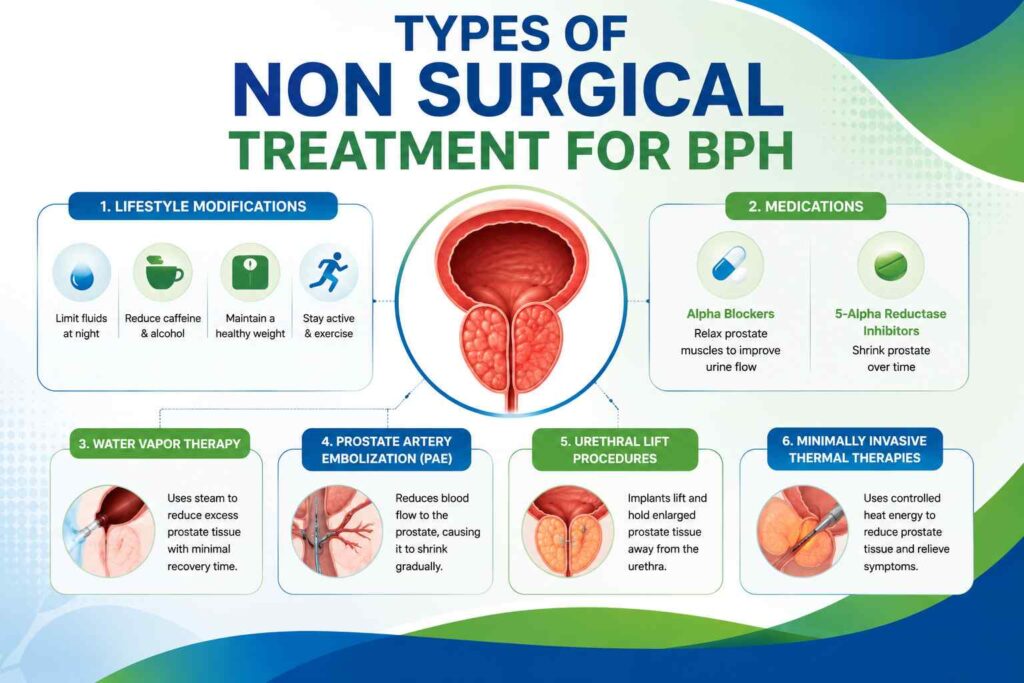
Several treatment approaches are available depending on symptom severity and prostate size.
1. Lifestyle Modifications
For mild symptoms, doctors often recommend lifestyle changes as the first line of management.
Helpful Lifestyle Changes
- Limit evening fluid intake
- Reduce caffeine consumption
- Reduce alcohol intake
- Maintain a healthy weight
- Exercise regularly
- Practice bladder training techniques
These changes may help improve urinary control and reduce symptom severity.
2. Medications for BPH
Medication is one of the most common forms of non surgical treatment for BPH.
Alpha Blockers
These medications relax the muscles around the bladder neck and prostate.
Benefits include:
- Faster symptom relief
- Improved urine flow
- Reduced urinary obstruction
5-Alpha Reductase Inhibitors
These medications work by shrinking the prostate over time.
Benefits include:
- Reduced prostate size
- Lower risk of urinary retention
- Long-term symptom improvement
Combination Therapy
Some patients benefit from using both medication types together.
3. Water Vapor Therapy
Water vapor therapy uses controlled steam energy to reduce excess prostate tissue.
Benefits
- Minimally invasive
- No major surgical incisions
- Quick recovery
- Improved urinary flow
- Preservation of sexual function in many cases
This option has become a popular non surgical treatment for BPH for suitable candidates.
4. Prostate Artery Embolization (PAE)
PAE is a procedure that reduces blood supply to the prostate, causing it to shrink gradually.
Advantages
- No major surgery
- Short recovery period
- Effective symptom improvement
- Suitable for selected patients
Many men choose this advanced non surgical treatment for BPH when medications are not sufficient.
5. Urethral Lift Procedures
These procedures use implants to hold enlarged prostate tissue away from the urethra.
Benefits
- Rapid symptom improvement
- Minimal downtime
- Outpatient treatment
- Preservation of sexual function
This option may be recommended for patients with specific prostate anatomy
Who Is a Good Candidate for Non Surgical Treatment for BPH

The ideal treatment depends on several factors.
Evaluation Factors
- Severity of symptoms
- Prostate size
- Overall health
- Age
- Existing medical conditions
- Treatment goals
A comprehensive assessment helps determine the most appropriate non surgical treatment for BPH for each individual.
Diagnostic Tests Before Treatment
Several tests may be performed to confirm BPH and assess symptom severity.
Medical History Review
A detailed discussion of symptoms and urinary habits.
Physical Examination
Including prostate assessment when necessary.
Urine Tests
Used to identify infections or other urinary conditions.
PSA Testing
Helps evaluate prostate health.
Ultrasound
Provides information about prostate size and bladder function.
Uroflowmetry
Measures urine flow rate and urinary performance
Benefits of Early Treatment
Seeking treatment early can prevent complications and improve long-term outcomes.
Improved Quality of Life
Patients often experience:
- Better sleep
- Reduced urinary urgency
- Greater confidence
- Improved daily comfort
Prevention of Complications
Early intervention may help reduce the risk of:
- Urinary retention
- Bladder damage
- Kidney problems
- Recurrent infections
Choosing the right non surgical treatment for BPH at an early stage can make a significant difference.
Recovery After Non Surgical Treatment for BPH
Recovery varies depending on the treatment method selected.
General Recovery Tips
- Stay hydrated
- Follow medical advice carefully
- Take prescribed medications as directed
- Avoid strenuous activity if recommended
- Attend follow-up appointments
Most patients return to normal activities relatively quickly after minimally invasive procedures
Tips for Managing BPH Symptoms Naturally
In addition to professional treatment, several habits may support urinary health.
Healthy Lifestyle Practices
- Maintain a balanced diet
- Exercise regularly
- Avoid excessive caffeine
- Reduce alcohol intake
- Manage stress
- Practice scheduled urination
These measures can complement a comprehensive non surgical treatment for BPH plan.
Potential Risks and Limitations
While non-surgical options are effective for many patients, results may vary.
Possible Considerations
- Some treatments may require ongoing medication
- Symptom improvement can vary
- Certain procedures may not be suitable for very large prostates
- Follow-up monitoring may be necessary
A personalized evaluation helps determine the most appropriate treatment strategy.
Conclusion
Choosing the right non surgical treatment for BPH can significantly improve urinary symptoms, comfort, and overall quality of life. From lifestyle modifications and medications to advanced minimally invasive procedures, several effective options are available for managing enlarged prostate symptoms. Early diagnosis, proper evaluation, and individualized treatment planning can help patients achieve better outcomes and maintain normal daily activities. Men experiencing persistent urinary symptoms should consider discussing non surgical treatment for BPH options with a qualified healthcare professional to determine the most suitable approach for their needs, especially when seeking effective care in Thrissur. For trusted information on benign prostatic hyperplasia (BPH), you can refer to the Mayo Clinic BHP Guide , which provides comprehensive information about symptoms, causes, diagnosis, and treatment options for an enlarged prostate.
Frequently Asked Questions
What is non surgical treatment for BPH
Non surgical treatment for BPH includes medications, lifestyle changes, and minimally invasive procedures that improve urinary symptoms without traditional surgery.
Can BPH be treated without surgery
Yes. Many patients successfully manage BPH through medications, lifestyle modifications, and minimally invasive treatments.
Are medications effective for BPH
Yes. Medications can help relax prostate muscles or reduce prostate size, improving urinary flow and symptom control.
What is the best non surgical treatment for BPH
The best treatment depends on symptom severity, prostate size, age, and overall health.
Is water vapor therapy considered non surgical
Yes. Water vapor therapy is a minimally invasive option commonly used as a non surgical treatment for BPH.
How long does it take to see results
Results vary depending on the treatment. Some patients notice improvement within days, while others may take several weeks or months.
Can lifestyle changes improve BPH symptoms
Yes. Healthy habits can reduce urinary symptoms and support overall prostate health.
Is BPH a form of cancer
No. BPH is a non-cancerous enlargement of the prostate gland.
Can BPH return after treatment
Some treatments may require ongoing management, and symptoms can recur in certain cases.
When should I seek medical advice for BPH
You should seek evaluation if urinary symptoms interfere with daily activities, sleep, or overall quality of life.