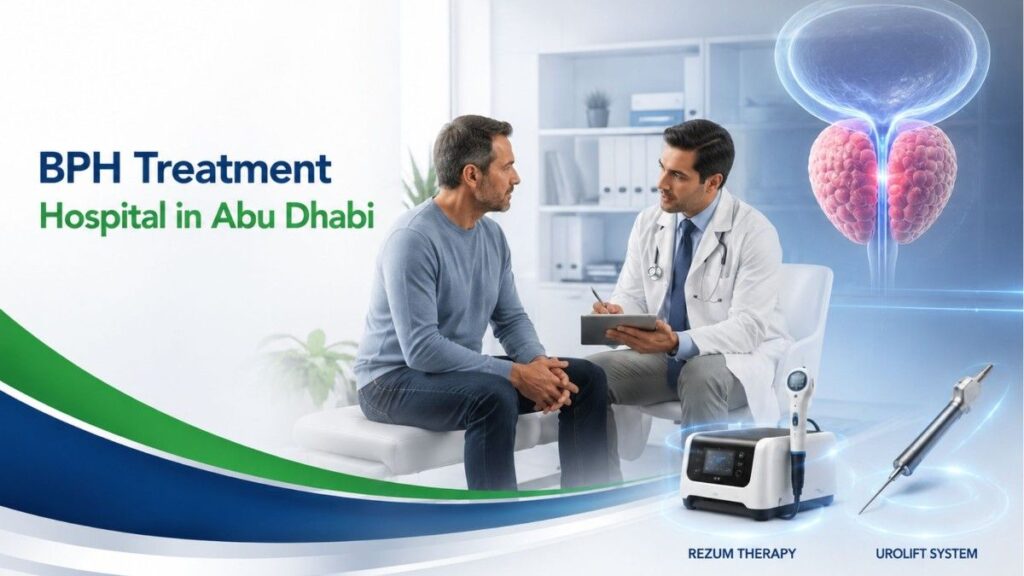
BPH Treatment Hospital in Abu Dhabi offers comprehensive care for men experiencing urinary problems caused by benign prostatic hyperplasia (BPH), also known as an enlarged prostate. As men age, the prostate gland naturally enlarges, often leading to bothersome urinary symptoms that affect daily life, sleep quality, and overall well-being. Seeking treatment from an experienced urology team ensures early diagnosis, effective symptom management, and access to advanced minimally invasive procedures.
If you are exploring modern treatment options, visit our guide on Rezum Treatment in Abu Dhabi to learn how water vapor therapy provides long-lasting relief from BPH symptoms without major surgery. This innovative treatment is suitable for many men looking for an effective solution with a quicker recovery.
Choosing a trusted BPH Treatment Hospital in Abu Dhabi gives patients access to experienced urologists, advanced diagnostic technology, personalized treatment plans, and state-of-the-art minimally invasive procedures that improve urinary function while preserving quality of life.
What Is Benign Prostatic Hyperplasia (BPH)?
Benign Prostatic Hyperplasia (BPH) is a non-cancerous enlargement of the prostate gland. The prostate surrounds the urethra, which carries urine from the bladder out of the body. As the prostate enlarges, it can compress the urethra, restricting urine flow and making it difficult to empty the bladder completely.
BPH is one of the most common urological conditions affecting men over the age of 50. Although it is not cancer, untreated BPH can significantly impact urinary health and quality of life.
Receiving care at a specialized BPH Treatment Hospital in Abu Dhabi helps ensure accurate diagnosis and access to the most suitable treatment options.
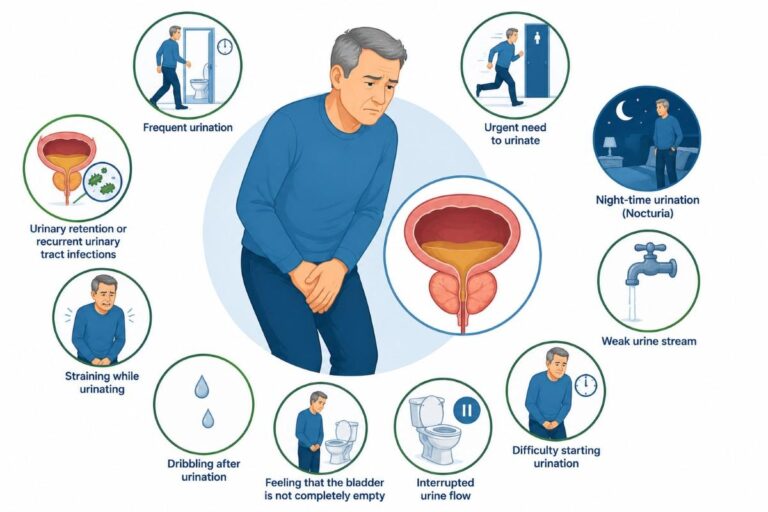
Symptoms of an Enlarged Prostate
The symptoms of BPH usually develop gradually and become more noticeable as the prostate enlarges.
Common symptoms include:
- Frequent urination
- Urgent need to urinate
- Night-time urination (Nocturia)
- Weak urine stream
- Difficulty starting urination
- Interrupted urine flow
- Feeling that the bladder is not completely empty
- Dribbling after urination
- Straining while urinating
As the condition progresses, some patients may develop urinary retention or recurrent urinary tract infections.
Causes and Risk Factors
Several factors increase the likelihood of developing benign prostatic hyperplasia.
Ageing
The risk of BPH rises significantly after the age of 50 due to natural hormonal changes.
Hormonal Changes
Changes in testosterone and other hormones over time contribute to prostate enlargement.
Family History
Men with a family history of BPH are more likely to develop the condition.
Obesity
Excess body weight has been associated with a higher risk of enlarged prostate and worsening urinary symptoms.
Diabetes
Poorly controlled diabetes may contribute to bladder dysfunction and increase urinary symptoms.
Sedentary Lifestyle
Lack of regular physical activity may increase the risk of developing BPH-related complications.
How Is BPH Diagnosed?
A specialized BPH Treatment Hospital in Abu Dhabi uses advanced diagnostic techniques to determine the severity of prostate enlargement and identify the most appropriate treatment.
Medical History
Your urologist will review:
- Urinary symptoms
- Medical conditions
- Medication history
- Family history
- Lifestyle factors
Physical Examination
A general examination may include a Digital Rectal Examination (DRE) to evaluate prostate size and consistency.
Urine Analysis
Urine testing helps detect:
- Infection
- Blood in urine
- Kidney abnormalities
Blood Tests
Common blood investigations include:
- PSA (Prostate-Specific Antigen)
- Kidney function tests
- Blood sugar levels
Ultrasound Scan
Ultrasound helps assess:
- Prostate size
- Bladder health
- Kidney condition
- Residual urine volume
Uroflowmetry
This non-invasive test measures urine flow rate and helps identify urinary obstruction.
Post-Void Residual (PVR) Test
A PVR test measures the amount of urine left in the bladder after urination, helping determine the severity of bladder emptying problems.
Treatment Options for BPH
Modern BPH Treatment Hospital in Abu Dhabi provides a wide range of treatment options based on symptom severity, prostate size, age, and overall health.
Treatment options include:
- Lifestyle modifications
- Prescription medications
- Alpha-blockers
- 5-alpha reductase inhibitors
- Rezum Therapy
- UroLift System
- Laser prostate surgery
- Transurethral Resection of the Prostate (TURP)
- Follow-up monitoring for mild symptoms
Your urologist will recommend the most appropriate treatment after a detailed evaluation.
Why Choose a BPH Treatment Hospital in Abu Dhabi?
Selecting an experienced BPH Treatment Hospital in Abu Dhabi ensures you receive evidence-based care using the latest diagnostic and treatment technologies.
Experienced Urologists
Specialist urologists provide accurate diagnosis and individualized treatment plans tailored to each patient’s condition.
Advanced Diagnostic Facilities
Hospitals are equipped with modern imaging, uroflowmetry, ultrasound, and laboratory services for comprehensive evaluation.
Minimally Invasive Treatments
Many hospitals offer advanced procedures such as Rezum Therapy and UroLift, helping patients recover faster with minimal discomfort.
Personalized Treatment Plans
Every patient receives a treatment plan based on prostate size, urinary symptoms, medical history, and lifestyle needs.
Comprehensive Follow-Up Care
Regular follow-up appointments ensure symptom improvement, monitor recovery, and support long-term prostate health.

Medications for BPH
For many patients, medications are the first line of treatment offered by a BPH Treatment Hospital in Abu Dhabi, especially when symptoms are mild to moderate.
Alpha-Blockers
Alpha-blockers relax the muscles around the prostate and bladder neck, allowing urine to flow more easily.
Benefits
- Improved urine flow
- Easier bladder emptying
- Reduced urinary frequency
- Better bladder control
- Quick symptom relief
5-Alpha Reductase Inhibitors
These medications gradually shrink the enlarged prostate by reducing the hormone responsible for prostate growth.
Benefits
- Decreases prostate size
- Slows disease progression
- Lowers the risk of urinary retention
- Reduces the need for future surgery
Your urologist may recommend combination therapy depending on the size of your prostate and the severity of your symptoms.
Rezum Therapy for BPH
One of the most advanced treatments available at a BPH Treatment Hospital in Abu Dhabi is Rezum Therapy, a minimally invasive procedure that uses sterile water vapor (steam) to reduce enlarged prostate tissue.
During the procedure, controlled steam is delivered into the enlarged areas of the prostate. The stored thermal energy destroys the targeted tissue, and over the following weeks, the body naturally absorbs it. As the prostate shrinks, pressure on the urethra decreases, improving urinary flow and relieving BPH symptoms.
Benefits of Rezum Therapy
- Minimally invasive procedure
- No surgical incisions
- Outpatient treatment
- Minimal bleeding
- Faster recovery
- Preserves urinary and sexual function for many patients
- Long-lasting symptom relief
- Reduced dependence on long-term medication
Many patients experience gradual improvement in urinary symptoms within a few weeks, with continued improvement over the next two to three months.
UroLift System
The UroLift System is another minimally invasive treatment available for selected patients with BPH.
Instead of removing prostate tissue, small implants are used to lift and hold the enlarged prostate away from the urethra, allowing urine to flow more freely.
Advantages of UroLift
- No cutting or removal of tissue
- Short procedure time
- Quick return to normal activities
- Preservation of sexual function
- Immediate improvement in urine flow for many patients
Your urologist will determine whether UroLift or Rezum Therapy is more suitable based on your prostate anatomy and symptoms.
Laser Therapy and TURP
For patients with larger prostates or more severe urinary obstruction, surgical treatment may be recommended.
Laser Prostate Surgery
Laser treatment removes or vaporizes excess prostate tissue using high-energy laser technology.
Benefits include:
- Less bleeding
- Shorter hospital stay
- Faster recovery than traditional surgery
- Effective symptom relief
Transurethral Resection of the Prostate (TURP)
TURP has long been considered a standard surgical treatment for moderate to severe BPH.
During the procedure, excess prostate tissue is removed through the urethra without external incisions.
Although highly effective, TURP generally involves a longer recovery period than minimally invasive procedures such as Rezum Therapy.
Recovery After BPH Treatment
Recovery following treatment at a BPH Treatment Hospital in Abu Dhabi depends on the procedure performed and your overall health.
Immediately After Treatment
Patients may experience:
- Mild burning during urination
- Increased urinary frequency
- Temporary urinary urgency
- Small amounts of blood in the urine
- Mild pelvic discomfort
These symptoms usually improve as healing progresses.
Long-Term Recovery
Over the following weeks:
- Urine flow becomes stronger.
- Bladder emptying improves.
- Night-time urination decreases.
- Urinary urgency becomes less frequent.
- Overall quality of life improves significantly.
Patients treated with Rezum Therapy often continue to notice improvement for up to three months.
Lifestyle Tips for Better Prostate Health
Healthy habits can support treatment outcomes and reduce the progression of BPH.
Stay Physically Active
Regular exercise supports bladder and prostate health while helping maintain a healthy weight.
Maintain a Balanced Diet
Eat plenty of vegetables, fruits, whole grains, and healthy fats while limiting processed foods.
Drink Fluids Wisely
Stay hydrated during the day but reduce fluid intake a few hours before bedtime to minimize nocturia.
Limit Caffeine and Alcohol
These beverages can irritate the bladder and worsen urinary symptoms.
Do Not Delay Urination
Empty your bladder regularly rather than holding urine for extended periods.
Attend Regular Follow-Up Visits
Routine check-ups allow your urologist to monitor prostate health and adjust treatment when needed.
When Should You Consult a Urologist?
You should visit a BPH Treatment Hospital in Abu Dhabi if you experience:
- Frequent urination
- Weak urine stream
- Difficulty starting urination
- Interrupted urine flow
- Incomplete bladder emptying
- Night-time urination
- Blood in the urine
- Recurrent urinary tract infections
- Sudden inability to urinate
Early evaluation helps prevent complications such as urinary retention, bladder damage, and kidney problems.
Conclusion
Choosing a trusted BPH Treatment Hospital in Abu Dhabi ensures access to experienced urologists, advanced diagnostic technology, and personalized treatment options for benign prostatic hyperplasia. Whether your condition is managed with medications, lifestyle changes, minimally invasive procedures such as Rezum Therapy or UroLift, or surgical intervention, early treatment can significantly improve urinary function and quality of life. If you are experiencing symptoms of an enlarged prostate, consulting a specialist promptly can help you receive the most appropriate care and prevent long-term complications.
For reliable information on benign prostatic hyperplasia and treatment options, visit the Urology Care Foundation.
Frequently Asked Questions
Find answers to common questions about BPH Treatment Hospital in Abu Dhabi and enlarged prostate care.
What is a BPH Treatment Hospital in Abu Dhabi?
A BPH Treatment Hospital in Abu Dhabi is a specialized healthcare facility that provides comprehensive diagnosis, treatment, and long-term management for benign prostatic hyperplasia (BPH), also known as an enlarged prostate.
What are the common symptoms of BPH?
Common symptoms include frequent urination, weak urine stream, difficulty starting urination, interrupted urine flow, incomplete bladder emptying, urinary urgency, and frequent nighttime urination (nocturia).
How is BPH diagnosed?
BPH is diagnosed through a medical history review, physical examination, digital rectal examination (DRE), PSA blood test, urine analysis, ultrasound, uroflowmetry, and post-void residual (PVR) urine measurement.
What treatment options are available for BPH?
Treatment options include lifestyle modifications, medications, Rezum Therapy, UroLift, laser prostate surgery, Transurethral Resection of the Prostate (TURP), and other minimally invasive procedures depending on the severity of symptoms.
Is Rezum Therapy available at a BPH Treatment Hospital in Abu Dhabi?
Yes. Many specialized BPH Treatment Hospitals in Abu Dhabi offer Rezum Therapy, a minimally invasive procedure that uses sterile water vapor to reduce enlarged prostate tissue and improve urinary symptoms.
Who is a suitable candidate for minimally invasive BPH treatment?
Men with moderate to severe urinary symptoms caused by benign prostatic hyperplasia who wish to avoid major surgery may be suitable candidates. A urologist will determine the best treatment after a detailed evaluation.
How long is the recovery after BPH treatment?
Recovery varies depending on the treatment. Patients undergoing minimally invasive procedures such as Rezum Therapy often return to normal activities within a few days, while complete symptom improvement continues over several weeks.
Can BPH be treated without surgery?
Yes. Many patients successfully manage BPH with medications, lifestyle changes, and minimally invasive treatments like Rezum Therapy or UroLift, reducing or eliminating the need for conventional surgery.
When should I visit a BPH Treatment Hospital in Abu Dhabi?
You should consult a urologist if you experience persistent urinary symptoms, frequent nighttime urination, weak urine flow, urinary retention, blood in the urine, or recurrent urinary tract infections.
Why choose a BPH Treatment Hospital in Abu Dhabi?
Choosing a BPH Treatment Hospital in Abu Dhabi gives you access to experienced urologists, advanced diagnostic technology, personalized treatment plans, minimally invasive procedures, comprehensive follow-up care, and effective long-term management of enlarged prostate symptoms.