Causes of Benign Prostatic Hyperplasia: Understanding Why the Prostate Enlarges
Benign Prostatic Hyperplasia (BPH) is one of the most common urological conditions affecting men as they grow older. Understanding the causes of benign prostatic hyperplasia can help men recognize risk factors early, seek timely medical advice, and take proactive steps to protect their urinary health.
Although BPH is not cancer and does not increase the risk of prostate cancer, it can significantly affect quality of life by causing bothersome urinary symptoms. As the prostate enlarges, it may press against the urethra and interfere with normal urine flow.
This guide explains the causes of benign prostatic hyperplasia, risk factors, symptoms, diagnosis, treatment options, and practical tips for maintaining prostate health.
What Is Benign Prostatic Hyperplasia?
Benign Prostatic Hyperplasia is a non-cancerous enlargement of the prostate gland. The prostate is a small gland located below the bladder and surrounds the urethra, the tube that carries urine out of the body.
As men age, the prostate often continues to grow. In some individuals, this enlargement becomes significant enough to narrow the urethra and create urinary symptoms.
Understanding the causes of benign prostatic hyperplasia is essential because the condition develops gradually and often progresses over time if left untreated.
Why Understanding the Causes of Benign Prostatic Hyperplasia Matters
Knowing the causes of benign prostatic hyperplasia helps men identify risk factors and understand why symptoms develop.
Benefits of understanding BPH causes include:
- Earlier diagnosis
- Better symptom management
- Improved treatment planning
- Reduced risk of complications
- Better long-term urinary health
Many men assume urinary symptoms are simply a normal part of aging. While age plays a major role, several other factors contribute to prostate enlargement.
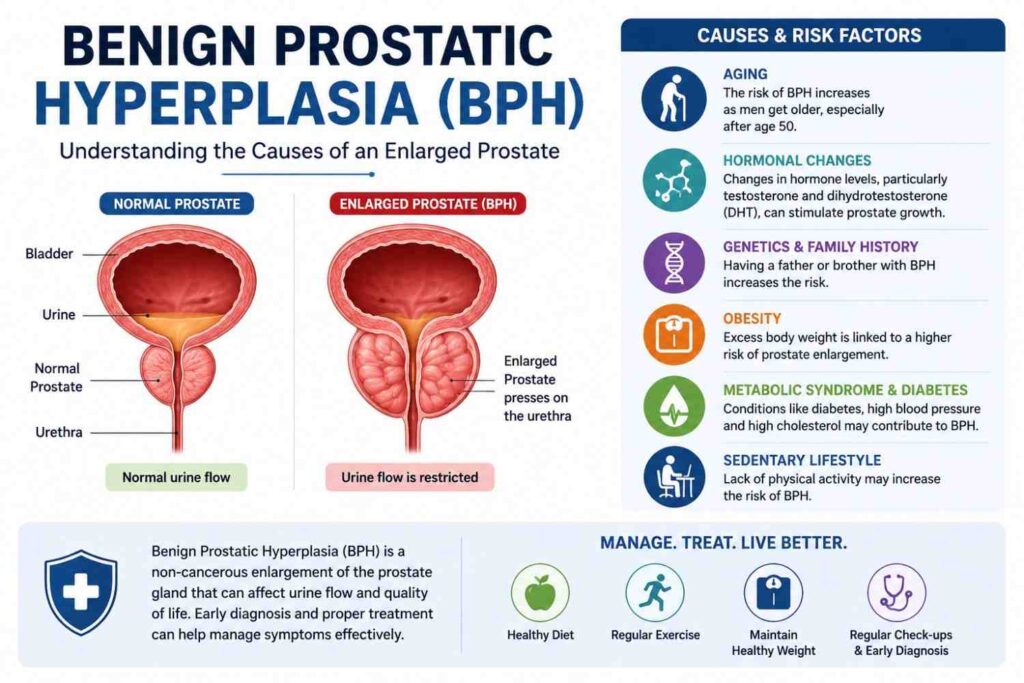
The Main Causes of Benign Prostatic Hyperplasia
1. Age-Related Hormonal Changes
One of the most important causes of benign prostatic hyperplasia is hormonal change associated with aging.
As men get older:
- Testosterone levels gradually decline
- Estrogen levels become relatively higher
- Hormonal balance shifts
These hormonal changes may stimulate prostate tissue growth, causing the gland to enlarge over time.
Most cases of BPH occur in men over the age of 50, making aging the strongest risk factor.
2. Dihydrotestosterone (DHT) Activity
DHT is a hormone derived from testosterone and plays an important role in prostate development.
Research suggests that:
- DHT remains active within prostate tissue even when testosterone levels decline
- Excessive DHT stimulation may contribute to continued prostate growth
- Some medications used for BPH treatment specifically target DHT production
This hormonal mechanism is considered one of the major causes of benign prostatic hyperplasia.
3. Family History and Genetics
Genetics can significantly influence prostate health.
Men are more likely to develop BPH if:
- Their father had prostate enlargement
- Brothers have been diagnosed with BPH
- There is a strong family history of urinary problems
Genetic predisposition is among the recognized causes of benign prostatic hyperplasia, particularly in men who develop symptoms at a younger age.
4. Obesity and Excess Body Weight
Obesity has been linked to an increased risk of prostate enlargement.
Excess body weight may contribute through:
- Hormonal imbalance
- Increased inflammation
- Metabolic changes
- Insulin resistance
Several studies suggest that overweight men are more likely to experience moderate to severe urinary symptoms related to BPH.
5. Metabolic Syndrome
Metabolic syndrome refers to a group of health conditions that occur together, including:
- High blood pressure
- Elevated blood sugar
- Excess abdominal fat
- Abnormal cholesterol levels
These metabolic abnormalities may influence prostate growth and are considered important causes of benign prostatic hyperplasia.
6. Chronic Inflammation
Long-term inflammation within prostate tissue may stimulate abnormal cell growth.
Inflammation can result from:
- Aging processes
- Repeated irritation
- Metabolic disorders
- Certain medical conditions
Researchers continue to investigate the relationship between chronic inflammation and prostate enlargement.
7. Sedentary Lifestyle
Lack of physical activity may increase the risk of BPH development.
A sedentary lifestyle can contribute to:
- Weight gain
- Poor circulation
- Metabolic dysfunction
- Increased inflammation
Regular exercise has been associated with improved urinary health and may help reduce symptom severity.
8. Diabetes
Diabetes is increasingly recognized among the potential causes of benign prostatic hyperplasia.
Men with diabetes may experience:
- Hormonal changes
- Nerve dysfunction affecting bladder function
- Increased inflammation
- Higher risk of urinary symptoms
Proper diabetes management may support better prostate health.
9. Cardiovascular Disease
Some studies suggest a connection between cardiovascular health and prostate enlargement.
Potential links include:
- Reduced blood flow
- Chronic inflammation
- Shared metabolic risk factors
Maintaining heart health may indirectly support prostate function.
10. Natural Cellular Aging
The prostate naturally undergoes cellular changes as part of the aging process.
These changes can include:
- Increased cell growth
- Reduced cellular regulation
- Tissue remodeling
Natural aging remains one of the most established causes of benign prostatic hyperplasia worldwide.
How BPH Is Diagnosed
Proper diagnosis is essential before beginning treatment.
- Medical History- Doctors review symptoms and overall health.
- Physical Examination-A prostate assessment may be performed.
- Urine Testing- Helps identify infection or other urinary conditions.
- Blood Tests- May include prostate-specific antigen (PSA) evaluation.
- Ultrasound-Provides information about prostate size and urinary tract health.
- Urine Flow Studies-Measures how effectively urine leaves the bladder.
Tips to Reduce the Risk of BPH Progression
Although aging cannot be prevented, certain lifestyle measures may help.
- Stay Physically Active – Regular exercise supports urinary and metabolic health.
- Maintain a Healthy Weight- Weight control may reduce several risk factors associated with BPH.
Follow a Balanced Diet
Focus on:
- Fruits
- Vegetables
- Whole grains
- Lean proteins
Control Chronic Conditions
Manage:
- Diabetes
- High blood pressure
- High cholesterol
Possible Complications of Untreated BPH
Without proper management, BPH may lead to:
- Urinary retention
- Recurrent urinary tract infections
- Bladder stones
- Bladder damage
- Kidney problems
- Progressive urinary dysfunction
Early intervention often helps prevent these complications.
Conclusion
Understanding the causes of benign prostatic hyperplasia is an important step toward protecting long-term prostate and urinary health. Aging, hormonal changes, genetics, obesity, metabolic conditions, and lifestyle factors all contribute to the development of BPH. Recognizing these risk factors early allows men to seek appropriate evaluation and treatment before symptoms significantly affect quality of life. With modern diagnostic methods and effective treatment options available, most men can successfully manage the symptoms associated with the causes of benign prostatic hyperplasia and maintain a healthy, active lifestyle.
Early evaluation and timely treatment can help prevent complications and support long-term urinary health. For more detailed medical information about Benign Prostatic Hyperplasia, visit the Urology Care Foundation’s guide to BPH.