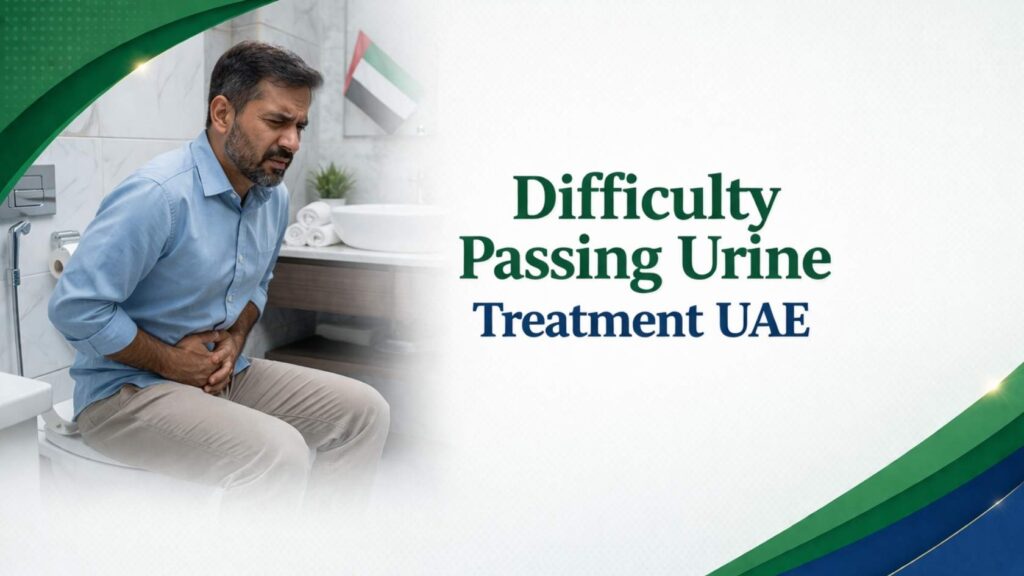
Difficulty Passing Urine Treatment UAE
Difficulty passing urine, medically known as urinary retention or obstructive urinary symptoms, is a common condition that can affect individuals of all ages. In the UAE, advanced urological treatments provide safe and effective solutions for this condition, helping patients regain normal urinary function quickly and comfortably. Whether caused by an underlying medical condition, infection, or anatomical obstruction, timely treatment is essential to prevent complications such as bladder damage, kidney issues, or recurrent infections.
What Is Difficulty Passing Urine?
Difficulty passing urine refers to any problem related to emptying the bladder completely or starting urination. It can range from mild hesitancy to complete inability to urinate. The condition can be acute (sudden onset) or chronic (long-term), and may occur due to a blockage, weakened bladder muscles, or nerve-related issues affecting bladder control.
Common Causes
- Benign Prostatic Hyperplasia (BPH) – Enlarged prostate in men can compress the urethra.
- Urinary Tract Infection (UTI) – Infections can cause inflammation and make urination painful or difficult.
- Urethral Stricture – Narrowing of the urethra due to injury, infection, or scarring.
- Neurological Conditions – Diseases like diabetes, multiple sclerosis, or spinal cord injury affecting bladder control.
- Bladder Stones – Stones inside the bladder can obstruct urine flow.
- Medications – Certain drugs can interfere with bladder muscle function.
- Pelvic Organ Prolapse – In women, bladder prolapse can lead to retention or difficulty urinating.
Early diagnosis of the cause is crucial to determine the most effective treatment.
Symptoms Associated with Difficulty Passing Urine
- Hesitancy or delay in starting urination
- Weak urine stream
- Frequent urge to urinate with small volumes
- Pain or burning during urination
- Feeling of incomplete bladder emptying
- Urgency or nighttime urination (nocturia)
- In severe cases, inability to urinate at all
Diagnosis and Evaluation
Doctors in the UAE use a combination of clinical evaluation and diagnostic tests to determine the underlying cause. Common evaluations include:
- Medical history and physical examination
- Urine analysis and culture to check for infection
- Blood tests for kidney function
- Ultrasound or CT scan of the urinary tract
- Uroflowmetry to measure urine flow rate
- Cystoscopy to inspect the urethra and bladder internally
- Neurological assessment if nerve damage is suspected
Accurate diagnosis is essential for effective treatment.
Non-Surgical Treatments
Depending on the cause, difficulty passing urine can often be treated with non-surgical methods:
- Medications:
- Alpha-blockers to relax bladder neck muscles (common in men with BPH)
- Antibiotics for urinary tract infections
- Anticholinergic or cholinergic agents for bladder muscle dysfunction
- Catheterization:
- Temporary use of a catheter to relieve acute urinary retention
- Intermittent self-catheterization may be advised for chronic cases
- Lifestyle Modifications:
- Adequate fluid intake
- Avoiding caffeine and alcohol, which irritate the bladder
- Timed voiding schedules
- Pelvic floor exercises to strengthen bladder control
Surgical Treatments
If conservative measures fail or obstruction is severe, surgical intervention may be necessary. Common procedures include:
- Transurethral Resection of the Prostate (TURP): Removes excess prostate tissue in men with BPH.
- Urethral Dilation or Urethrotomy: Widening a narrowed urethra.
- Bladder Stone Removal: Endoscopic or minimally invasive removal of stones blocking urine flow.
- Neuromodulation or Implantable Devices: For nerve-related bladder dysfunction.
- Pelvic Surgery: Corrects pelvic organ prolapse in women causing obstruction.
Minimally invasive techniques are preferred in the UAE to ensure faster recovery and minimal complications.
Recovery and Post-Treatment Care
Recovery depends on the type of treatment:
After medications or catheterization:
- Frequent monitoring of urine output
- Follow-up urine tests to ensure infection clearance
After surgery:
- Short hospital stay (often 1–3 days for minimally invasive procedures)
- Temporary catheter placement for 1–7 days
- Avoid heavy lifting for 2–4 weeks
- Adequate hydration to promote healing
- Follow-up checkups to monitor bladder function
Proper care after treatment reduces recurrence and improves long-term urinary health.
Potential Complications if Untreated
- Urinary tract infections
- Bladder damage or reduced capacity
- Kidney damage due to back pressure
- Chronic pain or discomfort
- Formation of bladder stones
Prompt treatment is essential to prevent serious complications and preserve urinary function.
Lifestyle Tips for Prevention
- Drink sufficient water daily (2–3 liters)
- Avoid prolonged holding of urine
- Maintain a healthy weight
- Manage underlying conditions like diabetes or prostate enlargement
- Perform regular pelvic floor exercises
- Limit irritants such as caffeine, alcohol, and highly acidic foods
Preventive measures reduce the risk of recurrence and improve overall urinary health.
Why Seek Treatment in the UAE?
The UAE offers state-of-the-art urological care with:
- Advanced diagnostic imaging
- Minimally invasive and laser-assisted procedures
- Experienced urologists and multidisciplinary care
- Quick recovery and short hospital stays
- Personalized treatment plans for all age groups
Patients benefit from modern techniques that ensure safe, effective, and comfortable treatment for difficulty passing urine.
Conclusion
Difficulty passing urine is a common but manageable condition that requires accurate diagnosis and timely treatment. In the UAE, patients have access to modern therapies ranging from medications and lifestyle changes to minimally invasive surgeries. Early intervention not only relieves symptoms but also prevents complications such as kidney damage, bladder dysfunction, and recurrent infections. With expert care and proper follow-up, individuals can regain normal urinary function and maintain long-term urinary health in the UAE.
Frequently Asked Questions
1. What causes difficulty passing urine?
Difficulty passing urine can be caused by prostate enlargement, urinary tract infections, urethral strictures, bladder stones, neurological conditions, or medications.
2. How is difficulty passing urine diagnosed?
Diagnosis includes medical history, physical examination, urine tests, blood tests, ultrasound or CT scans, uroflowmetry, and sometimes cystoscopy.
3. Can medications help with urinary retention?
Yes, medications like alpha-blockers, antibiotics, or drugs to improve bladder muscle function may relieve symptoms depending on the cause.
4. When is catheterization necessary?
Catheterization is needed in acute urinary retention or severe difficulty passing urine to relieve immediate obstruction.
5. What are the surgical options?
Surgical options include TURP for prostate enlargement, urethral dilation, bladder stone removal, neuromodulation for nerve-related issues, or pelvic surgery in women with prolapse.
6. How long is the recovery period after treatment?
Recovery depends on the treatment type. Minimally invasive surgeries typically require 1–3 days of hospital stay, with normal activities resumed in 1–4 weeks.
7. Are there risks if difficulty passing urine is left untreated?
Untreated urinary retention can lead to infections, bladder damage, kidney issues, chronic pain, or formation of bladder stones.
8. Can lifestyle changes help improve urinary symptoms?
Yes, drinking enough water, avoiding caffeine and alcohol, practicing pelvic floor exercises, and maintaining a healthy weight can help reduce symptoms.
9. Is difficulty passing urine common in both men and women?
Yes, while causes differ (BPH in men, pelvic organ prolapse in women), both genders can experience urinary retention or obstruction.
10. Why is treatment in the UAE recommended?
The UAE offers advanced diagnostics, minimally invasive procedures, expert urologists, and fast recovery, ensuring effective and safe treatment.