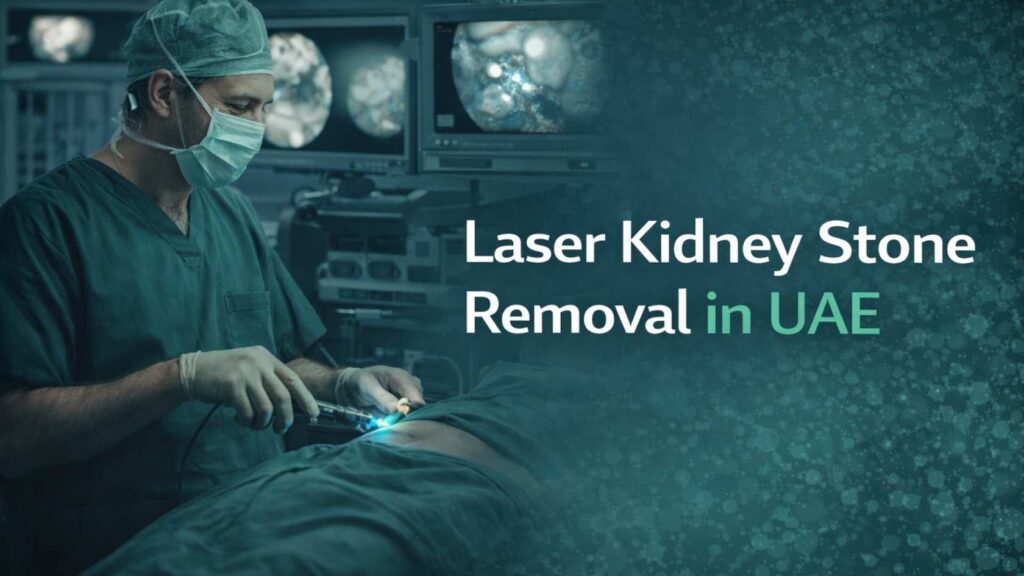
Laser Kidney Stone Removal in UAE
Laser kidney stone removal in UAE is an advanced minimally invasive treatment used to break and remove kidney stones from the urinary tract. Kidney stones are solid mineral deposits that form inside the kidneys and can cause severe pain when they move through the urinary system. Laser technology has significantly improved the treatment of kidney stones by allowing precise stone fragmentation with minimal tissue damage and faster recovery.
This modern procedure uses a specialized laser to break kidney stones into very small fragments, which can then pass naturally through urine or be removed during the procedure. Because laser treatment is highly precise, it allows doctors to treat stones effectively while protecting surrounding tissues in the urinary tract.
Understanding Kidney Stones
Kidney stones are hard mineral deposits that form when certain substances in urine become concentrated and crystallize. Over time, these crystals may grow larger and form stones inside the kidneys.
Several factors can contribute to the formation of kidney stones, including:
Dehydration
High levels of minerals such as calcium or uric acid in urine
Diet high in salt or certain proteins
Family history of kidney stones
Certain metabolic conditions
Kidney stones vary in size. Some may be very small and pass naturally through urine, while others can become large enough to block the urinary tract and require medical treatment.
Symptoms of Kidney Stones
Kidney stones may not cause symptoms until they begin moving within the urinary tract. When a stone blocks the ureter, which carries urine from the kidney to the bladder, it can cause intense pain.
Common symptoms include:
Severe pain in the lower back or side
Pain that spreads to the lower abdomen or groin
Blood in the urine
Nausea or vomiting
Frequent urination
Burning sensation during urination
If these symptoms occur, medical evaluation is recommended to confirm the presence and size of the kidney stone.
What Is Laser Kidney Stone Removal?
Laser kidney stone removal is a minimally invasive procedure used to treat kidney stones that cannot pass naturally. The procedure typically uses a technique called ureteroscopy with laser lithotripsy.
During the procedure, a thin instrument called a ureteroscope is inserted through the urethra and bladder into the ureter or kidney. A laser fiber is then used to break the stone into smaller fragments.
These fragments may either be removed immediately or left to pass naturally through urine.
Because the procedure does not require large surgical incisions, it is considered minimally invasive and usually allows quicker recovery compared with traditional surgery.
How Laser Lithotripsy Works
Laser lithotripsy uses concentrated laser energy to break kidney stones into very small pieces.
The process typically involves:
Inserting a ureteroscope through the urinary passage.
Locating the kidney stone using a camera attached to the scope.
Delivering laser energy directly to the stone.
Breaking the stone into tiny fragments.
Removing fragments or allowing them to pass naturally.
The laser energy is highly precise, which helps protect surrounding tissues while effectively breaking the stone.
Benefits of Laser Kidney Stone Removal
Laser kidney stone removal offers several advantages compared with traditional surgical procedures.
Minimally Invasive Treatment
The procedure is performed through natural urinary pathways without large surgical incisions.
Precise Stone Fragmentation
Laser energy allows accurate targeting of stones while minimizing damage to surrounding tissues.
Effective for Different Stone Types
Laser lithotripsy can treat many types of kidney stones regardless of their composition.
Faster Recovery
Most patients recover quickly and can return to normal activities within a short time.
Short Hospital Stay
In many cases, patients may return home the same day or after a short observation period.
Who May Need Laser Kidney Stone Removal
Laser kidney stone removal may be recommended for individuals who have:
Kidney stones too large to pass naturally
Stones causing persistent pain
Stones blocking the urinary tract
Recurrent urinary infections caused by stones
Stones that do not respond to medication
Treatment decisions depend on stone size, location, and overall patient health.
Preparation Before the Procedure
Before undergoing laser kidney stone removal, patients typically undergo a detailed evaluation.
Common pre-procedure steps may include:
Imaging tests such as ultrasound or CT scan
Urine tests to check for infection
Blood tests to assess kidney function
Medical history review
Patients may also receive instructions about fasting or temporarily stopping certain medications before the procedure.
What Happens During the Procedure
Laser kidney stone removal is usually performed under anesthesia to ensure patient comfort.
During the procedure:
A thin ureteroscope is inserted through the urethra into the urinary tract.
The camera on the scope helps locate the kidney stone.
A laser fiber is used to break the stone into small pieces.
Stone fragments may be removed using tiny instruments.
The procedure duration varies depending on the size and location of the stone.
Recovery After Laser Kidney Stone Removal
Recovery from laser lithotripsy is generally quick because the procedure does not involve large incisions.
During the recovery period, patients may experience:
Mild discomfort during urination
Small amounts of blood in urine
Frequent urination for a short time
Passing small stone fragments
These symptoms usually improve within a few days.
Doctors may recommend drinking plenty of water to help flush remaining stone fragments from the urinary tract.
Possible Risks and Side Effects
Laser kidney stone removal is considered safe, but like all medical procedures, it may carry some potential risks.
Possible side effects include:
Temporary blood in urine
Urinary tract infection
Mild pain during urination
Temporary swelling of the urinary tract
Serious complications are uncommon when the procedure is performed under proper medical care.
Preventing Future Kidney Stones
After treatment, lifestyle changes may help reduce the risk of future kidney stones.
Helpful preventive measures include:
Drinking adequate water daily
Reducing salt intake
Maintaining a balanced diet
Limiting foods high in oxalates if advised
Managing underlying medical conditions
Regular follow-up visits may also help monitor kidney health and prevent recurrence.
Advantages of Modern Laser Technology
Advances in laser technology have significantly improved kidney stone treatment.
Modern laser systems allow:
Precise targeting of stones
Treatment of stones in different locations
Reduced risk of injury to surrounding tissues
Effective fragmentation of large stones
These improvements make laser lithotripsy one of the most commonly used treatments for kidney stones today.
Long-Term Outcomes
Most patients experience complete relief after laser kidney stone removal. Once the stones are removed or passed naturally, symptoms such as pain and urinary discomfort usually resolve.
Long-term outcomes are generally favorable when patients follow preventive measures and maintain healthy hydration habits.
Early detection and treatment of kidney stones can prevent complications and support better kidney health.
Final Thoughts
Laser kidney stone removal is a modern and effective treatment option for individuals suffering from kidney stones. By using advanced laser technology, the procedure breaks stones into small fragments while minimizing damage to surrounding tissues. This minimally invasive approach allows faster recovery, shorter hospital stays, and effective relief from kidney stone symptoms. With proper medical care and preventive lifestyle habits, laser kidney stone removal continues to be an important treatment option for managing kidney stones across the UAE.
Frequently Asked Questions.
1. What is laser kidney stone removal?
Laser kidney stone removal is a minimally invasive procedure that uses laser energy to break kidney stones into very small fragments so they can be removed or passed naturally through urine.
2. How does laser lithotripsy work?
A thin instrument called a ureteroscope is inserted through the urinary tract to locate the stone. A laser fiber then breaks the stone into smaller pieces.
3. Who is a candidate for laser kidney stone removal?
Patients with kidney stones that are too large to pass naturally, causing severe pain, urinary blockage, or repeated infections may require laser stone removal.
4. Is laser kidney stone removal painful?
The procedure is usually performed under anesthesia, so patients typically do not feel pain during the treatment.
5. How long does the procedure take?
Laser kidney stone removal generally takes between 30 minutes and 1 hour depending on the size and location of the stone.
6. What is the recovery time after the procedure?
Most patients recover quickly and can return to normal activities within a few days after the procedure.
7. Are there any side effects after laser kidney stone removal?
Some temporary side effects may include mild pain during urination, small amounts of blood in urine, or frequent urination.
8. Can laser treatment remove all types of kidney stones?
Yes, laser lithotripsy is effective for most types of kidney stones regardless of their composition.
9. How can kidney stones be prevented after treatment?
Drinking plenty of water, reducing salt intake, and following dietary advice can help reduce the risk of future kidney stones.
10. Is laser kidney stone removal safe?
Yes, it is considered a safe and effective treatment when performed by experienced medical professionals using proper medical evaluation.