
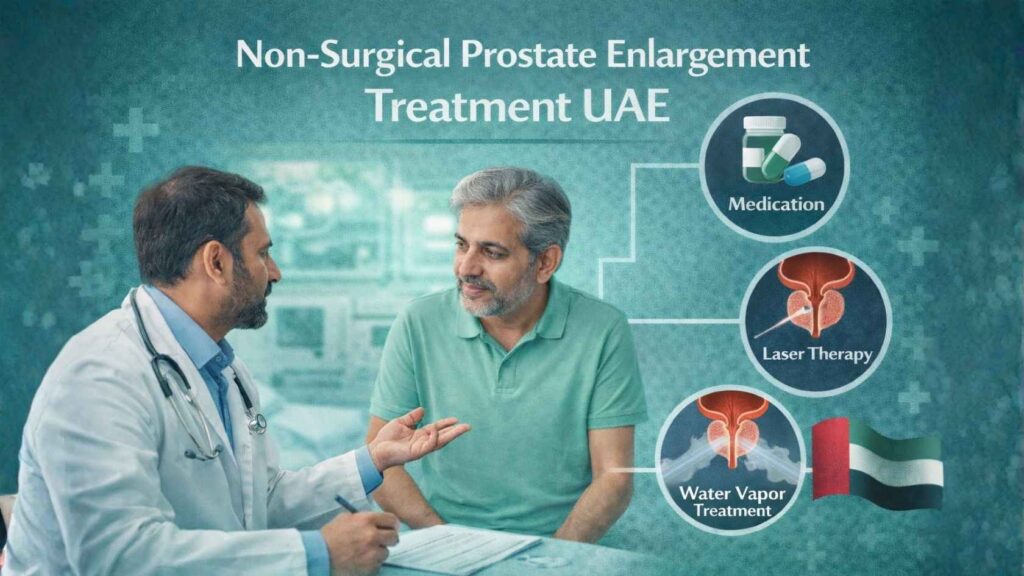
Non Surgical Prostate Enlargement Treatment UAE
Non surgical prostate enlargement treatment UAE refers to modern medical approaches designed to relieve urinary symptoms caused by benign prostatic hyperplasia (BPH) without performing major surgery. Prostate enlargement is a common condition that affects many men as they age. When the prostate grows larger, it can press against the urethra and restrict the flow of urine. This pressure can cause uncomfortable urinary symptoms that disrupt daily life and sleep. Non-surgical treatment options aim to reduce these symptoms, improve urine flow, and support long-term prostate health while avoiding the risks and recovery time associated with traditional surgical procedures.
These treatments focus on minimally invasive techniques, targeted therapies, and structured medical management. Many individuals prefer non-surgical approaches because they allow faster recovery, lower complication risk, and minimal interruption to normal routines.
Understanding Prostate Enlargement
The prostate is a small gland that plays a role in male reproductive function. It surrounds the urethra, which is the tube responsible for carrying urine from the bladder out of the body.
As men grow older, the prostate may gradually increase in size. This enlargement is known as benign prostatic hyperplasia. Although it is not cancerous, the condition can cause several urinary difficulties.
Common symptoms of prostate enlargement include:
Weak urine stream
Difficulty starting urination
Frequent urination during the day
Waking up multiple times at night to urinate
Urgency to urinate suddenly
Feeling that the bladder is not completely empty
If symptoms worsen over time, they can significantly affect comfort, sleep quality, and overall lifestyle.
Why Many Patients Prefer Non-Surgical Treatment
Traditional prostate surgery can be effective, but it may involve hospital admission, longer recovery periods, and potential complications.
Non-surgical treatments are increasingly preferred because they offer several advantages:
Reduced recovery time
Lower risk of complications
Minimal disruption to surrounding tissues
Shorter treatment sessions
Faster return to daily activities
These options focus on relieving urinary obstruction while preserving normal urinary and sexual function.
Types of Non Surgical Prostate Enlargement Treatments
Several non-surgical treatment options are available for managing prostate enlargement. The choice depends on symptom severity, prostate size, overall health, and personal treatment preferences.
Medication-Based Management
For many patients, medications are the first line of treatment for prostate enlargement. These medications help relax prostate muscles or reduce prostate size over time.
Common medication approaches include:
Alpha-blockers to relax prostate and bladder muscles
5-alpha reductase inhibitors to shrink prostate tissue
Combination therapy for enhanced symptom relief
While medications can reduce symptoms, they often require long-term use and regular monitoring.
Minimally Invasive Steam Therapy
Water vapor therapy is a modern minimally invasive treatment used to reduce enlarged prostate tissue. This therapy delivers controlled steam energy into the prostate, causing excess tissue to shrink gradually.
Benefits of steam therapy include:
Short treatment time
No surgical incision
Same-day discharge
Gradual natural healing process
Over several weeks, the treated tissue is absorbed by the body, allowing the urinary passage to widen.
Prostatic Urethral Lift
Another non-surgical technique involves using small implants to lift prostate tissue away from the urethra. This procedure improves urine flow without removing prostate tissue.
Advantages include:
Immediate improvement in urine flow
Minimal recovery time
Preservation of sexual function
No tissue removal
Laser-Based Therapies
Laser technologies can be used to treat prostate enlargement with minimal invasiveness. Laser therapy works by using focused energy to reduce obstructive tissue and improve urinary flow.
Laser procedures may involve:
Vaporization of excess prostate tissue
Targeted removal of obstructive tissue
Improved bladder emptying
These techniques are designed to reduce bleeding and shorten recovery compared with conventional surgery.
How Non Surgical Treatments Work
Although each treatment method uses different technology, the primary goal remains the same: reducing pressure on the urethra caused by enlarged prostate tissue.
Most non-surgical treatments work by:
Shrinking prostate tissue
Lifting obstructing tissue away from the urethra
Relaxing muscles that affect urine flow
As the obstruction is relieved, the bladder can empty more efficiently, improving urinary comfort.
What to Expect During Evaluation
Before selecting a treatment option, patients usually undergo a comprehensive evaluation. This helps determine the severity of symptoms and identify the most appropriate treatment approach.
The evaluation process may include:
Review of urinary symptoms
Medical history assessment
Physical examination
Urine flow measurement
Ultrasound imaging of the prostate
Blood tests such as PSA evaluation
These tests help confirm that symptoms are caused by prostate enlargement and rule out other conditions.
Benefits of Non Surgical Treatment Approaches
Non-surgical treatments provide several advantages for patients seeking relief from prostate enlargement symptoms.
Faster Recovery
Because these treatments avoid large surgical incisions, recovery time is usually shorter compared with traditional surgery.
Reduced Risk
Minimally invasive procedures generally carry lower risks of bleeding, infection, or complications.
Preservation of Normal Function
Many non-surgical treatments aim to preserve sexual function and reduce the likelihood of long-term side effects.
Improved Quality of Life
By relieving urinary symptoms, patients often experience better sleep, improved comfort, and greater confidence in daily activities.
Recovery After Non Surgical Treatment
Recovery experiences vary depending on the specific treatment method used. However, most patients notice gradual improvement over time.
During the recovery phase, some individuals may experience temporary urinary changes such as:
Mild burning during urination
Increased urinary frequency
Slight discomfort
Temporary urgency
These effects usually improve as the prostate tissue heals and swelling decreases.
Many patients can return to light daily activities within a few days after treatment.
Lifestyle Considerations for Managing Prostate Health
In addition to medical treatment, certain lifestyle adjustments may support prostate health and reduce urinary symptoms.
Helpful lifestyle practices include:
Maintaining a healthy weight
Staying physically active
Limiting caffeine and alcohol intake
Drinking adequate fluids during the day
Avoiding large fluid intake before bedtime
Healthy habits can complement medical treatments and improve overall urinary function.
Long-Term Outlook
Non-surgical prostate treatments are designed to provide long-term symptom relief while minimizing disruption to daily life. Many patients experience lasting improvement in urinary flow and bladder control after treatment.
Long-term benefits may include:
Reduced nighttime urination
Improved bladder emptying
Stronger urine stream
Increased daily comfort
Regular follow-up evaluations help monitor prostate health and ensure that treatment outcomes remain stable.
Importance of Early Treatment
Early evaluation and treatment of prostate enlargement symptoms can help prevent complications such as:
Urinary retention
Recurrent urinary tract infections
Bladder damage
Kidney strain in advanced cases
Seeking medical guidance when symptoms first appear allows for timely treatment and better long-term outcomes.
Final Thoughts
Non surgical prostate enlargement treatment provides modern solutions for managing urinary symptoms without the need for major surgery. By using minimally invasive technologies, targeted therapies, and structured medical care, these treatments help reduce prostate obstruction and restore comfortable urinary function. For men experiencing symptoms of prostate enlargement, exploring non-surgical options offers an effective path toward symptom relief, faster recovery, and improved quality of life across the UAE.
Frequently Asked Questions.
1. What is non surgical prostate enlargement treatment?
Non surgical prostate enlargement treatment includes medical and minimally invasive procedures designed to relieve urinary symptoms caused by benign prostatic hyperplasia (BPH) without performing major surgery.
2. What are the common non surgical treatments for prostate enlargement?
Common options include medications, water vapor therapy, prostatic urethral lift procedures, and certain minimally invasive laser treatments that reduce prostate obstruction.
3. Who is a suitable candidate for non surgical prostate treatment?
Men experiencing moderate urinary symptoms due to prostate enlargement who want to avoid traditional surgery may be considered suitable after medical evaluation.
4. Are non surgical prostate treatments safe?
Most non surgical treatments are considered safe when performed after proper medical assessment and are designed to reduce complications compared with traditional surgery.
5. How long does recovery take after minimally invasive prostate treatment?
Recovery time varies depending on the treatment method, but many patients return to normal activities within a few days.
6. Do non surgical treatments permanently cure prostate enlargement?
These treatments help reduce symptoms and improve urine flow. However, long-term monitoring is still important because prostate enlargement can continue with age.
7. Will non surgical prostate treatments affect sexual function?
Many minimally invasive procedures aim to preserve sexual function and have a lower risk of long-term sexual side effects.
8. When should someone seek treatment for prostate enlargement?
Medical evaluation is recommended when urinary symptoms such as frequent urination, weak stream, or nighttime urination begin affecting daily life.
9. Can lifestyle changes help with prostate enlargement symptoms?
Yes, maintaining a healthy weight, reducing caffeine intake, and staying physically active can help improve urinary comfort along with medical treatment.
10. How is the best treatment option chosen?
Treatment decisions are based on symptom severity, prostate size, medical history, and patient preference after proper diagnostic evaluation.