Signs and Symptoms of Enlarged Prostate Treated Through BPH Treatment in Sharjah
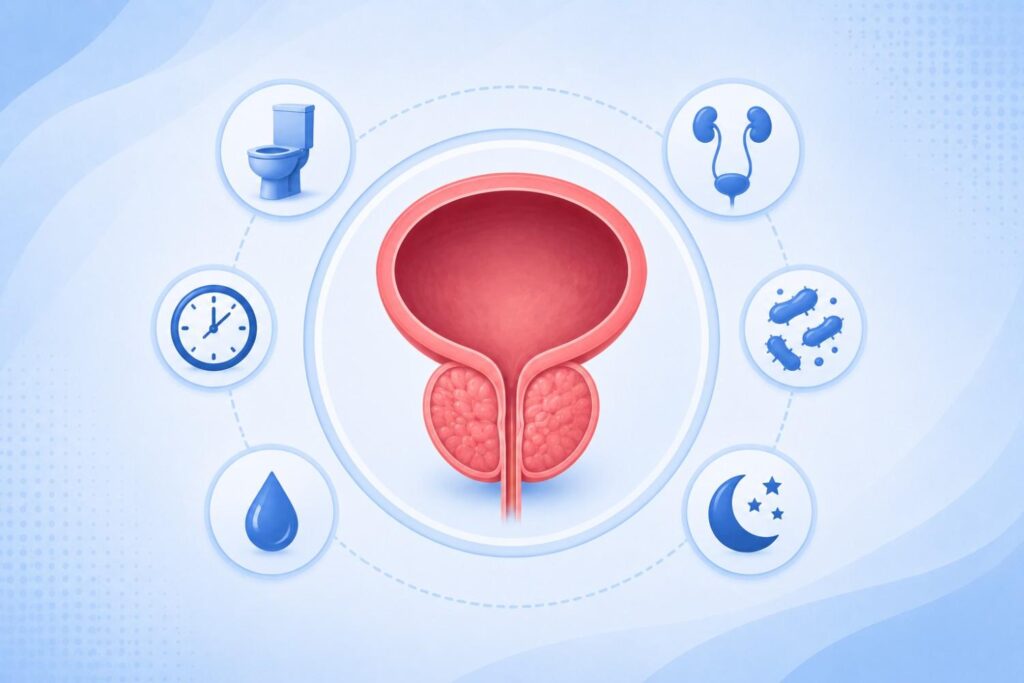
Symptoms of enlarged prostate are common in aging men. Also known as Benign Prostatic Hyperplasia (BPH), the condition occurs when the prostate enlarges and presses against the urethra, affecting normal urine flow. Although not cancerous, it can impact daily comfort and quality of life.
Many men overlook the symptoms of enlarged prostate as a normal part of aging. Recognizing the warning signs early can help support timely diagnosis, appropriate treatment, and better long-term urinary health.
What Causes Symptoms of Enlarged Prostate?
The prostate gland surrounds the urethra, which carries urine from the bladder out of the body. As the prostate enlarges, it can narrow the urethra and obstruct urine flow. This pressure on the urinary tract is responsible for many of the common symptoms of enlarged prostate.
The severity of symptoms can vary from person to person. Some men with significant enlargement may experience mild symptoms, while others with smaller enlargement may have more noticeable urinary difficulties.
If you are experiencing these symptoms and would like to explore available treatment options, learn more about BPH treatment in Sharjah.
Early Symptoms of Enlarged Prostate
The symptoms of enlarged prostate often develop gradually and may initially be mild.
Frequent Urination
One of the earliest symptoms of enlarged prostate is the need to urinate more often than usual. Men may notice an increased frequency during both the day and night.
Urgency to Urinate
A sudden and strong urge to urinate can occur, sometimes making it difficult to delay using the restroom.
Difficulty Starting Urination
Many men experience hesitation when attempting to begin urination, even when the bladder feels full.
Weak Urine Stream
A reduced force of urine flow is a common sign that the enlarged prostate is restricting the urethra.
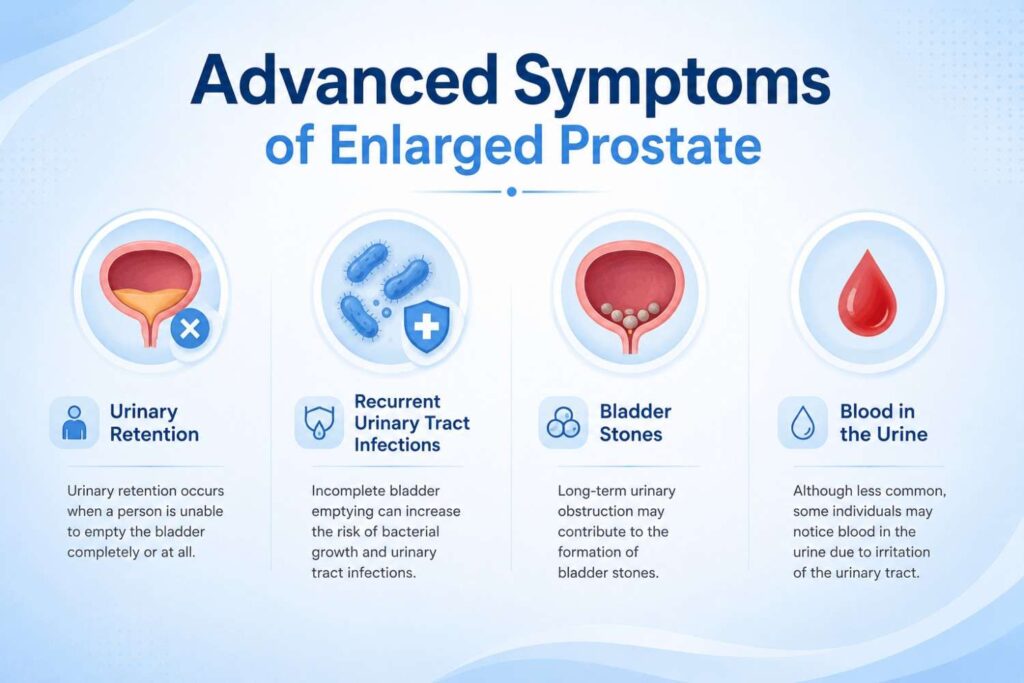
Common Symptoms of Enlarged Prostate
As the condition progresses, symptoms may become more noticeable and disruptive.
Waking Up at Night to Urinate
Also known as nocturia, frequent nighttime urination is one of the most bothersome symptoms of enlarged prostate and can significantly affect sleep quality.
Incomplete Bladder Emptying
Many men feel that the bladder has not fully emptied after urination.
Intermittent Urine Flow
Urine flow may repeatedly stop and start during urination rather than flowing continuously.
Dribbling After Urination
Some men experience leakage or dribbling after they believe urination has finished.
How Symptoms of Enlarged Prostate Affect Daily Life
The symptoms of enlarged prostate can have a significant impact on everyday activities.
Common challenges include:
- Interrupted sleep
- Daytime fatigue
- Difficulty during travel
- Reduced productivity
- Frequent restroom visits
- Anxiety related to urinary urgency
As symptoms worsen, quality of life may gradually decline, making professional evaluation increasingly important.
When Should You See a Urologist?
Men should seek medical advice if symptoms become persistent, worsen over time, or begin interfering with daily activities.
Medical evaluation is particularly important if you experience:
- Difficulty passing urine
- Sudden inability to urinate
- Blood in the urine
- Pain during urination
- Recurrent urinary tract infections
Early diagnosis often provides access to more treatment options and better symptom control.
How Are Symptoms of Enlarged Prostate Diagnosed?
Diagnosis usually begins with a detailed discussion of urinary symptoms and medical history.
Additional evaluation may include:
- Physical examination
- Urine tests
- Blood tests
- Ultrasound imaging
- Urine flow studies
- Bladder function assessment
These investigations help determine whether symptoms are related to prostate enlargement or another urinary condition.
Tips for Managing Symptoms of Enlarged Prostate
Certain lifestyle adjustments may help reduce urinary discomfort.
Helpful measures include:
- Limiting fluids before bedtime
- Reducing caffeine intake
- Maintaining a healthy weight
- Staying physically active
- Avoiding unnecessary delay in urination
- Following medical advice regularly
Conclusion
Symptoms of enlarged prostate can range from mild urinary changes to more significant problems that affect daily life and sleep quality. Common symptoms include frequent urination, urgency, weak urine flow, difficulty starting urination, and incomplete bladder emptying. Recognizing these warning signs early can help prevent complications and improve long-term urinary health.
Men experiencing persistent symptoms of enlarged prostate should seek timely medical evaluation to determine the underlying cause and appropriate treatment plan. Early diagnosis and proper management can help maintain comfort, confidence, and quality of life.
For more detailed medical information about enlarged prostate and BPH, visit the Urology Care Foundation’s BPH resource page.
Frequently asked questions
What are the early symptoms of enlarged prostate?
Early symptoms of enlarged prostate may include frequent urination, urgency, difficulty starting urination, and a weak urine stream.
Does an enlarged prostate always cause symptoms?
No. Some men may have prostate enlargement without noticeable symptoms, while others may experience significant urinary problems.
Why does an enlarged prostate affect urination?
The prostate surrounds the urethra. As it enlarges, it can compress the urethra and restrict the normal flow of urine.
What is the most common symptom of enlarged prostate?
Frequent urination, especially during the night, is one of the most common symptoms of enlarged prostate.
Can enlarged prostate symptoms worsen over time?
Yes. Symptoms often develop gradually and may become more bothersome if the condition is left untreated.
When should I see a doctor for enlarged prostate symptoms?
You should seek medical advice if urinary symptoms persist, worsen, affect sleep, or interfere with daily activities.
Can an enlarged prostate cause urinary retention?
Yes. In advanced cases, an enlarged prostate may block urine flow and make it difficult to empty the bladder completely.
Are enlarged prostate symptoms the same as prostate cancer symptoms?
Some symptoms may overlap, but enlarged prostate and prostate cancer are different conditions. Proper medical evaluation is needed for an accurate diagnosis.
Can lifestyle changes help manage enlarged prostate symptoms?
Yes. Reducing caffeine intake, limiting fluids before bedtime, maintaining a healthy weight, and staying active may help reduce symptoms.
Can enlarged prostate symptoms be treated?
Yes. Treatment options may include lifestyle modifications, medications, minimally invasive procedures, and surgical treatments depending on symptom severity.