When Should You See a Doctor for BPH?
Many men notice changes in their urinary habits as they grow older and assume it is simply part of ageing. While some degree of change is normal, certain urinary symptoms are warning signs of Benign Prostatic Hyperplasia (BPH) -a condition that benefits greatly from timely medical evaluation.
Knowing when to see a doctor for BPH can make a significant difference. Early assessment helps prevent symptom progression, reduces the risk of serious complications, and opens up a wider range of treatment options including minimally invasive procedures that may no longer be suitable if the condition is left too long.
What Is BPH and Why Does It Progress?
Benign Prostatic Hyperplasia is a non-cancerous enlargement of the prostate gland that occurs as men age. As the prostate grows, it can press against the urethra and restrict normal urine flow causing a range of lower urinary tract symptoms that tend to worsen gradually over time.
BPH does not resolve on its own. Without proper management, symptoms typically progress, and the risk of complications increases. Understanding the full spectrum of BPH and its treatment options is an important step in protecting your long-term urinary health.
Early Warning Signs You Should Not Ignore
Many men delay seeking help because their symptoms seem manageable at first. However, these early signs are your body’s signal that the prostate is beginning to affect normal urinary function.

See a doctor if you notice any of the following:
- Needing to urinate more frequently than usual, particularly during the day
- Waking up one or more times each night to urinate
- A weak or slow urine stream that seems to have changed over time
- Difficulty starting urination, even when the urge is present
- A feeling that the bladder has not fully emptied after urinating
- Dribbling at the end of urination
These symptoms may be mild at first, but they are reliable early indicators of prostate enlargement. A consultation at this stage offers the most flexible range of treatment options from lifestyle changes and medications to minimally invasive BPH treatments such as Rezum Therapy or UroLift.
When BPH Symptoms Become More Serious
As BPH advances, symptoms can move beyond mild inconvenience and begin affecting daily life, work performance, sleep quality, and emotional wellbeing. At this stage, medical evaluation becomes more urgent.
You should see a doctor promptly if you experience:
- Symptoms that have noticeably worsened over recent weeks or months
- Urinary urgency so severe that you struggle to reach the bathroom in time
- Frequent urinary tract infections that keep recurring
- Blood visible in your urine
- Pain or a burning sensation during urination
- A noticeably reduced urine stream that has become very weak or stops and starts
- Lower abdominal discomfort or pressure
These symptoms suggest that the prostate enlargement may be causing more significant obstruction, and a urologist can assess whether medication or a BPH procedure is needed.
When to Seek Urgent Medical Attention
Some BPH-related situations require urgent care and should not be waited out or managed at home.
Go to a doctor immediately if you experience:
- Complete inability to urinate – this is called acute urinary retention and is a medical emergency. It causes severe discomfort and requires immediate catheterisation to relieve the blockage.
- Severe lower abdominal or pelvic pain combined with inability to urinate
- Blood in the urine that is significant or recurring
- High fever with urinary symptoms -this may indicate a serious urinary tract infection or kidney involvement
Acute urinary retention is one of the most serious complications of untreated BPH. It can lead to bladder damage and kidney complications if not treated promptly.
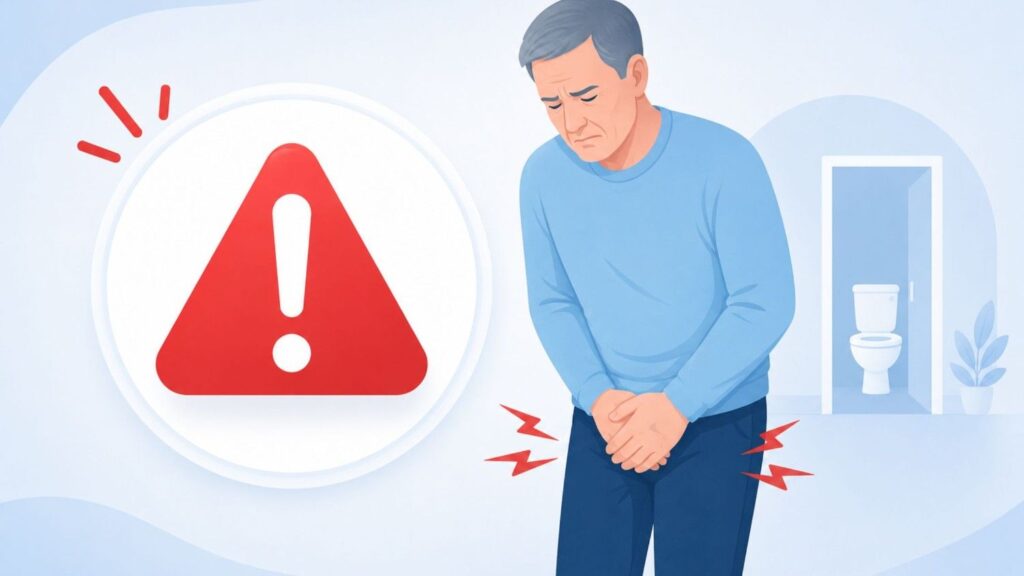
Why Men Delay Seeing a Doctor – And Why That Is a Mistake
Research consistently shows that men tend to delay seeking medical help for urinary symptoms. Common reasons include embarrassment, assuming symptoms are a normal part of ageing, or simply not realising that effective treatment is available.
The reality is that BPH is one of the most treatable urological conditions. Modern options from medication to procedures like Rezum Therapy, UroLift, TURP, and Plasma TURP – offer effective, personalised relief. Delaying evaluation narrows your options and increases the risk of complications including urinary retention, bladder stones, bladder damage, and kidney problems.
The sooner you seek assessment, the more choice you have in how your condition is managed.
What Happens at a BPH Consultation?
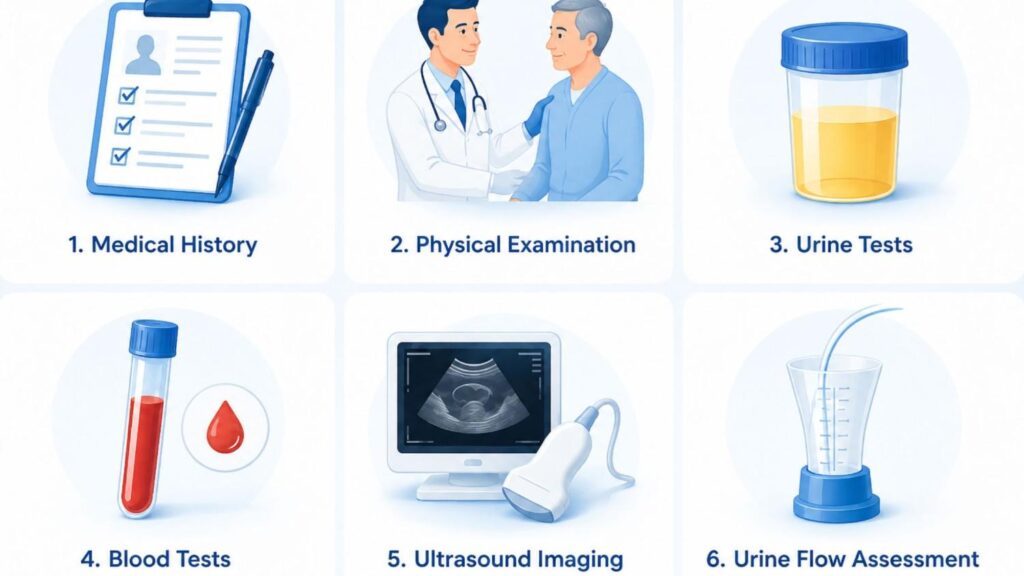
Knowing what to expect can make it easier to take that first step. A BPH evaluation typically involves:
Based on these findings, your urologist will recommend the most appropriate course of action – whether that is lifestyle changes, medication, or a procedure.
How BPH Is Treated After Diagnosis
Once assessed, treatment is tailored to your symptom severity, prostate size, and personal preferences. Options available through BPH treatment in Sharjah include:
- Lifestyle modifications – for mild symptoms
- Medications – alpha-blockers and 5-alpha reductase inhibitors for mild to moderate symptoms
- Rezum Therapy – water vapour treatment for suitable candidates
- UroLift – implant-based procedure to open the urinary channel
- TURP / Plasma TURP – surgical options for more significant obstruction
Early presentation gives you access to the full range of options, including the least invasive ones.
Conclusion
The answer to when should you see a doctor for BPH is straightforward – sooner rather than later. Whether you are experiencing early symptoms like mild frequency and a weak stream, or more serious signs like recurring infections or difficulty urinating, a urologist can help you understand your condition and take control of it.
Do not wait for symptoms to become severe or for complications to develop.
For clinically reviewed information on BPH, the American Urological Association provides comprehensive guidance on evaluation and management.