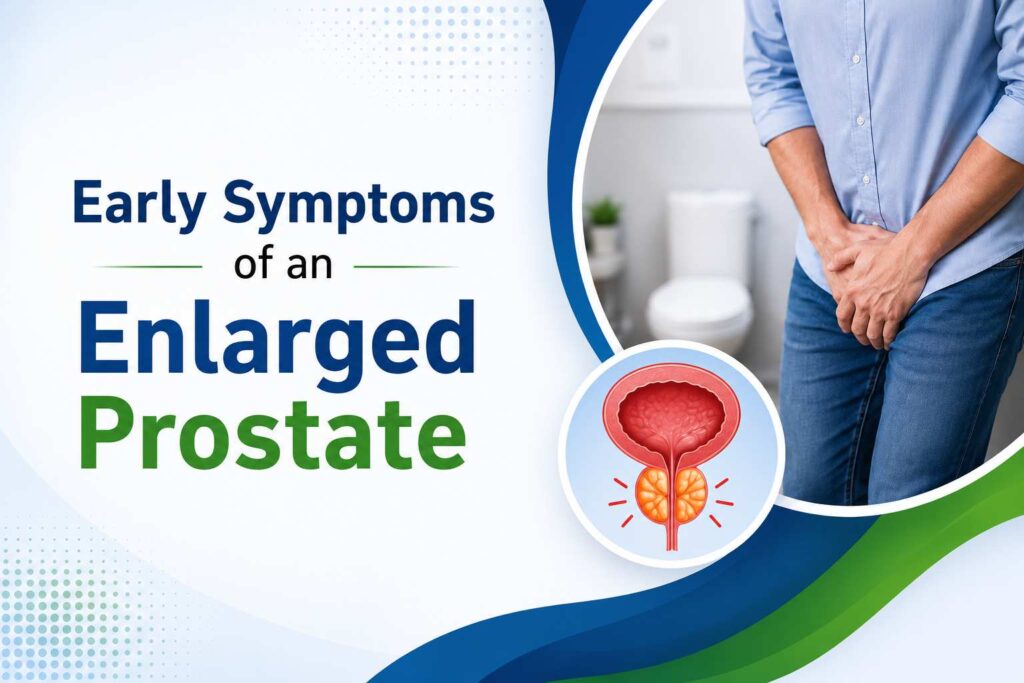
7 Powerful Facts About Early Symptoms of an Enlarged Prostate
Many men experience urinary changes as they grow older, but they often ignore these signs until they begin affecting daily life. Understanding the Early Symptoms of an Enlarged Prostate can help you seek timely medical advice and prevent complications. If you notice frequent urination, weak urine flow, or difficulty emptying your bladder, these may be among the Early Symptoms of an Enlarged Prostate that should not be overlooked. People in Thrissur should also remember that early evaluation often leads to more effective treatment and improved quality of life.
An enlarged prostate, medically known as benign prostatic hyperplasia (BPH), is a non-cancerous increase in the size of the prostate gland. Although it is common with aging, recognizing the Early Symptoms of an Enlarged Prostate allows for earlier diagnosis and better symptom management.
What Is an Enlarged Prostate
The prostate is a small gland located below the bladder and around the urethra. Its main function is to produce fluid that nourishes and transports sperm.
As men age, the prostate may gradually enlarge. Since it surrounds the urethra, an enlarged prostate can squeeze the urinary passage, making urination more difficult. This pressure leads to many of the Early Symptoms of an Enlarged Prostate.
Why Recognizing Early Symptoms of an Enlarged Prostate Matters
Identifying the Early Symptoms of an Enlarged Prostate allows treatment before severe urinary problems develop. Many men dismiss mild urinary changes as a normal part of aging, but ignoring symptoms may eventually lead to:
- Bladder damage
- Urinary retention
- Kidney complications
- Frequent urinary tract infections
- Reduced quality of life
Early intervention usually offers more treatment options and faster relief.
Common Early Symptoms of an Enlarged Prostate
The Early Symptoms of an Enlarged Prostate usually develop gradually.
Frequent Urination
One of the earliest warning signs is needing to urinate more often than usual, especially during the day.
Night-Time Urination (Nocturia)
Waking several times during the night to urinate is one of the most common Early Symptoms of an Enlarged Prostate.
Difficulty Starting Urination
Many men find it takes longer before urine begins to flow.
Weak Urine Stream
A slow or weak urinary stream often develops as the prostate presses against the urethra.
Interrupted Urine Flow
The urine stream may stop and start multiple times.
Feeling That the Bladder Is Not Empty
Many patients continue to feel fullness even after finishing urination.
Dribbling After Urination
Small amounts of urine may leak after finishing.
Sudden Urge to Urinate
Some men experience an urgent need to urinate with little warning.
Causes of Early Symptoms of an Enlarged Prostate

Several factors contribute to prostate enlargement.
Aging
The biggest risk factor is increasing age.
Hormonal Changes
Changes in testosterone and other hormones influence prostate growth.
Family History
Men with close relatives who have BPH are more likely to develop it.
Obesity
Excess body weight may increase the likelihood of prostate enlargement.
Lack of Physical Activity
A sedentary lifestyle has been associated with worsening urinary symptoms.
Diabetes and Heart Disease
These conditions may contribute to prostate-related urinary problems.
Risk Factors
Several factors increase the chance of developing Early Symptoms of an Enlarged Prostate.
- Age over 50
- Family history
- Obesity
- Diabetes
- High blood pressure
- Poor diet
- Lack of exercise
- Smoking
- Excessive alcohol consumption
Types of Enlarged Prostate Symptoms
Doctors generally classify symptoms into two groups.
Storage Symptoms
- Frequent urination
- Urgency
- Night-time urination
- Urinary leakage
Voiding Symptoms
- Weak stream
- Difficulty starting
- Straining
- Interrupted flow
- Incomplete emptying
How an Enlarged Prostate Affects Daily Life
The Early Symptoms of an Enlarged Prostate may seem mild initially but can gradually interfere with everyday activities.
Common effects include:
- Interrupted sleep
- Reduced concentration
- Fatigue
- Anxiety during travel
- Frequent restroom visits
- Reduced confidence
- Difficulty at work
When Should You See a Doctor
Medical evaluation is recommended if you experience:
- Frequent urination
- Persistent weak urine stream
- Difficulty emptying the bladder
- Blood in urine
- Pain during urination
- Complete inability to urinate
- Recurrent urinary infections
Early assessment helps identify the cause before complications occur.
Diagnosis of Early Symptoms of an Enlarged Prostate

Doctors use several methods to confirm the diagnosis.
Medical History
Symptoms, medications, and medical conditions are reviewed.
Physical Examination
Including a digital rectal examination.
Urine Test
Checks for infection or blood.
Blood Test
May include PSA testing if appropriate.
Ultrasound
Evaluates the prostate and bladder.
Urine Flow Test
Measures the speed of urine flow.
Bladder Scan
Determines whether urine remains after urination.
Treatment Options for Early Symptoms of an Enlarged Prostate
Treatment depends on symptom severity.
Lifestyle Changes
Many men with mild symptoms benefit from:
- Limiting fluids before bedtime
- Reducing caffeine
- Avoiding excessive alcohol
- Maintaining healthy weight
- Regular exercise
- Bladder training
Medications
Doctors may prescribe medicines that:
- Relax prostate muscles
- Reduce prostate size
- Improve urine flow
Minimally Invasive Procedures
When medications are ineffective, minimally invasive treatments may be considered.
Surgery
Surgery is usually reserved for severe symptoms or complications.
Benefits of Early Treatment
Seeking treatment early offers several advantages.
- Better symptom control
- Improved bladder function
- Better sleep
- Lower risk of urinary retention
- Reduced infection risk
- Improved quality of life
- Fewer long-term complications
Lifestyle Tips to Reduce Symptoms
Simple habits can reduce urinary discomfort.
- Stay physically active.
- Maintain a healthy weight.
- Avoid excessive caffeine.
- Reduce alcohol intake.
- Empty the bladder completely.
- Avoid delaying urination.
- Drink enough water during the day.
- Eat fruits and vegetables.
- Manage diabetes and blood pressure.
- Attend regular health check-ups.
Foods That Support Prostate Health
A balanced diet may help maintain prostate health.
Recommended foods include:
- Tomatoes
- Pumpkin seeds
- Walnuts
- Salmon
- Green leafy vegetables
- Broccoli
- Citrus fruits
- Whole grains
- Legumes
- Olive oil
Can Early Symptoms of an Enlarged Prostate Be Prevented
Although aging cannot be prevented, healthy habits may lower symptom severity.
Preventive measures include:
- Exercising regularly
- Maintaining ideal body weight
- Eating nutritious foods
- Drinking water appropriately
- Avoiding smoking
- Limiting alcohol
- Managing chronic diseases
- Scheduling routine health screenings
Conclusion
Recognizing the Early Symptoms of an Enlarged Prostate is one of the best ways to protect long-term urinary health. Symptoms such as frequent urination, weak urine flow, urgency, and difficulty emptying the bladder should never be ignored. Early diagnosis often allows simpler treatment, better symptom control, and fewer complications. If these urinary changes persist, seeking timely medical evaluation can make a significant difference. Individuals in Thrissur experiencing these symptoms should consider a professional assessment to receive appropriate guidance and care. For more evidence-based information about the Early Symptoms of an Enlarged Prostate, visit the National Institute of Diabetes and Digestive and Kidney Diseases (NIDDK) guide on Enlarged Prostate (BPH), which explains symptoms, diagnosis, and treatment options.
frequently asked questions
What are the earliest symptoms of an enlarged prostate
Frequent urination, weak urine stream, urgency, and difficulty starting urination are common early symptoms.
Is an enlarged prostate cancer?
No. Benign prostatic hyperplasia (BPH) is a non-cancerous enlargement of the prostate.
At what age does prostate enlargement usually begin
Many men begin developing symptoms after the age of 50.
Can enlarged prostate symptoms improve without surgery
Yes. Mild symptoms often improve with lifestyle changes and medications.
Does drinking less water help
Not necessarily. Proper hydration is important, but limiting fluids before bedtime may reduce night-time urination.
Can exercise help
Yes. Regular physical activity may reduce urinary symptoms and improve overall health.
Is waking at night to urinate always caused by an enlarged prostate
No. Other medical conditions can also cause nocturia.
What foods are good for prostate health
Tomatoes, leafy vegetables, pumpkin seeds, fish, fruits, and whole grains are considered beneficial.
Can untreated enlarged prostate cause complications
Yes. It may lead to urinary retention, infections, bladder damage, and kidney problems.
When should I consult a healthcare professional
If urinary symptoms persist, worsen, or interfere with daily activities, medical evaluation is recommended.