WHO IS A SUITABLE CANDIDATE FOR REZUM TREATMENT?
Benign Prostatic Hyperplasia (BPH), or an enlarged prostate, can gradually interfere with urination, sleep, daily activities, and overall quality of life. While medicines can help some men manage urinary symptoms, they may not provide enough relief for everyone. When symptoms remain bothersome, minimally invasive treatments such as Rezum therapy may be considered.
But not every man with an enlarged prostate is automatically suitable for Rezum. The decision depends on several factors, including urinary symptoms, prostate size and anatomy, response to medication, previous treatments, general health, and individual expectations.
What Is Rezum Treatment?
Rezum is a minimally invasive treatment used for Rezum Treatment Clinic in Sharjah for Benign Prostatic Hyperplasia. Instead of surgically cutting out prostate tissue, the procedure uses controlled water-vapor energy to treat selected areas of the enlarged prostate.
During treatment, a specialized device delivers steam into targeted prostate tissue. The thermal energy affects the treated cells, and the body gradually processes the tissue during the healing period. As the treated tissue reduces, there may be more room for urine to pass through the urinary channel.
Key features of Rezum include:
- Minimally invasive treatment
- Water-vapor energy
- Targeted treatment of prostate tissue
- No external surgical incision
- Generally short treatment
- Gradual improvement during recovery
- An approach that considers preservation of surrounding structures
However, the advantages of Rezum do not mean that it is the right treatment for every person with BPH. A proper urological assessment is essential before deciding on treatment.
Why Is Rezum Used for BPH?
BPH occurs when the prostate becomes enlarged and begins to affect the passage of urine through the urethra. As the prostate grows, it can make bladder emptying more difficult.
Common urinary symptoms include:
- Frequent urination
- Urinary urgency
- Weak urine stream
- Difficulty starting urination
- Interrupted urine flow
- Feeling that the bladder has not emptied completely
- Increased urination at night
- Dribbling after urination
Some men manage these symptoms successfully with medication. Others continue to experience problems despite treatment.
When symptoms remain troublesome, a urologist may discuss procedural options. Rezum is one minimally invasive approach that may be considered after evaluating the patient’s prostate, symptoms, medical history, previous treatment, and expectations.
WHO IS A SUITABLE CANDIDATE FOR REZUM TREATMENT?
One of the most important questions men ask is, WHO IS A SUITABLE CANDIDATE FOR REZUM TREATMENT?
There is no single factor that determines candidacy. Instead, a urologist considers the complete clinical picture.
A man may be considered for Rezum when he has:
- Persistent urinary symptoms related to BPH
- Symptoms that interfere with daily life or sleep
- A prostate that has been appropriately evaluated
- An inadequate or unsatisfactory response to medication
- An interest in a minimally invasive treatment option
- Appropriate prostate anatomy for the procedure
- Realistic expectations regarding recovery and symptom improvement
- Overall health that allows the procedure to be considered
The final decision should always be individualized.
Persistent BPH Symptoms
Men with ongoing urinary symptoms may benefit from discussing Rezum with a urologist. Symptoms do not necessarily need to be severe before treatment options are discussed, but they should be significant enough to affect comfort, sleep, routine activities, or quality of life.
Troublesome Symptoms Despite Medication
Medication can be useful for managing BPH symptoms. However, some men continue to experience bothersome urinary problems despite taking prescribed medicines.
In such situations, a urologist may discuss whether a procedure could provide another treatment option.
Preference for a Minimally Invasive Approach
Some men want to explore alternatives to procedures that involve physically removing prostate tissue. Rezum uses targeted water-vapor energy rather than cutting the prostate tissue out.
For men who prefer a minimally invasive approach, this may be an important factor when discussing treatment options.
Urinary Symptoms That May Make Rezum Worth Discussing
If you are wondering, WHO IS A SUITABLE CANDIDATE FOR REZUM TREATMENT?, your symptoms are an important part of the answer.
A urologist may ask how often you urinate, whether you wake during the night, whether your urine stream is weak, and whether you have difficulty emptying your bladder.
Symptoms Worth Discussing With a Urologist
- Weak or slow urinary stream
- Difficulty beginning urination
- Frequent trips to the bathroom
- Sudden urgency
- Night-time urination
- Interrupted urine flow
- Incomplete bladder emptying
- Post-urination dribbling
The effect of these symptoms on everyday life is also important. Two men can have similar urinary symptoms but very different levels of discomfort or disruption.
For this reason, candidacy should not be determined by one symptom alone.
Why Prostate Size and Anatomy Matter
Another important factor when asking WHO IS A SUITABLE CANDIDATE FOR REZUM TREATMENT? is the prostate itself.
The urologist needs to assess the size and anatomy of the prostate before deciding whether Rezum is appropriate. The number and location of water-vapor treatments can depend on the prostate’s characteristics.
The assessment may help the doctor understand:
- Where the prostate is causing obstruction
- Which areas may need treatment
- How many treatments may be required
- Whether the patient’s anatomy is appropriate for Rezum
- Which other treatment options may be relevant
This is why a treatment decision should never be based solely on age or symptoms.
Men Who May Prefer a Minimally Invasive Treatment
For some patients, the appeal of Rezum is its minimally invasive nature.
The procedure is performed through the urinary passage rather than through an external abdominal incision. Controlled water vapor is delivered to selected prostate tissue, and the body gradually processes the treated tissue.
A man may want to discuss Rezum if he:
- Wants to explore minimally invasive BPH treatment
- Has bothersome urinary symptoms
- Has already undergone a BPH evaluation
- Wants an alternative to certain surgical approaches
- Understands that improvement develops gradually
- Has realistic expectations about recovery
It is important to remember that preference alone does not make someone a candidate. Medical suitability must come first.
Does Medication Response Affect Rezum Suitability?
Medication response is another factor in determining WHO IS A SUITABLE CANDIDATE FOR REZUM TREATMENT?
Some men experience satisfactory symptom control with medication and may not need a procedure. Others may find that their symptoms continue despite treatment.
A urologist may therefore review:
- Which BPH medicines are being used
- How well symptoms are controlled
- Whether side effects are occurring
- How long treatment has been used
- Whether symptoms continue to affect daily life
- Whether another treatment approach should be considered
Rezum should not automatically replace medication. The appropriate choice depends on the individual situation.
The Importance of Overall Health
A patient’s general health is also considered before any procedure.
During consultation, the doctor may review existing medical conditions, current medications, allergies, previous procedures, recent infections, and any previous problems with anesthesia.
Patients should provide complete information about their health history, particularly regarding:
- Prescription medicines
- Blood-thinning medicines
- Allergies
- Previous urinary procedures
- Previous prostate treatments
- Existing medical conditions
- Recent infections
- Previous anesthesia problems
This information allows the medical team to plan treatment appropriately and discuss possible risks.
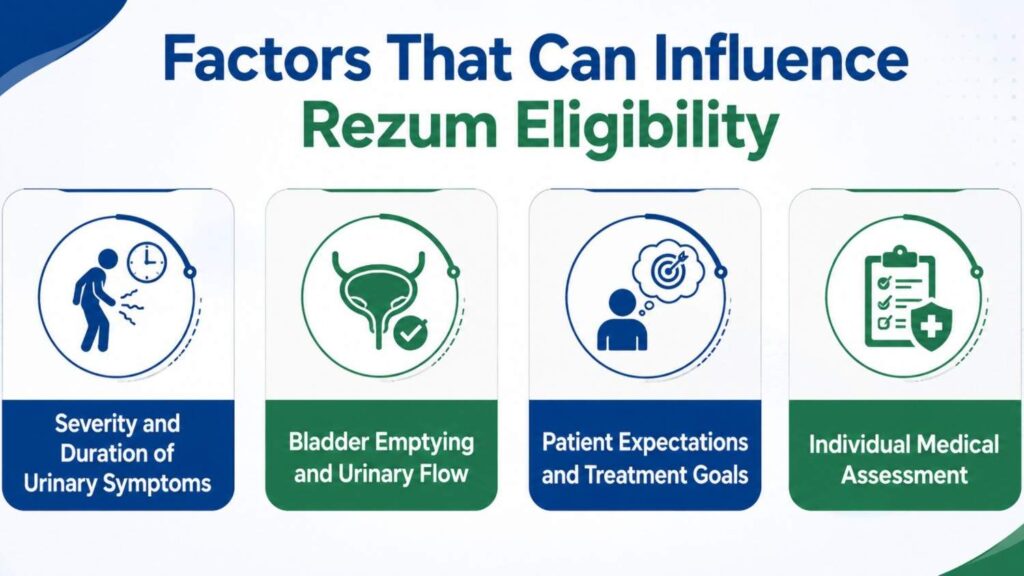
Previous BPH Treatment and Rezum Candidacy
Previous treatment does not automatically determine whether a man can undergo Rezum, but it is an important part of the assessment.
A urologist may want to know whether the patient has previously used medication or undergone another prostate or urinary procedure.
The doctor can then consider the current symptoms, prostate anatomy, previous treatment, and available alternatives before recommending an approach.
This individualized assessment is particularly important because BPH treatment is not a one-size-fits-all decision.
What Happens During the Suitability Assessment?
If you want to know WHO IS A SUITABLE CANDIDATE FOR REZUM TREATMENT?, the best answer comes from a proper urological evaluation.
A typical assessment may involve several stages.
1. Discussing Your Symptoms
The doctor will ask about urinary frequency, urgency, stream strength, night-time urination, difficulty starting, and bladder emptying.
2. Reviewing Your Medical History
Your existing health conditions, medicines, allergies, previous procedures, and previous prostate treatment may be reviewed.
3. Evaluating the Prostate
The doctor assesses the prostate and considers its size and anatomy.
4. Checking Urinary Function
Depending on the clinical situation, urine testing, urinary-flow assessment, and bladder-emptying evaluation may be performed.
5. Reviewing Previous Treatment
The doctor considers whether medication or previous BPH treatment has provided sufficient relief.
6. Discussing Treatment Options
Rezum may be discussed alongside other approaches such as medication, TURP, laser procedures, or UroLift.
7. Setting Realistic Expectations
The doctor should explain that Rezum does not usually produce its final result immediately. Symptom improvement develops during the healing period.
Who May Not Be the Right Candidate?
Knowing WHO IS A SUITABLE CANDIDATE FOR REZUM TREATMENT? also means understanding that not everyone with BPH will be appropriate for the procedure.
A patient may require another treatment approach depending on:
- Prostate anatomy
- Prostate characteristics
- Severity of symptoms
- Previous prostate procedures
- Overall health
- Current medications
- Individual treatment goals
- Findings from the urological assessment
Rather than assuming that Rezum is automatically better than surgery or medication, patients should ask which option best fits their specific condition.
A responsible treatment decision should consider alternatives rather than promoting one procedure for every patient.

What Should You Expect After Rezum Treatment?
Understanding recovery is essential when deciding WHO IS A SUITABLE CANDIDATE FOR REZUM TREATMENT?
Rezum is not generally a treatment where patients should expect an immediate final result. The prostate needs time to heal, and symptom improvement develops gradually.
Some temporary symptoms may occur during the early recovery period, including:
- Urinary frequency
- Urinary urgency
- Mild burning during urination
- Blood in the urine
- Blood in semen
- Pelvic discomfort
- Changes in urinary flow
The doctor may prescribe medication or provide specific instructions to help manage recovery.
How Long Does Rezum Improvement Take?
Some patients may begin noticing improvement within several weeks, while continued improvement can occur over the following months.
Recovery can vary based on:
- Prostate characteristics
- Baseline urinary symptoms
- Individual healing
- Number of treatments
- Overall health
- Previous BPH treatment
Patients should follow their urologist’s recovery instructions instead of comparing their progress with someone else’s experience.
Questions to Ask Your Urologist Before Rezum
Before deciding whether Rezum is appropriate, consider asking:
- Is my urinary problem caused by BPH?
- Is my prostate anatomy suitable for Rezum?
- What other treatment options are available?
- Why would Rezum be appropriate for my situation?
- What should I expect during recovery?
- Could my symptoms temporarily become worse after treatment?
- What medications should I take or stop before the procedure?
- Will I need a catheter?
- How long will follow-up continue?
- When should I expect improvement?
These questions can help you understand whether Rezum fits your individual needs rather than choosing a treatment based only on its reputation or convenience.
Conclusion
So, WHO IS A SUITABLE CANDIDATE FOR REZUM TREATMENT? Men with persistent BPH-related urinary symptoms, suitable prostate anatomy, inadequate symptom control with medication, and an interest in minimally invasive treatment may be considered for Rezum. However, suitability depends on an individualized assessment of symptoms, prostate characteristics, overall health, previous BPH treatments, medications, and treatment expectations.
Ultimately, WHO IS A SUITABLE CANDIDATE FOR REZUM TREATMENT? is a question that should be answered by a qualified urologist after evaluating the individual’s condition. Since Rezum uses targeted water-vapor energy and improvement develops gradually, patients should also understand the expected recovery process, potential temporary symptoms, and available alternatives before choosing treatment. Learn more about Benign Prostatic Hyperplasia (BPH) and its available treatment options.