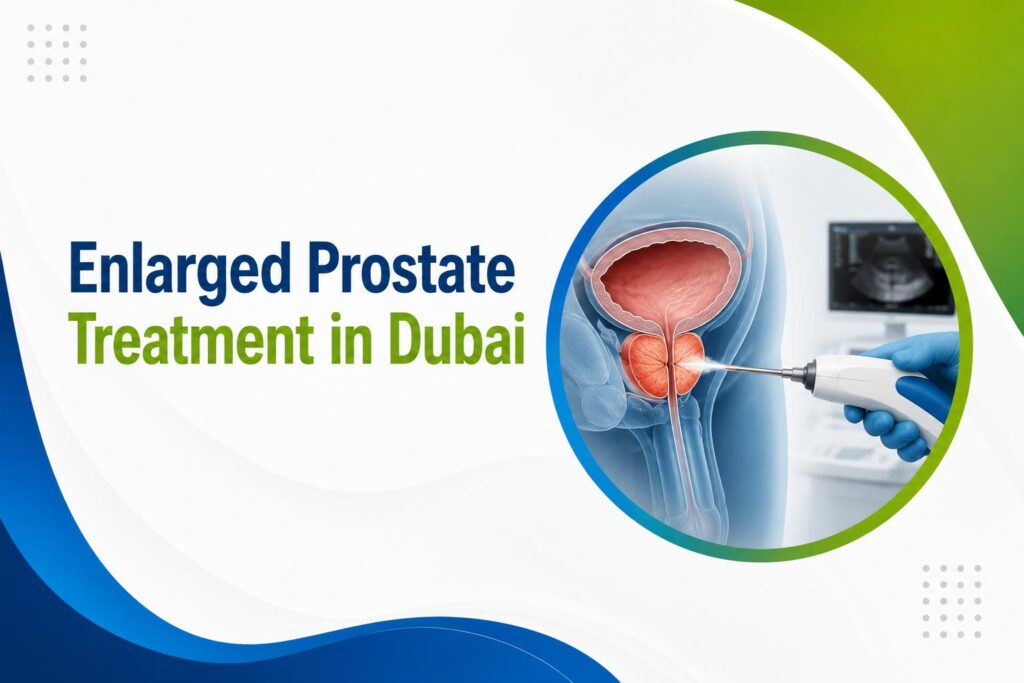
10 Powerful Facts About Enlarged Prostate Treatment in Dubai
An enlarged prostate is one of the most common health conditions affecting men as they age. Many men ignore the early signs, assuming they are a normal part of aging. However, timely diagnosis and Enlarged Prostate Treatment in Dubai can significantly improve quality of life, reduce urinary problems, and prevent complications. Today, modern medical technology offers several minimally invasive and advanced treatment options that provide effective relief with faster recovery. Whether symptoms are mild or severe, understanding the available treatments helps patients make informed decisions about their health.
What Is an Enlarged Prostate
An enlarged prostate, also called Benign Prostatic Hyperplasia (BPH), is a non-cancerous increase in the size of the prostate gland. The prostate surrounds the urethra, which carries urine from the bladder out of the body. As the gland grows, it can compress the urethra and make urination difficult.
BPH is extremely common among older men and becomes more frequent with increasing age. While it is not cancer, it can cause uncomfortable urinary symptoms that interfere with daily life.
Why Does the Prostate Enlarge
The exact reason is still being studied, but several factors contribute to prostate enlargement.
Age-Related Hormonal Changes
Hormonal changes that occur with aging are considered the primary cause of prostate enlargement.
Genetic Factors
Men with a family history of enlarged prostate are more likely to develop the condition.
Lifestyle Factors
Several lifestyle habits may increase the risk:
- Lack of physical activity
- Obesity
- Poor dietary habits
- Diabetes
- High blood pressure
Common Symptoms of Enlarged Prostate
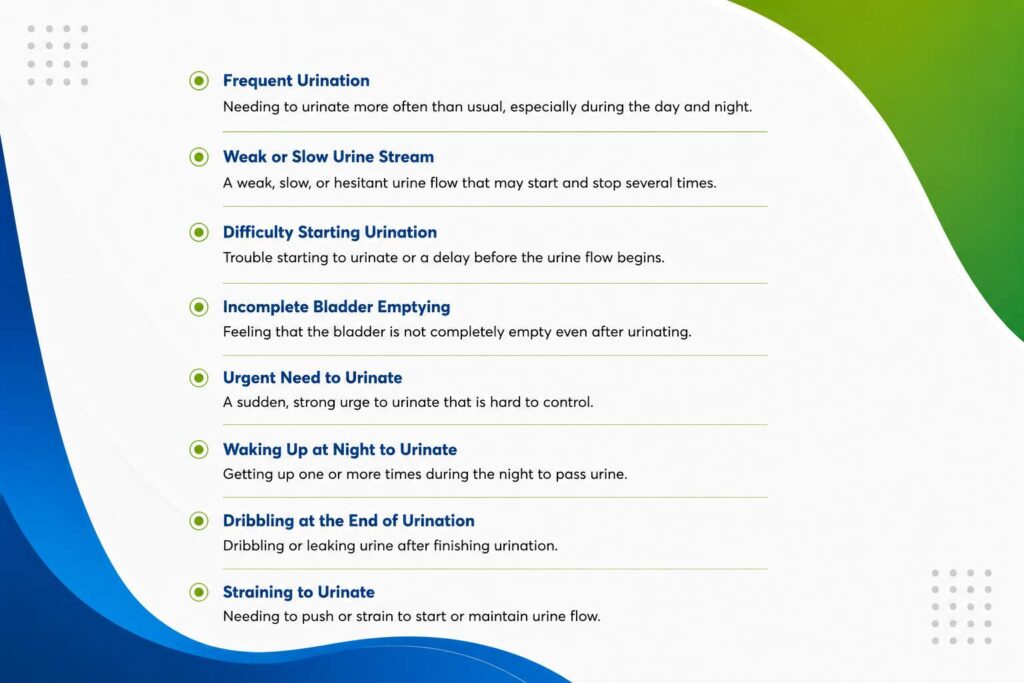
Recognizing symptoms early allows patients to seek Enlarged Prostate Treatment in Dubai before complications develop.
Common symptoms include:
- Frequent urination
- Difficulty starting urination
- Weak urine stream
- Interrupted urine flow
- Feeling that the bladder is not completely empty
- Urgency to urinate
- Frequent nighttime urination (Nocturia)
- Dribbling after urination
- Sudden inability to urinate
Some patients experience only mild symptoms, while others may struggle with severe urinary obstruction.
When Should You Seek Medical Attention
Medical evaluation is recommended if you notice:
- Blood in urine
- Pain during urination
- Complete inability to urinate
- Recurrent urinary tract infections
- Persistent urinary symptoms affecting daily activities
Ignoring symptoms can increase the risk of bladder damage and kidney problems.
Types of Enlarged Prostate
Understanding the type of enlargement helps determine the best treatment.
Mild Enlargement
Symptoms are manageable with lifestyle changes and regular monitoring.
Moderate Enlargement
Patients often require medications along with lifestyle modifications.
Severe Enlargement
Significant obstruction usually requires advanced minimally invasive procedures or surgery.
Risk Factors
Several factors increase the likelihood of developing BPH.
Age
Risk rises significantly after age 50.
Family History
A close relative with BPH increases your chances.
Obesity
Extra body weight is associated with prostate enlargement.
Diabetes
Metabolic disorders contribute to urinary problems.
Heart Disease
Poor cardiovascular health may influence prostate growth.
How Is Enlarged Prostate Diagnosed
Before recommending Enlarged Prostate Treatment in Dubai, doctors perform a detailed evaluation.
Diagnostic methods include:
Medical History
Symptoms, medications, and lifestyle are reviewed.
Physical Examination
Digital Rectal Examination (DRE) helps assess prostate size.
Urine Test
Checks for infection or blood.
Blood Test
A PSA (Prostate-Specific Antigen) test may be recommended to rule out other conditions.
Ultrasound
Provides detailed imaging of the prostate.
Uroflowmetry
Measures urine flow strength.
Post-Void Residual Test
Determines how much urine remains in the bladder after urination.
Cystoscopy
Allows direct visualization of the urinary tract when needed
Enlarged Prostate Treatment in Dubai
Modern medicine offers several highly effective treatment options depending on symptom severity and prostate size.
Lifestyle Changes
Patients with mild symptoms often benefit from simple modifications.
These include:
- Reducing caffeine intake
- Limiting alcohol
- Drinking less fluid before bedtime
- Maintaining a healthy weight
- Regular exercise
- Scheduled urination
- Avoiding constipation
Lifestyle improvements may reduce symptoms without medication.
Medications
Many patients begin treatment with medications.
Common categories include:
Alpha Blockers
These relax prostate muscles, allowing urine to flow more easily.
Benefits include:
- Rapid symptom relief
- Improved urine flow
- Reduced bladder pressure
5-Alpha Reductase Inhibitors
These medications gradually shrink the prostate.
Benefits include:
- Reduced prostate size
- Lower risk of urinary retention
- Delayed disease progression
Combination Therapy
Some patients benefit from both medication types together.
Minimally Invasive Enlarged Prostate Treatment in Dubai
Minimally invasive procedures have transformed prostate care by reducing recovery time and minimizing discomfort.
Rezum Water Vapor Therapy
Rezum uses natural water vapor to shrink enlarged prostate tissue.
Advantages include:
- No major surgery
- Minimal downtime
- Preserves sexual function in most patients
- Quick recovery
UroLift System
The UroLift procedure lifts enlarged prostate tissue away from the urethra without removing tissue.
Benefits include:
- No cutting
- Fast recovery
- Immediate symptom improvement
- Usually performed as a day-care procedure
Prostatic Artery Embolization (PAE)
PAE reduces blood supply to the prostate, causing it to shrink naturally.
Advantages include:
- Minimally invasive
- No surgical incision
- Lower complication rate
- Short hospital stay
Laser Therapy
Laser procedures remove excess prostate tissue with precision.
Popular techniques include:
- Holmium Laser
- GreenLight Laser
- Thulium Laser
Benefits include:
- Less bleeding
- Faster recovery
- Effective symptom relief
- Suitable for many patients
Surgical Enlarged Prostate Treatment
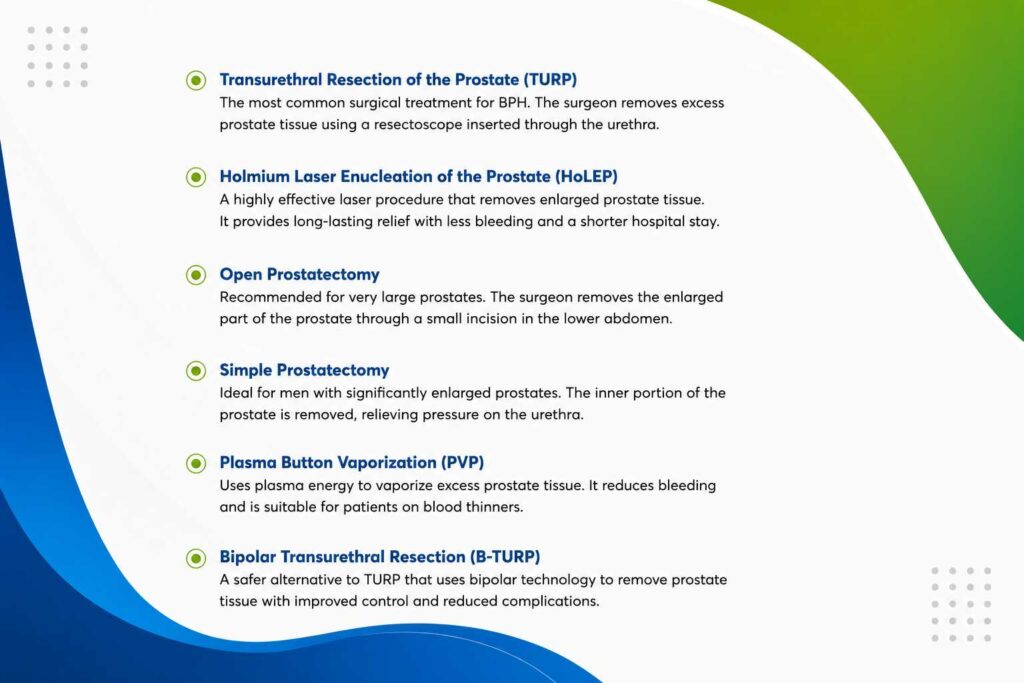
When symptoms become severe or minimally invasive treatments are unsuitable, surgery may be recommended.
TURP (Transurethral Resection of the Prostate)
TURP remains one of the most established procedures for treating BPH.
Benefits include:
- Long-term symptom relief
- Improved urinary flow
- High success rate
Open Prostate Surgery
Rarely required today, open surgery is reserved for extremely large prostates.
Benefits of Early Enlarged Prostate Treatment
Seeking treatment early offers numerous advantages.
Benefits include:
- Better bladder function
- Improved sleep quality
- Reduced urinary urgency
- Less discomfort
- Prevention of kidney complications
- Lower infection risk
- Enhanced quality of life
- Improved confidence
- Reduced need for emergency treatment
- Better long-term outcomes
Recovery After Treatment
Recovery depends on the chosen treatment.
General recommendations include:
- Drink adequate water
- Avoid heavy lifting
- Take prescribed medications
- Attend follow-up appointments
- Avoid constipation
- Resume activities gradually
- Report unusual symptoms promptly
Most minimally invasive treatments allow patients to return to normal activities within a few days.
Can Enlarged Prostate Be Prevented
Although aging cannot be prevented, healthy habits may reduce the risk of worsening symptoms.
Helpful habits include:
- Regular exercise
- Healthy weight management
- Balanced diet
- Limiting alcohol
- Avoiding smoking
- Staying hydrated
- Managing diabetes
- Routine medical check-ups
Foods That Support Prostate Health
A healthy diet may help maintain prostate function.
Recommended foods include:
- Tomatoes
- Pumpkin seeds
- Walnuts
- Salmon
- Leafy green vegetables
- Broccoli
- Berries
- Green tea
- Olive oil
- Citrus fruits
Possible Complications If Left Untreated
Without proper care, an enlarged prostate may lead to:
- Urinary retention
- Bladder stones
- Kidney damage
- Recurrent urinary infections
- Blood in urine
- Bladder weakness
- Chronic discomfort
Early diagnosis greatly reduces these risks.
Choosing the Right Treatment
The best treatment depends on several factors.
Doctors consider:
- Age
- Symptom severity
- Prostate size
- Overall health
- Patient preferences
- Existing medical conditions
Personalized treatment plans often produce the best outcomes.
Conclusion
Living with urinary symptoms does not have to become a permanent part of aging. Thanks to advancements in medical technology, Enlarged Prostate Treatment in Dubai now includes a wide range of safe, effective, and minimally invasive solutions tailored to individual needs. Early diagnosis, proper evaluation, and timely treatment can improve urinary function, enhance overall well-being, and reduce the risk of complications. If you experience ongoing urinary problems, seeking professional medical care can help you choose the most appropriate treatment and return to a healthier, more comfortable lifestyle. For comprehensive patient information on enlarged prostate (BPH), visit the Mayo Clinic’s guide .